
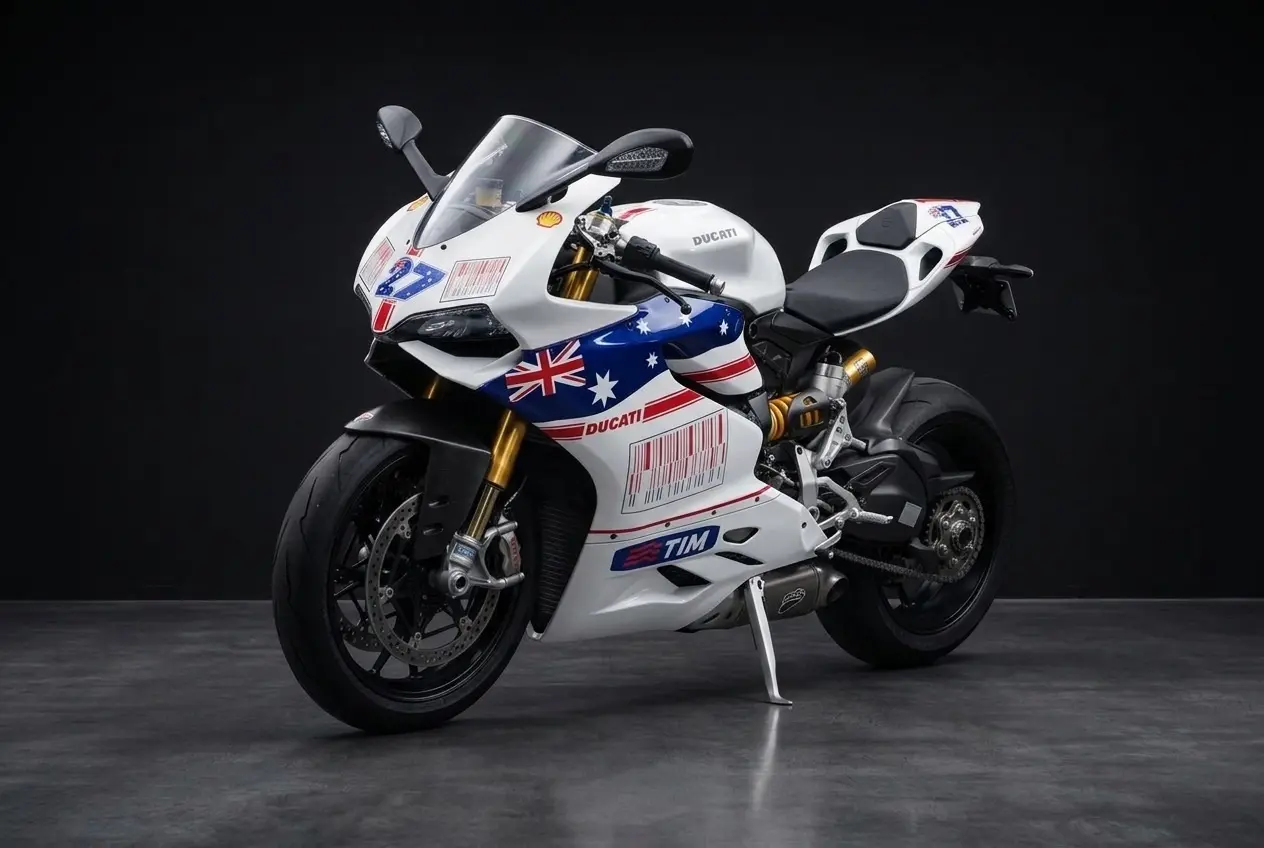
Book the Ducati 1199R. Pick your dates and book the Ducati 1199R online, or call us and we will sort it with you.
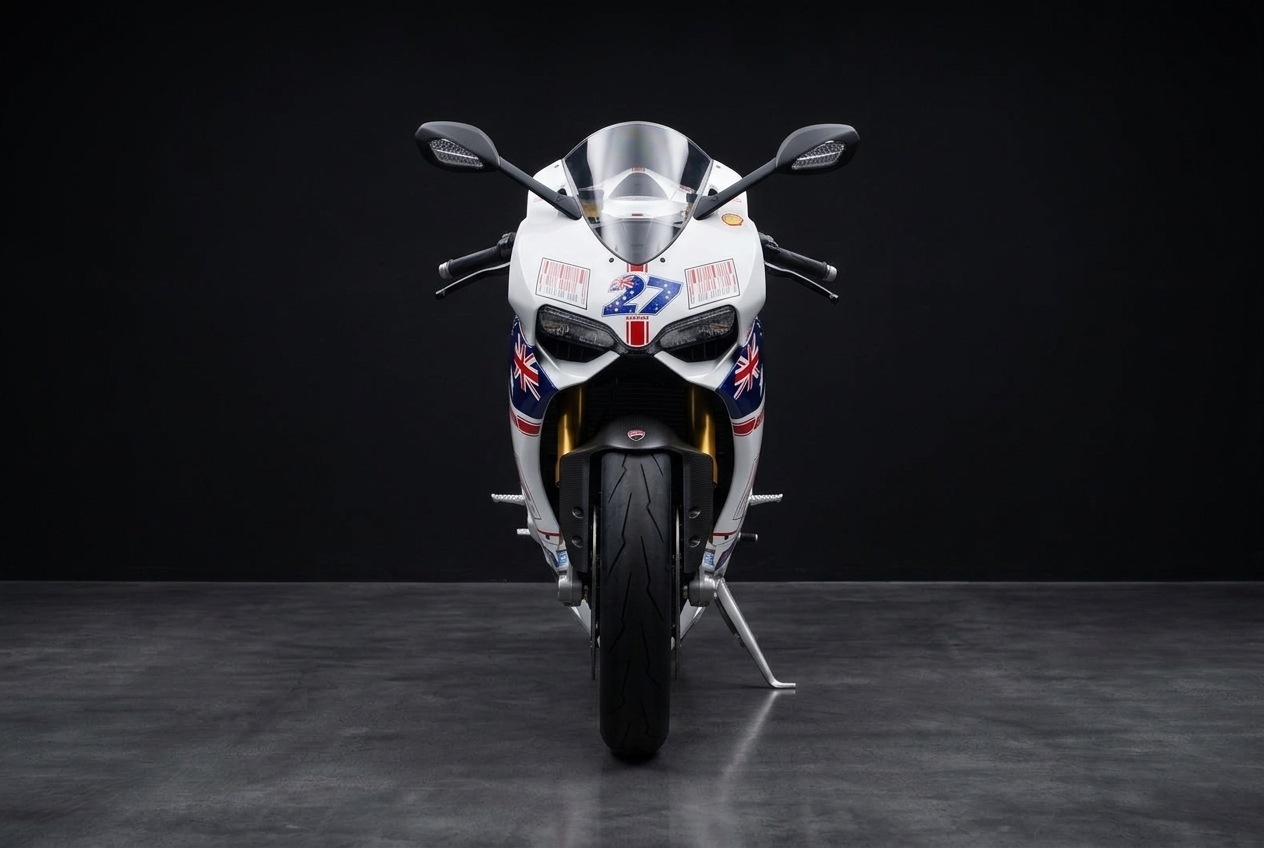
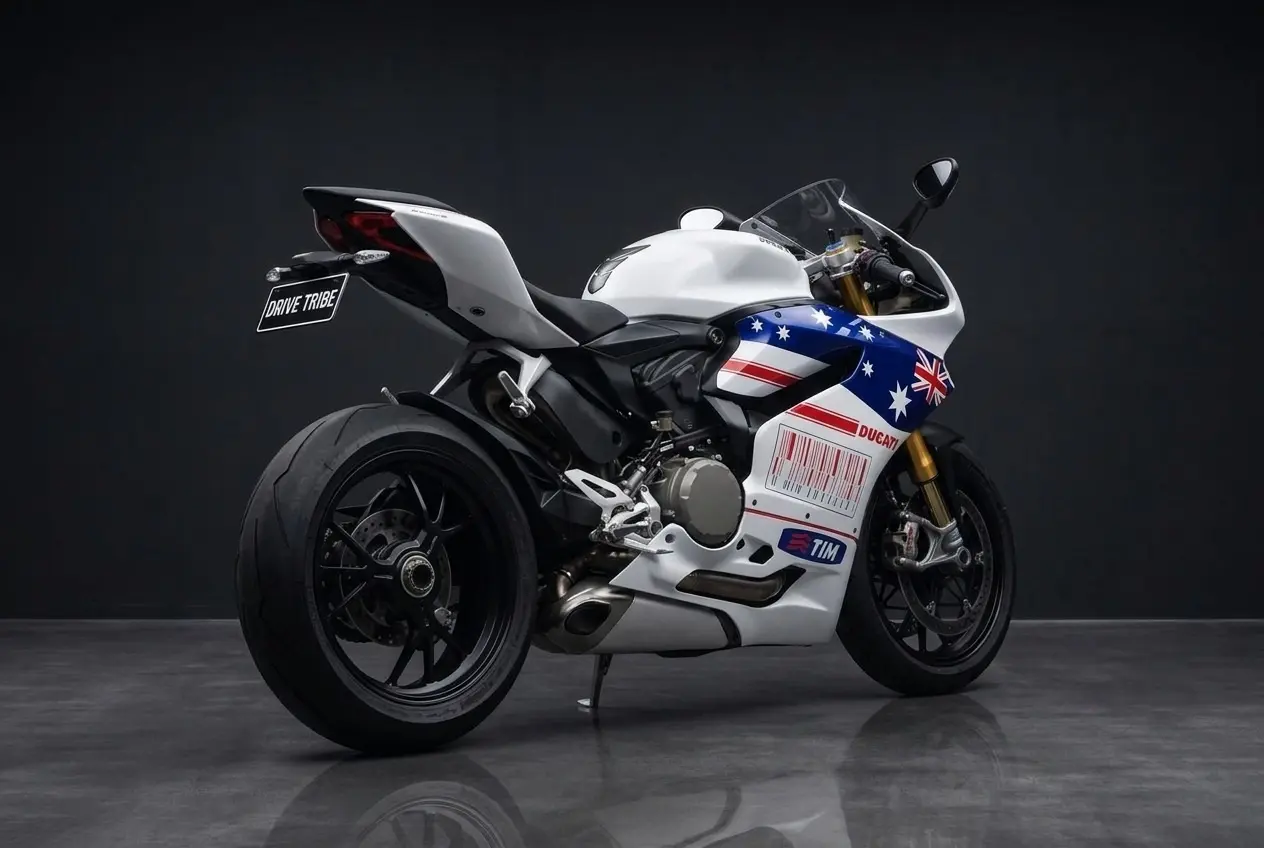
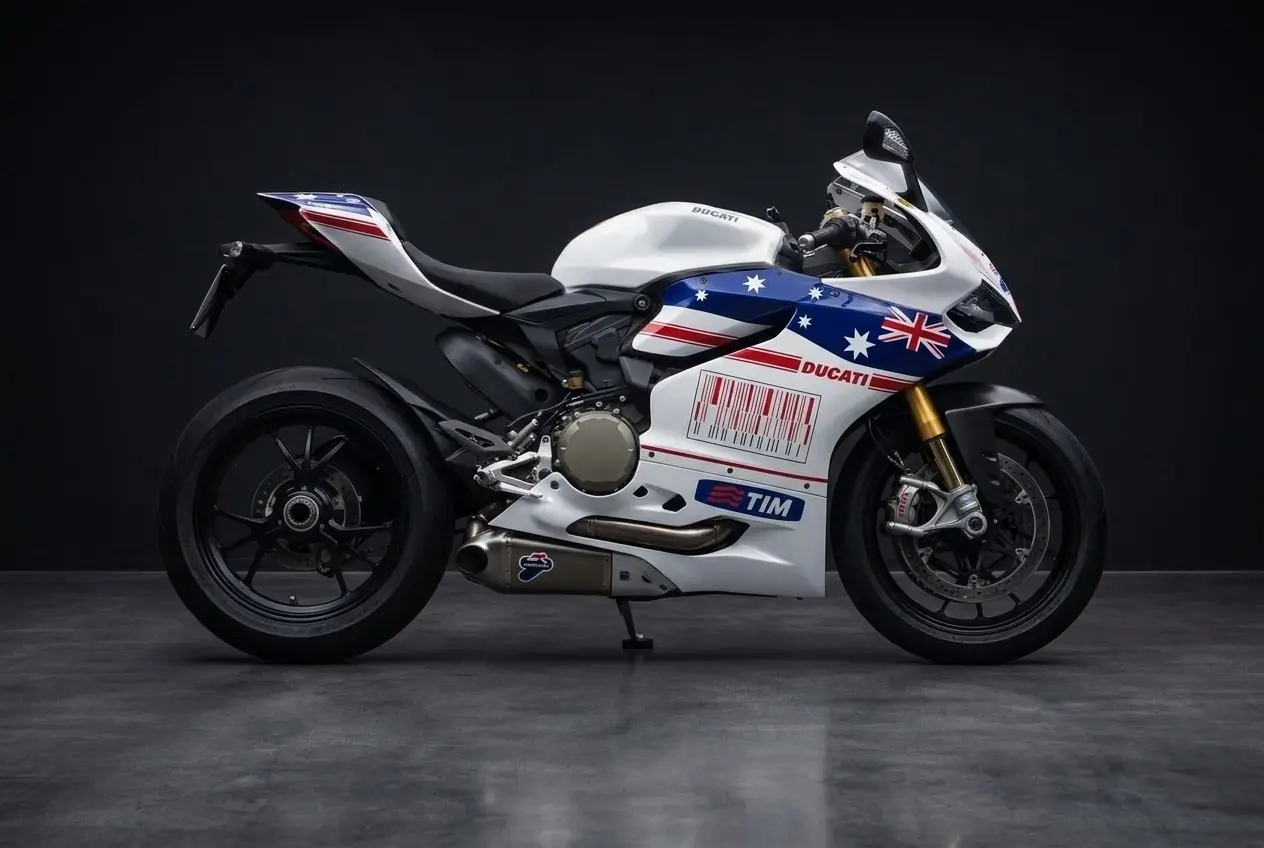
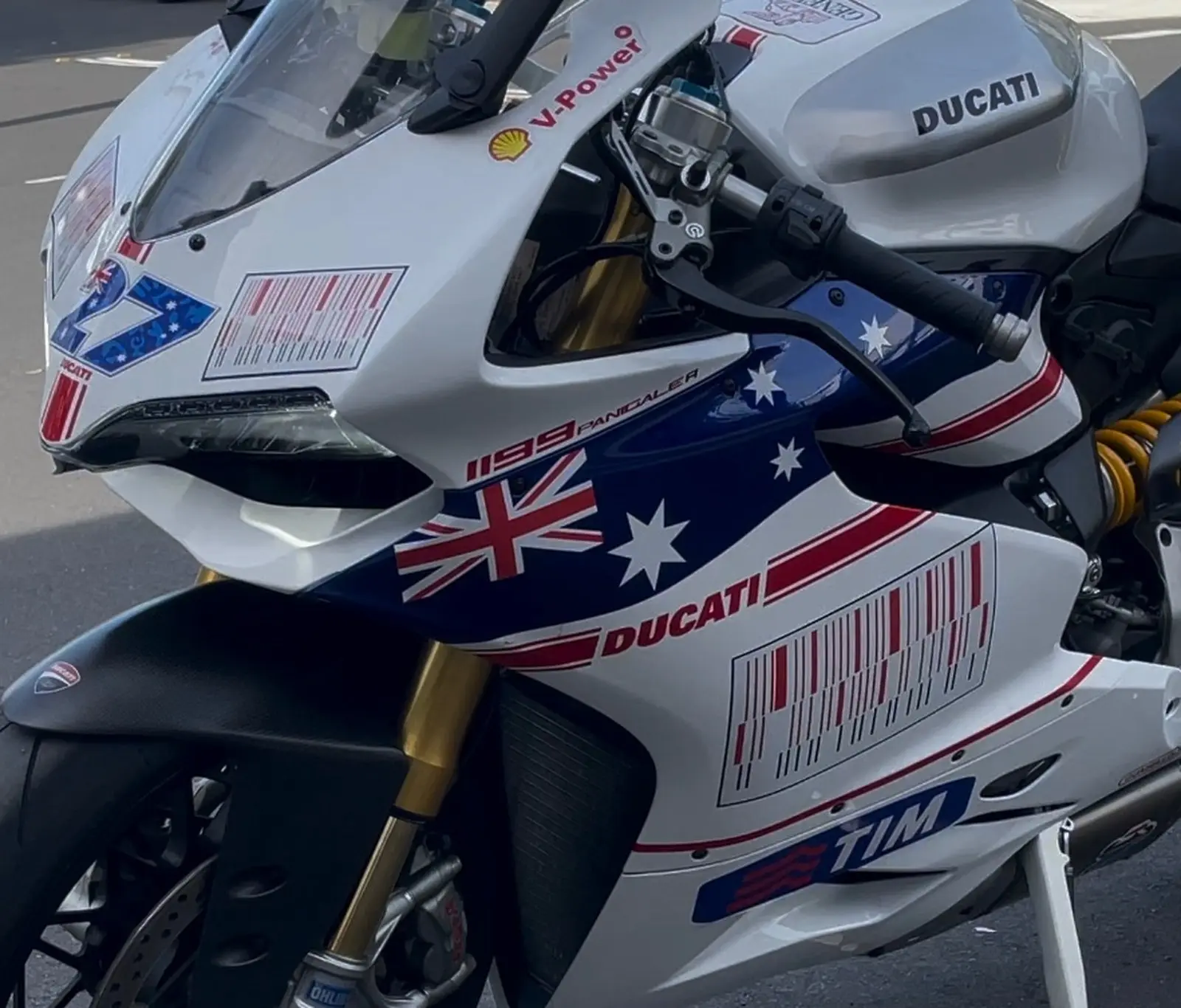
Book NowCall 0468 011 118A superbike asks a lot of your feet before it asks anything of your hands. The Ducati 1199R is a serious machine, and its Australian flag livery is a tribute to Casey Stoner, the Australian rider who won his first MotoGP World Championship on a Ducati in 2007. Before a first hire, the footpegs and gear lever decide how confident you feel in a car park and how settled you feel on a fast road. Here is how we set them up and what we want you to know before you ride away from Parramatta.
Still choosing a bike? Start with our guide to motorcycle hire in Sydney, which sets out the licence, age and pillion rules.
Why foot controls decide your first hour on a superbike
Your feet carry more of the message on a superbike than most new riders expect. The footpegs take your weight through every corner, and the gear lever and rear brake pedal sit where your toes and heels must find them without searching. When those controls feel wrong, your attention drifts from the road to your boots. Good setup removes that distraction, so the first hire becomes a chance to learn the bike rather than wrestle with it.
The Ducati 1199R produces 143 kW from its V-twin, and it rewards a rider who is settled and balanced. Your legs are the anchor when the bike moves under hard acceleration or braking, so a stable base matters as much as reach to the bars. Our advice is simple: set the controls before you start the engine, then confirm them after a few minutes of gentle riding. A rider who feels secure through the feet is far less likely to grab the bars or overreact.
Foot controls also shape low-speed moves, such as pulling out of a driveway, rolling through a car park or stopping at a traffic light. Those are the moments when a poorly set footrest makes you wobble. Spend a few minutes practising stops and slow turns in a quiet street before you head out, and notice whether your feet move naturally between the controls without you looking down.
Setting the footpegs before you leave Parramatta
Start with the bike stopped and held steady, and sit in the saddle with your feet on the pegs. Find the spot where your ankles sit naturally and your knees bend without strain. Your heels should not hang off the back edge, and your toes should reach the gear lever without stretching. If the position still feels off, tell our team before you leave, because that is a setup question worth resolving at the depot rather than on the road.
Once you have the basic position, work through this checklist before you start the engine. Each step takes a minute, and together they tell you whether the bike is ready for you.
Ask us to talk through any adjustment that is available on your booking, so you know what can and cannot be changed without tools. Never ride with a control that feels loose, out of place or unfamiliar, and never attempt changes that need tools you do not have.
- Confirm your feet reach the pegs without stretching, with your weight sitting square on the seat.
- Rest the balls of your feet on the pegs rather than the arches, and keep your ankles loose.
- Move your toe to the gear lever and your heel to the rear brake, one at a time, while stationary.
- Check that your knees rest lightly against the tank and do not clamp down.
- Dab a foot down on each side and confirm your balance feels steady rather than awkward.
Gear lever and rear brake: working them without looking down
On a sport bike the gear lever is the control you will use most, and the rear brake is the one you use least but must find instinctively. Practise upshifts and downshifts while stationary, with the bike in neutral, so you learn the feel of the lever before the engine is running. Keep your heel near the pedal rather than sliding it across the footrest, and avoid pressing the lever with the side of a loose boot where it can slip.
The aim is to shift without thinking about it. On a hard acceleration out of a bend, a slightly early or late change is far less of a problem than a lost foot. Make sure your boots have a firm sole, your ankles are supported and your toes move freely. If you find a neutral you did not mean to find, stop, select the right gear and roll gently rather than fumbling for it mid-corner.
Brake use changes on a fast machine too. Lean on the front brake for most of your stopping, and treat the rear as a supporting tool at low speed, such as in a car park or at a slow junction. Heavy braking in a bend upsets the balance of any motorbike, so brake before you lean and let the bike settle before you add throttle.
A first-hire coastal loop through the Royal National Park
For a first hire we like a loop that gives you room to learn without much pressure. One favourite runs south from Sydney toward the Royal National Park, following the coast and forest roads to the lookouts near Stanwell Tops. The round trip from Parramatta covers roughly 130 kilometres, so it works as a relaxed morning or an unhurried afternoon. Traffic thins quickly once you clear the suburbs, and the road gives you a feel for the bike at a manageable pace.
The route mixes gentle sweepers, short climbs and a few tighter bends near the coastal lookouts. The surface is generally good, although leaf debris and sand can drift onto the road near the park entrances, especially after wind. Keep your line tidy, avoid sudden inputs and take each bend in a gear you are comfortable with. A steady pace through the park is the best way to build confidence before the faster stretches.
Stop at a lookout for a few minutes and check how your feet and legs feel. Many riders find their grip tightens when they are nervous, so take a moment to relax your knees before setting off again. Use the stop to review the controls, the gear lever and your footing, and make small changes if anything feels wrong. Changing one small thing at a lookout is far easier than trying to fix it at the next junction.
Best time of day and season for a first hire
Mid-morning on a weekday is the sweet spot for a first hire. Traffic is lighter, the air is cool and the coastal light is soft for judging distances. Dawn and dusk bring more wildlife, with kangaroos and wallabies moving through the bushland edges beside the road. Scan the verges ahead and slow down wherever trees come close to the tarmac, because an animal stepping out at speed leaves very little time to react.
Autumn and spring suit the coast best, with mild temperatures and fewer crowds than the summer peak. Summer heat is manageable if you start early, but the sun and salt air can dehydrate you faster than you notice. Winter mornings can be cold and damp, and the shaded sections stay slick for longer. Pack a layer that you can remove easily, because the temperature changes quickly between the suburbs and the open coast.
Wet weather changes the grip picture quickly. Wet painted lines and leaves on the bends can be slippery even after light rain, and salt spray can leave a film on the road near the water. Check road conditions with Transport for NSW before leaving, especially after storms or when works are scheduled. In the wet, brake earlier, ease the throttle on and off gently and give yourself far more space than you think you need.
Want the Ducati 1199R for your date? Pick your dates and book the Ducati 1199R online, or call us and we will sort it with you.
Book NowCall 0468 011 118Fuel, food and rest stops on the coast
Fuel is straightforward on this loop because stations are spread through the suburbs and along the main roads. Top up before you leave the city and check again before you enter the park, where services are limited. Note the next place to refuel as you go, and do not let the fuel warning decide for you. Running out of fuel on a coastal road is an avoidable inconvenience that can turn a relaxed ride into a stressful one.
Coastal towns have plenty of places for a light meal, and many have outdoor seating with a view over the water. Choose a spot with space to park your bike safely and a clear view of the traffic passing by. Avoid a heavy meal before you ride, and keep water with you, because the wind off the ocean hides how much fluid you are losing. A light lunch keeps your concentration sharp for the return leg.
Plan a break at least once an hour, and treat each one as a chance to check your footing, stretch your hips and reset your grip. Do not drink alcohol at any stop while you still have the bike to ride, and do not get back on if you feel light-headed or unwell. If you feel tired or unsettled, park somewhere safe and rest before continuing. The coast will still be there after a proper break.
Road character: corners, surfaces and weekend crowds
The coastal bends vary from long sweepers to tighter corners that appear suddenly from behind rock or tree cover. Look through each bend, keep your speed controlled and avoid braking while you are leaned over. Surfaces change with the seasons and with maintenance work, so expect patches of worn bitumen and the occasional loose stone on the apex. Riding at a steady pace lets you read these changes before they catch you out.
On weekends the same road carries cyclists, sports cars, touring groups and coaches. Keep a generous distance and be ready for drivers who stop suddenly at lookouts or pull out from parking bays. Stay within the posted limit at all times, and only pass when you can see clearly ahead and the road is free of oncoming traffic. Weekend crowds are the main reason many riders prefer an early start.
Weekdays feel quieter and more predictable, which suits a first hire. Use that calm to practise the skills you set up in the car park, such as smooth braking, steady throttle and clean gear changes, rather than chasing a fast pace. Confidence on a superbike grows from repetition on familiar roads, and the coast offers plenty of both. Let the bike come to you rather than the other way round.
Hire rules and safety for your first day
Three rules shape a first hire. Every booking is self-drive from our Parramatta depot, and three days is the minimum hire. Your licence must be a full motorcycle licence held for at least three years, and you must be 25 or older. If we judge a rider unsafe, we may end the hire, so treat every ride as a chance to show steady judgement.
Gear matters from the first kilometre. Wear a properly fitted helmet, gloves that let you work the controls, boots with firm soles and ankle support, and protective layers that suit the weather. Coastal mornings can feel mild until you are moving at speed, and wet grip can disappear quickly under leaves or salt. Dress for the coldest part of the ride rather than the warmest.
Fatigue, wildlife and alcohol are the simple rules that matter most. Stop when you feel drowsy, slow down at dawn and dusk when kangaroos are active, and never ride after drinking alcohol. Share your loop and expected return time with a friend before you leave. Ride within your ability, and remember that a first hire is about learning the bike, not proving anything to anyone on the road.
Ready to book your Ducati 1199R first hire
The Ducati 1199R suits a rider who wants a striking superbike and has the experience to match it. Its Australian flag livery, a tribute to Casey Stoner, makes it a memorable machine to ride, and its V-twin rewards a calm, balanced rider who takes the time to learn it. The bike is built for experienced riders, so an honest look at your skills is the first step.
Start with the basics: choose a date, confirm that your licence and age meet our requirements, and sketch a route that suits your level. Keep the first day short and unhurried, and plan a return time that leaves room for stops and a slow final stretch. A first hire that finishes with a smile is worth more than a long day that leaves you tired.
When you are ready, book the Ducati 1199R and make your first hire a confident one. Our team in Parramatta will walk you through the controls, answer your questions and help you plan a loop you will enjoy. We look forward to seeing you on the road.
Frequently asked questions
Can I adjust the footpegs on a Ducati 1199R before my first ride?
Ask our team at pickup to explain which controls can be adjusted and which ones need a workshop. Do not attempt changes at the roadside. Test the position in a quiet car park first, then ride a short distance and check how your feet feel. If anything still feels wrong, tell us before you leave rather than pushing on. A small change at the depot is far better than a discomfort problem halfway through a loop.
How long should I practise gear changes before heading onto a busy road?
Spend at least ten or fifteen minutes practising in a quiet area before you join traffic. Work through slow starts, gentle upshifts and downshifts, and stops at several different speeds. Notice whether you find neutral easily and whether your heel reaches the rear brake without searching. Once the actions feel automatic, head out gradually, starting with quieter roads and building up as your confidence grows.
Is a superbike a sensible first big bike for a rider with limited experience?
The Ducati 1199R is a superbike built for experienced riders, so it is not the natural choice for someone with limited experience. Build your skills on a more forgiving machine first, and talk honestly with us about your riding background before booking. Our team can help you decide whether the Ducati suits you now or later. Confidence should come from practice, not from the reputation of the bike.
What should I do if my foot slips off the peg while riding?
Stay calm, keep your hands steady on the bars and ease off the throttle gently. Do not stab at the brakes or pull hard on the bars, because sudden inputs can unsettle the bike. Find a safe place to stop when you can, then reset your foot and check the position before continuing. A foot slipping is usually a sign to adjust your footing or ease your pace rather than a reason to panic.
How should I build up throttle while learning the bike?
Build throttle gradually. Start with gentle openings on straight sections, and focus on smooth transitions rather than sharp bursts. Practise closing the throttle smoothly before bends so the bike settles. A superbike responds quickly, so smooth inputs keep you in control and help you learn where the power begins. Patience early on makes the rest of the hire far more enjoyable.
Which weather should stop a first hire on the coast?
Heavy rain, strong winds and fog are good reasons to rethink the day. Wet painted lines and leaf debris reduce grip quickly, and gusty wind can push a light rider around near exposed headlands. Check the forecast the night before and again in the morning. If conditions look doubtful, move the hire to another day rather than riding in conditions you have not tested before.
Ready when you are. Pick your dates and book the Ducati 1199R online, or call us and we will sort it with you.
Book NowCall 0468 011 118