
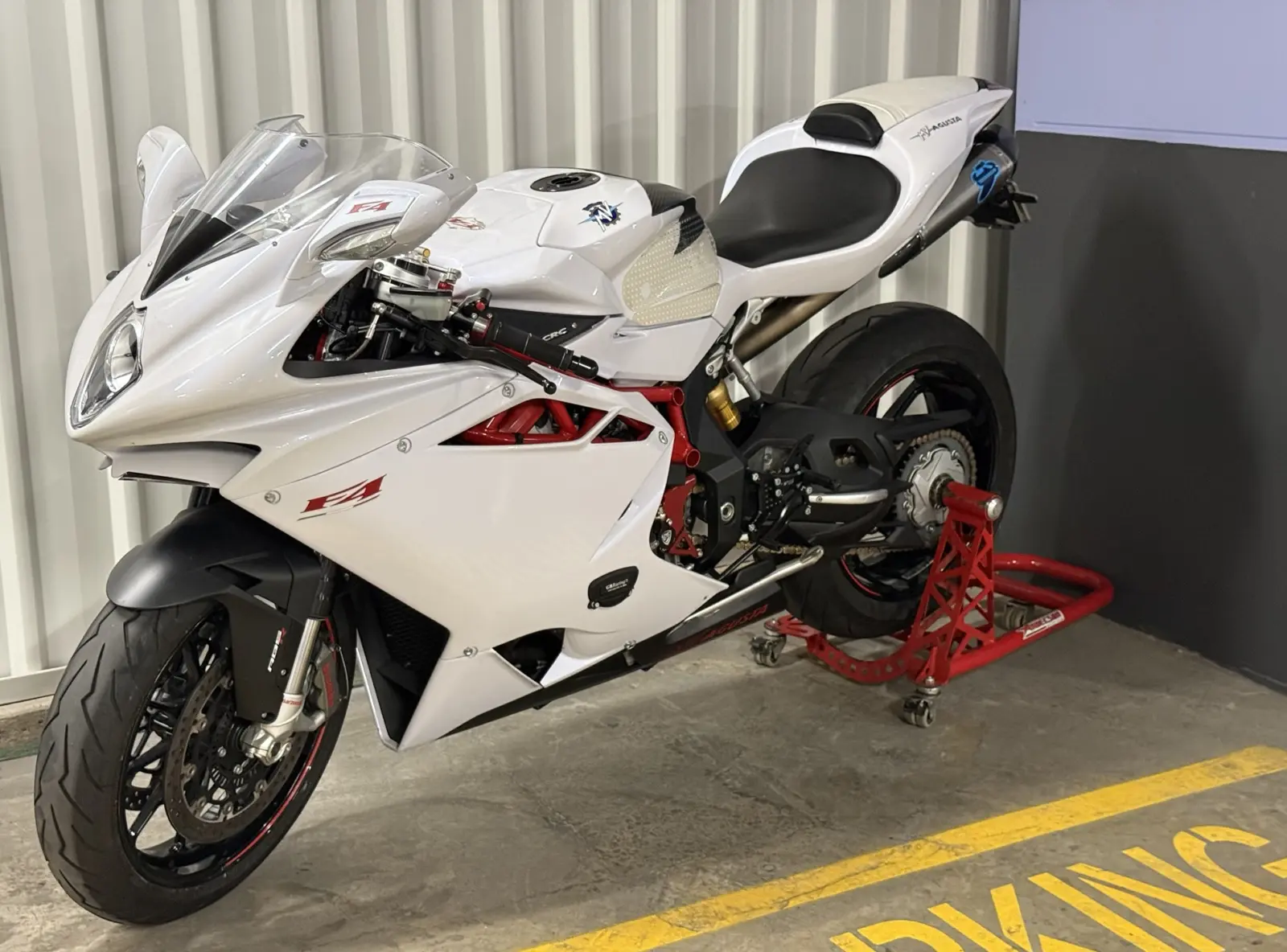
Book the MV Agusta F4. Pick your dates and book the MV Agusta F4 online, or call us and we will sort it with you.
Book NowCall 0468 011 118Trail braking sounds like a racing term, but it describes something most riders do without naming it: carrying a little brake into the start of a corner and easing off as the bike leans in. Used well, it helps the bike settle into a bend. Used at the wrong moment, on the wrong surface, it can unsettle a bike quickly. This guide explains the technique, shows how it applies to the hills and bends near Oberon and sets out when it is better to leave it alone.
Still choosing a bike? Start with our guide to motorcycle hire in Sydney, which sets out the licence, age and pillion rules.
What trail braking means and why it matters
Trail braking is the practice of keeping light pressure on the brakes as you enter a corner, then releasing that pressure gradually as the lean angle builds. The name comes from the way the braking force trails into the bend rather than being finished in a straight line before you turn. The result, when it is done smoothly, is a bike that drops weight onto the front tyre and turns in with a settled, willing feel.
The technique matters most on bends where you need to slow for a tight radius but do not want to stand the bike up mid-corner. A rider who finishes all their braking before the turn-in often has to add lean and throttle at the same time, which can make the bike feel busy. Carrying a small amount of brake into the start of the turn keeps the front end loaded and the line tidy.
It is also a technique that calls for restraint. Trail braking is not a licence to grab the front lever mid-bend. The pressure needs to be light, progressive and finished well before the apex, so the bike has a clear transition from braking to accelerating.
Setting up the entry on the Oberon road
The roads around Oberon offer a mix of open sweepers and tighter, shorter bends, often with changes in camber and crests that hide what is coming. Before you enter a corner, read the radius, look for the exit and decide how much speed you need to lose. Most of that speed should come off in a straight line, leaving only a small amount of brake to carry into the turn.
Your entry speed should be one you can hold comfortably through the whole bend. If you feel you must brake hard to make the corner, the entry was too fast, and no amount of clever technique will fix it. Slow earlier, settle the bike and let the trail braking be a finishing touch rather than the main event.
Watch the weight of the bike as you approach. Braking shifts weight forward, which firms the front and helps the bike turn in. Be aware that a rear wheel that lightens too early can cause the bike to feel light and unstable, so apply the rear brake lightly, if at all, and keep the bike balanced through the transition.
Releasing the brake as the lean builds
The release is where trail braking is won or lost. As you lean into the corner, ease the brake lever or pedal off in a smooth, even motion, so that by the apex the bike is free of braking and ready to accept power. Think of the release as a gradual handover from the brakes to the throttle rather than an abrupt switch.
The timing depends on the bend. On a long, open sweeper you can hold a light touch of brake for longer, while on a short, tight corner the release needs to happen earlier. Pay attention to how the bike feels, and let the feedback guide the amount of pressure you keep on the lever.
Once the brake is released, roll the throttle on progressively. Opening too fast can push the bike wide and unsettle the line, while a steady, measured roll keeps the bike composed through the exit. A smooth exit is the sign that the trail braking was done well.
- Brake in a straight line first
- Keep the pressure light as the lean builds
- Release smoothly before the apex
- Roll the throttle on once the bike is settled
When to leave trail braking alone
Trail braking is not the answer to every corner. Wet surfaces, loose gravel and worn patches of bitumen all reduce the grip available to the tyres, and any braking mid-bend on these surfaces can cause the front to slide. In those conditions, finish your braking in a straight line, slow more than you think you need to and enter the bend with a conservative line.
Unfamiliar roads are another reason to hold back. If you do not yet know the camber, the surface or the way a particular bend tightens, the safest choice is to brake fully before the turn and wait until you can see the exit clearly. Learning a road in stages gives you the experience to add trail braking later, once the surface and layout are predictable.
Blind crests and bends with traffic approaching in the opposite lane are also poor places to experiment. The priority is always to keep the bike in control, see what is coming and have room to react. If your concentration is split, leave trail braking out of the picture and keep your inputs simple and smooth.
Choosing the MV Agusta for braking practice
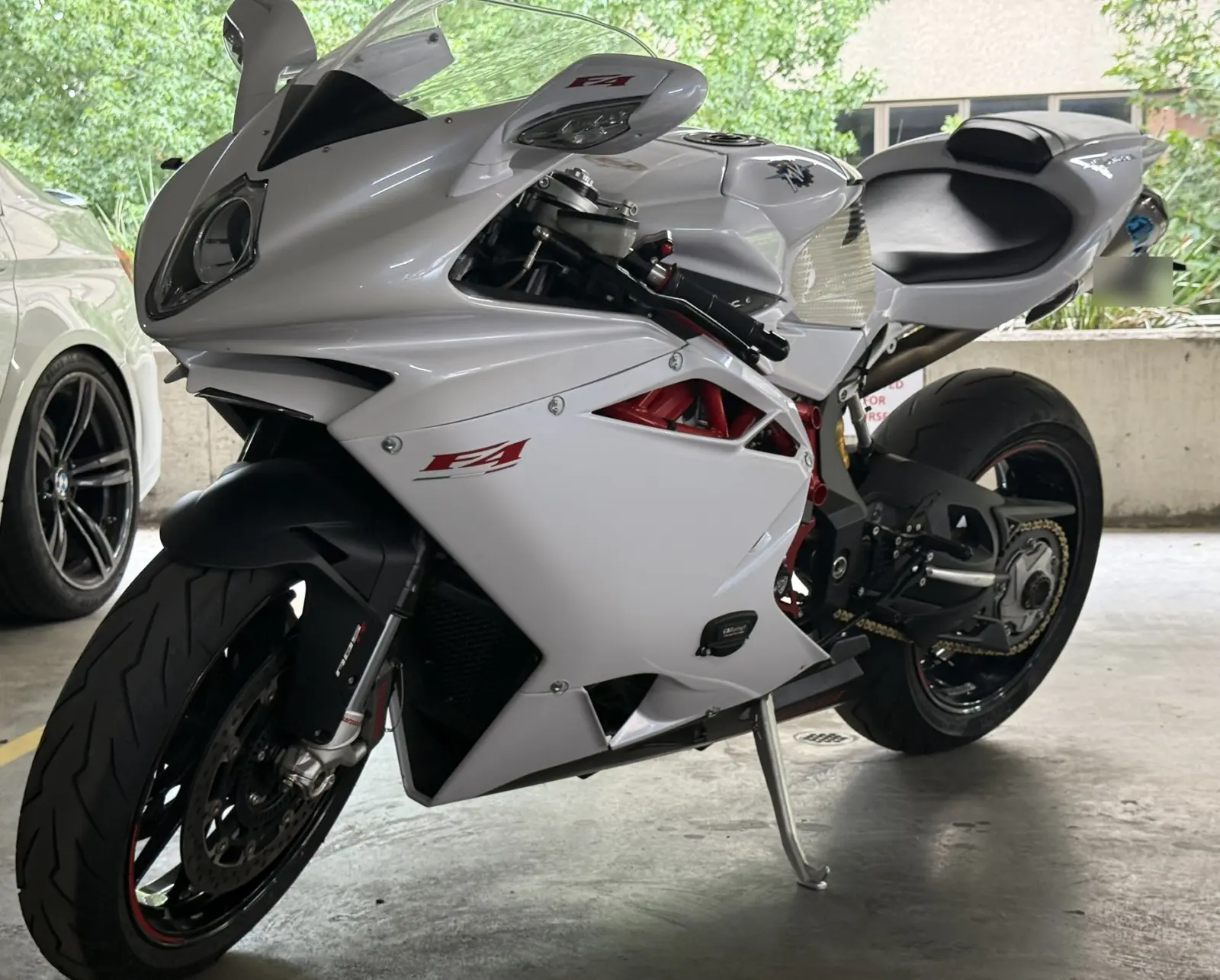
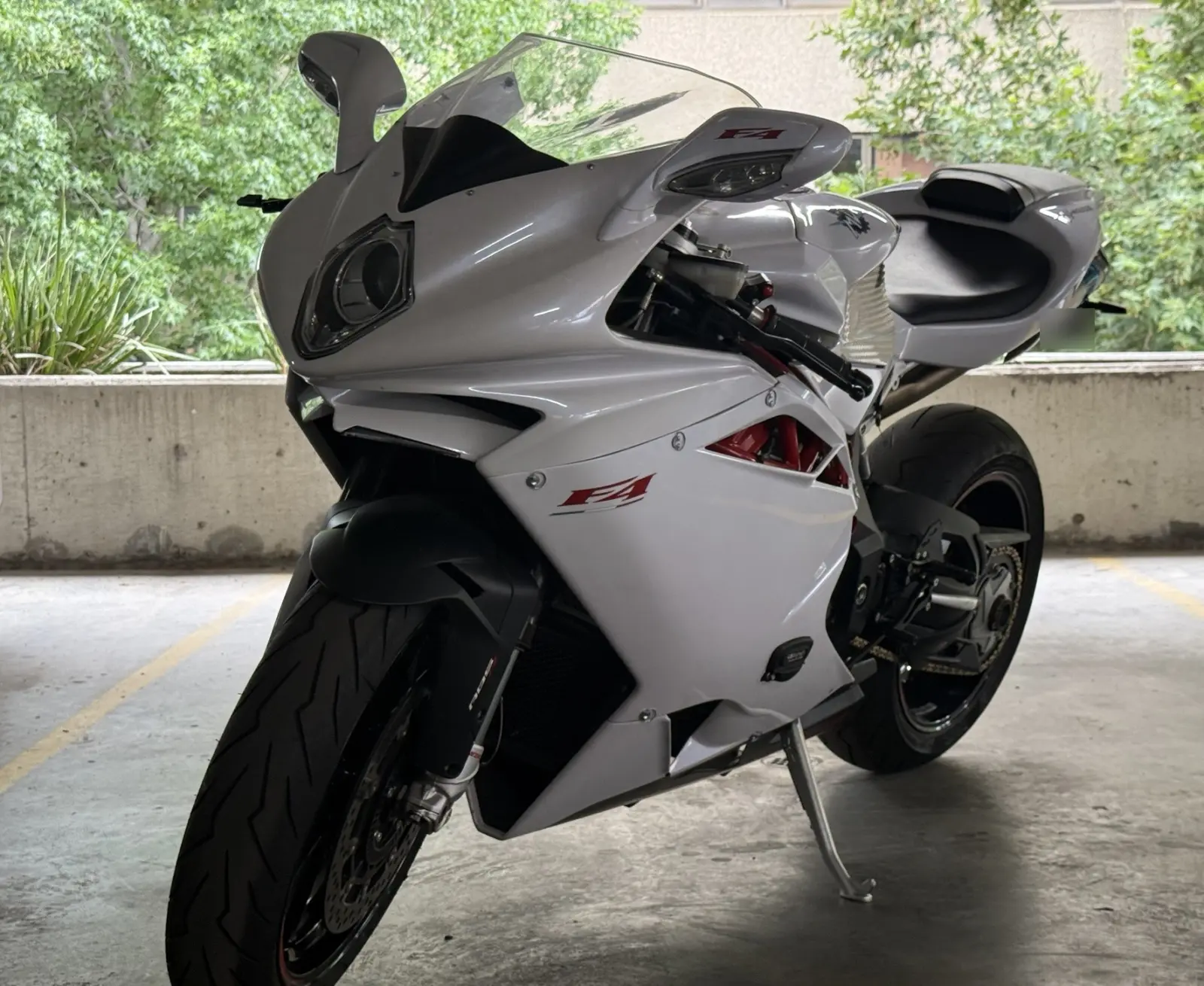
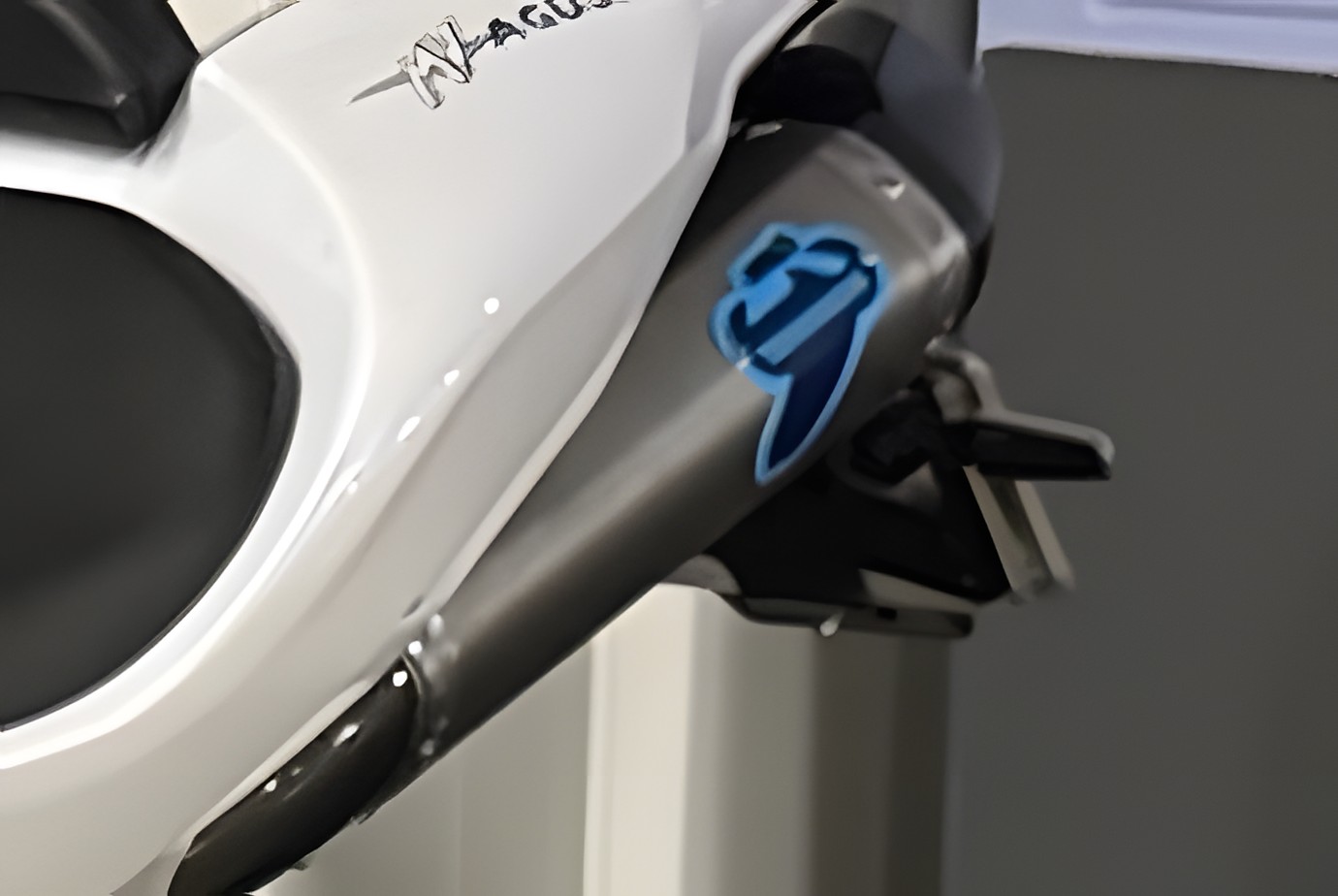
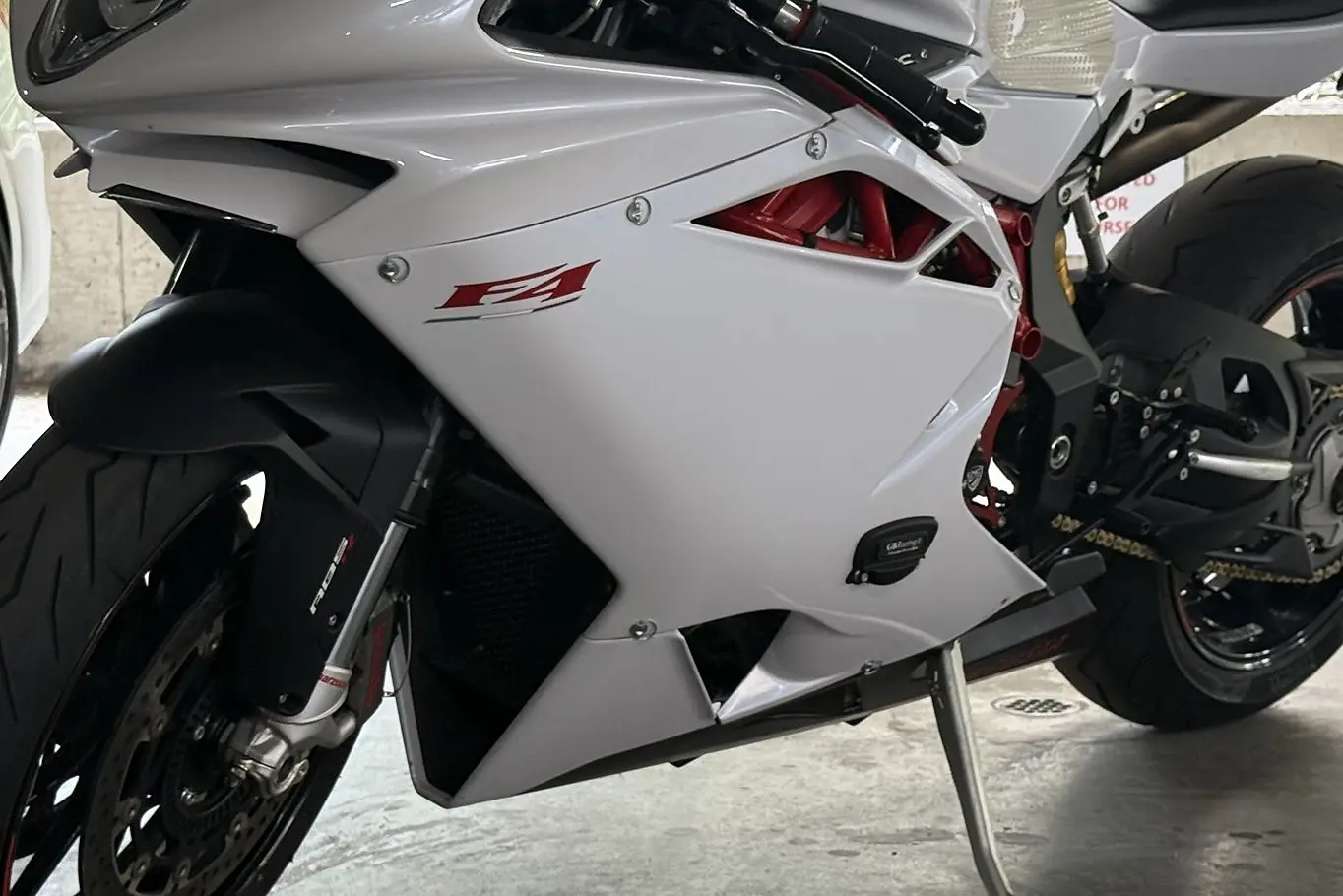
The MV Agusta F4 is a bike that responds well to precise inputs, which makes it a useful tool for learning how trail braking feels. It is a 998cc inline four with a pearl white finish and a red trellis frame, and its performance exhaust gives clear feedback through the throttle and brakes. A rider who wants to understand how the bike reacts to changes in load will find the F4 very informative.
Because the F4 is a powerful machine, the lesson is to keep braking pressure modest and the throttle roll-on gentle. Power is best used after the bike is settled, not during the braking phase. Practising on quiet, familiar roads lets you explore the technique without the pressure of traffic or unknown surfaces.
The F4 is built for experienced riders. If you are still learning the basics of braking in a straight line, spend time on those fundamentals first. Once they are second nature, the F4 gives you an excellent platform to refine trail braking, and our team can talk you through whether it suits your experience.
A practice routine for quieter roads
Build the skill in stages. Start with straight-line braking to a set point, then practise the same stop with a slight turn at the end. Move on to a gentle bend, using a light touch of brake at the turn-in and releasing it as the lean builds. Repeat each stage until the transition feels natural and the bike feels settled throughout.
Choose your practice roads carefully. A long, open road with clear visibility, a good surface and little traffic is ideal. Avoid crests, shaded corners and anywhere gravel or water is likely to sit. Early starts help, since our bikes cannot leave their overnight storage before 6am, and the first light usually brings the quietest roads.
End each session while you still feel focused. Long practice sessions can lead to tired hands and wandering attention, and both undo the progress you have made. Short, deliberate sessions build better habits than long, distracted ones.
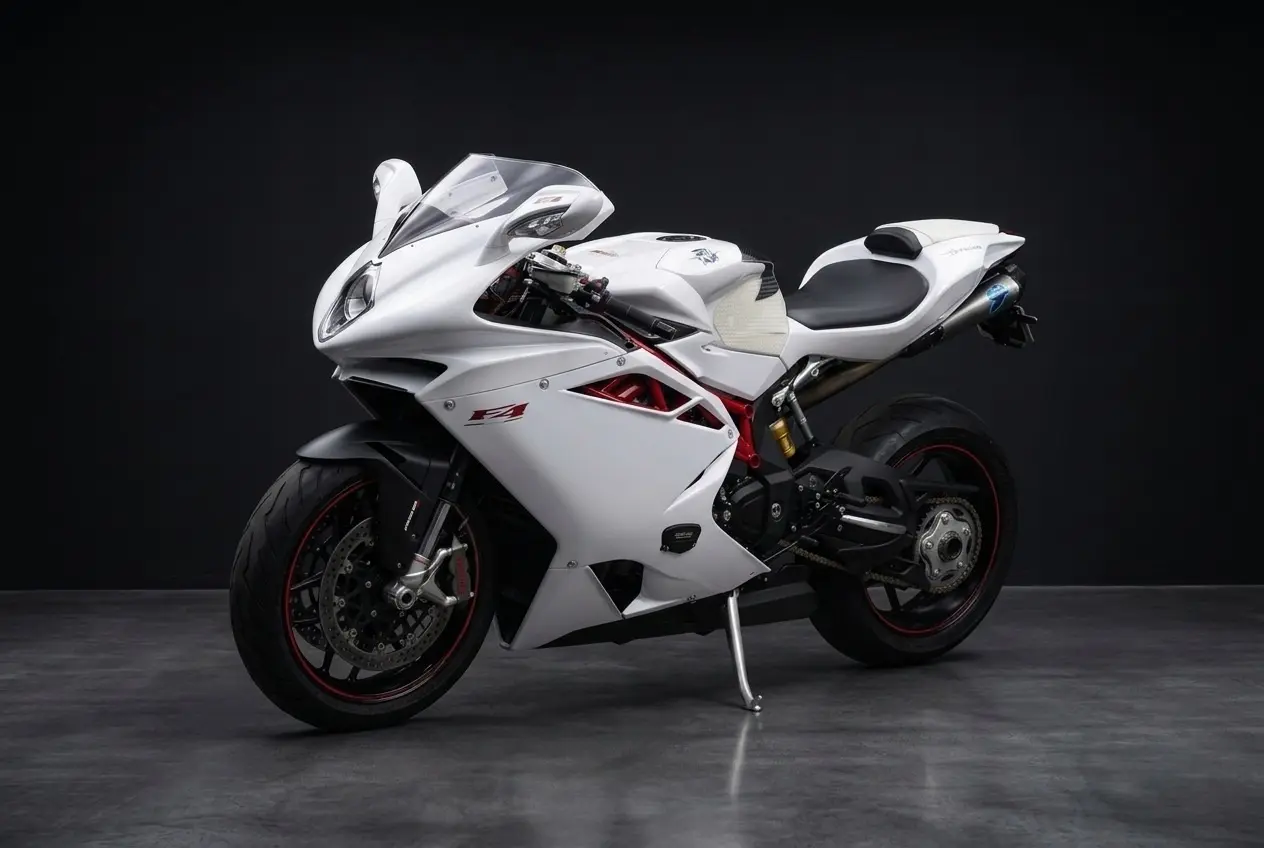
Want the MV Agusta F4 for your date? Pick your dates and book the MV Agusta F4 online, or call us and we will sort it with you.
Book NowCall 0468 011 118Season, traffic and stops on the Oberon road
Autumn and spring are the most pleasant times to practise on the Oberon road. Temperatures are comfortable, the surfaces are usually dry, and the landscape is at its best. Winter brings frost and damp corners, and summer can bring heat and sudden storms, so check the conditions before you set out.
Traffic varies by day. Weekday mornings tend to be quieter, while weekends bring touring vehicles, caravans and visitors to the towns and lookouts. Plan practice for quieter periods and keep your following distance generous, since a rider concentrating on a braking technique needs room to make smooth inputs.
Fuel and food stops are spaced out along the road, so top up before you leave the larger towns. A simple café stop, a bench at a lookout or a shaded spot for water all give you a chance to reset your focus. Carry a light snack and plenty of water, especially on warm afternoons.
Hire terms for a practice day
Three hire points are worth knowing before a practice day. Your licence has to be a full motorcycle one that you have carried for at least three years, and you need to be 25 or older to take any of our bikes out. For kit, you can hire gear by the day for each person or turn up in your own. Bikes are self-drive from our Parramatta base and hire runs for a minimum of three days, which gives you room to practise without rushing.
Using the hire period well makes a real difference to your progress. Spread your practice across several days, starting with the basics on the first morning and refining the technique as your confidence grows. Rest between sessions and avoid overloading your concentration.
If you have questions about the terms, talk to our team before you book. We can help you plan a practice route and choose the bike that suits the skills you want to develop.
Safety while learning to trail brake
Gear is the first line of defence. A helmet that fits well, gloves with good grip, a jacket with armour and boots that protect the ankle reduce the risk of injury if the front slides or the bike goes down. Choose clothing suited to the weather, since heat and cold both affect concentration.
Fatigue and frustration are the biggest threats to a learning session. If you find yourself braking harder or chasing the feeling of a perfect corner, take a break. Stop, stretch, drink water and return to straight-line braking to reset your inputs.
Wildlife is active around dawn and dusk on country roads, and gravel and damp patches can gather on the shoulders of bends. Keep your speed measured, watch the verges and never ride after drinking alcohol. Ride within your ability, and remember that a smooth stop is always more valuable than a clever corner.
- Practise straight-line braking first
- Keep braking light and progressive
- Avoid trail braking on wet or gravelly surfaces
- Stop when your concentration fades
Book the MV Agusta for your next practice day
Trail braking rewards patience, quiet roads and a clear understanding of what the bike is doing. Build the skill slowly, respect the surface and let the technique become a natural part of how you ride.
If you are ready to refine your braking on the open roads near Oberon, look at the MV Agusta F4 on our site and choose your dates. We will confirm the details with you before the day and talk through the route, the practice spots and the gear you need. You can see the full line-up on our fleet page.
When the practice day is in the diary, book the MV Agusta F4 and we will have it prepared for your start. Ride with care, brake with a light hand and enjoy the road.
Frequently asked questions
What exactly is trail braking?
Trail braking means keeping light pressure on the brakes as you enter a corner, then easing off gradually as the bike leans. It helps keep weight on the front tyre during the turn-in, which can make the bike feel settled. It should be done lightly and finished well before the apex, and it is a technique that builds over time with practice.
Is trail braking safe on the Oberon road?
It can be, when the surface is dry, the visibility is good and the bend is one you know well. On wet, gravelly or unfamiliar corners, it is safer to finish braking in a straight line before the turn. Blind crests and corners with oncoming traffic are poor places to experiment. Build the skill gradually on quieter roads first.
Which Drive Tribe bike suits practice on bends?
The MV Agusta F4 responds well to precise inputs, so it is useful for understanding how a bike reacts to changes in braking. It is a powerful machine for experienced riders, so keep your inputs modest. The Yamaha MT-09 SP is a more approachable option for riders still building their basics, with strong brakes and premium adjustable suspension.
How do I know when to stop trail braking?
Stop once the bike is leaning and you can feel it settle. The brake should be fully released before the apex, so the bike can accept throttle on the way out. If the bike feels unsettled, or the front feels as if it might slide, release the lever and let the bike find its line. Practise the release on straight roads before using it in bends.
Do I need to check road conditions before riding the Oberon road?
Yes. Check road conditions with Transport for NSW before leaving, since roadworks, closures and weather can change the route at short notice. Also look at the surface on the morning of your ride, as frost and damp patches can make the braking technique much less forgiving.
Can I practise trail braking on a bike I have not ridden before?
It is better to learn on a bike you know well. Spend time on straight-line braking and gentle bends first, so the feel of the machine is familiar. Once you understand how the bike responds, you can start to add trail braking in small, careful steps. Speak to our team if you want help choosing a bike for your practice.
Ready when you are. Pick your dates and book the MV Agusta F4 online, or call us and we will sort it with you.
Book NowCall 0468 011 118