

Book the Ducati 1199R. Pick your dates and book the Ducati 1199R online, or call us and we will sort it with you.
Book NowCall 0468 011 118Every few kilometres on a New South Wales road, a sign tells you something about what is coming. The posted limit steps down as the houses appear, a chevron board warns of a sharp curve and a roadworks sign flags a narrowed lane. For a rider these signs are cues to read, not numbers to chase. This guide shows how to use the signs you pass to anticipate bends, towns and hazards, so your attention stays on the road ahead.
Still choosing a bike? Start with our guide to motorcycle hire in Sydney, which sets out the licence, age and pillion rules.
Why signs are a reading tool, not a target
Road signs are written for every driver on the road, but a motorcycle rider gets more from them than most. A sign that a car driver glances at on the way past becomes, for a rider, a clue about the lean angle you will need, the surface you may find and the vehicles you are likely to meet. Treating each sign as information to be understood, rather than a box to be ticked, changes the whole feel of a ride.
The mistake to avoid is treating a posted limit as a goal. The limit is the most that is allowed in ideal conditions, and it says nothing about whether the bend ahead is clear, whether the surface is wet or whether a farm vehicle is about to pull out. A rider who fixes their attention on the sign rather than the road is looking in the wrong place, and the speed on the dash tells them very little about what the next corner holds.
Our approach is simple. Let each sign prompt a question: what is this telling me about the road in the next few hundred metres? Once you have an answer, adjust your attention, your position and your gap to traffic. The sign is the start of the thinking, not the end of it, and that habit builds a rider who is calm, unhurried and steadily more capable over time.
What a change in the posted limit tells you
A posted limit that drops as you approach a built-up area is one of the clearest signals on any NSW road. It usually means houses, shops, side streets and pedestrians are close by, and that the road is about to become more crowded and less predictable. Ease your attention outward, scan for people on footpaths and drivers pulling out of driveways, and be ready for the surface to change as the road takes on urban wear.
A limit that rises again after a town is also worth noticing. It tells you that the built-up section has ended, but it does not mean the road ahead is clear. Many rural approaches still hold slow tractors, cyclists and horse riders, and a sudden return to open road often hides a bend or a rise that was not visible from the town. Use the change as a prompt to re-check your lane position and your sight lines.
School zones and seasonal signs deserve special care. They appear at predictable times, and they tell you that children may be near the kerb or crossing the road. On a weekday morning or afternoon, treat these stretches as a time to lift your head, check the verges and keep a clear space around you, because the signs are only useful if you act on what they are asking of you.
Signs that warn of curves and junctions
Chevron boards and curve warning signs are the most valuable early clues for a rider. A chevron board on the outside of a bend shows the direction of the turn, and a row of them tells you the curve is sharper or longer than a single sign suggests. Read the direction and the number of boards together, then decide where your braking and your line should begin.
Advisory speed signs sit beneath some curve warnings and suggest a sensible pace for the bend. Treat them as a useful guide to how tight the corner is, not as a target to hit. They are set with dry, daylight conditions in mind, so wet weather, shade or fallen debris can make a bend feel very different on the day, and you should be prepared to ride it more slowly.
Junction signs and give way markings warn you that traffic may enter the road from the side. Gravel or mud at the edge of a junction is a common hazard after rain, and vehicles pulling out may not see a motorcycle as quickly as you would like. Slow earlier, keep your head moving and be ready to brake gently if a car begins to edge forward.
Towns, villages and the moment the road opens up
Village entrances often arrive without much warning on the quieter roads that run through the hills and valleys of the region. The first sign may be a modest name board, followed by a change in the surface, a narrowing of the lane or a pedestrian crossing hidden behind a bend. Scan for these features as you enter, and treat a village as a place where life happens at a slower, less predictable pace.
Leaving a village is equally important. Riders often relax as the last buildings fall away, but this is exactly when a driver pulling out behind you may choose to overtake, or when a rise and bend appear that could not be seen from the centre of town. Keep your lane position steady, check your mirrors and hold back from any overtaking manoeuvre until the road ahead is clearly open.
Towns along the Windsor and Richmond corridor and the approaches to the Hawkesbury have their own rhythm. Traffic can build quickly on a weekend morning, and cafes and lookout stops attract a steady flow of cars and tour vehicles. Plan your pace around these stops, and keep a bit more space than usual when a car is indicating to pull into a parking bay.

Roadworks, lane changes and reduced visibility
Roadworks signs are among the most important on any ride, because they tell you that the road surface, the lane width and the traffic pattern are all about to change. Expect loose material, painted lines that are slippery when fresh, and temporary barriers that narrow the space you have to work with. Begin to slow earlier than you normally would, and keep the bike upright over any fresh seal or uneven edge.
Lane changes and merging signs ask you to move the bike into a different position, often with little room for error. Check your mirrors and your blind spot, make the movement smoothly and avoid sudden corrections halfway through. A calm, deliberate lane change at a steady pace is far safer than a rushed one made because the lane has suddenly ended.
Reduced visibility signs, such as those for fog or heavy rain, mean the road ahead may not be clear for long stretches. Use the sign as a reason to lower your pace, increase the distance to the vehicle in front and turn on your lights. If you cannot see far enough to stop safely, the sign is telling you to wait, not to press on.
Want the Ducati 1199R for your date? Pick your dates and book the Ducati 1199R online, or call us and we will sort it with you.
Book NowCall 0468 011 118Using the Ducati on a road full of changing signs
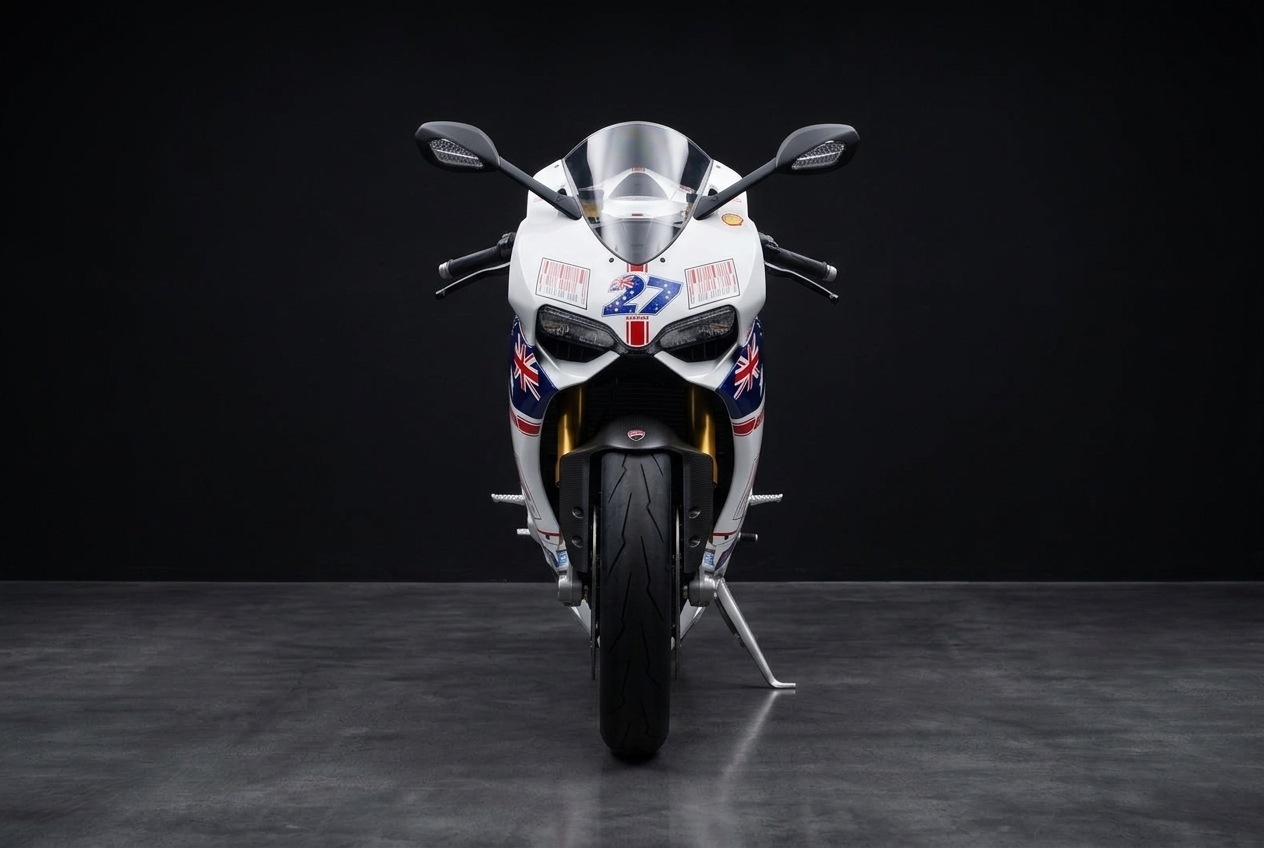
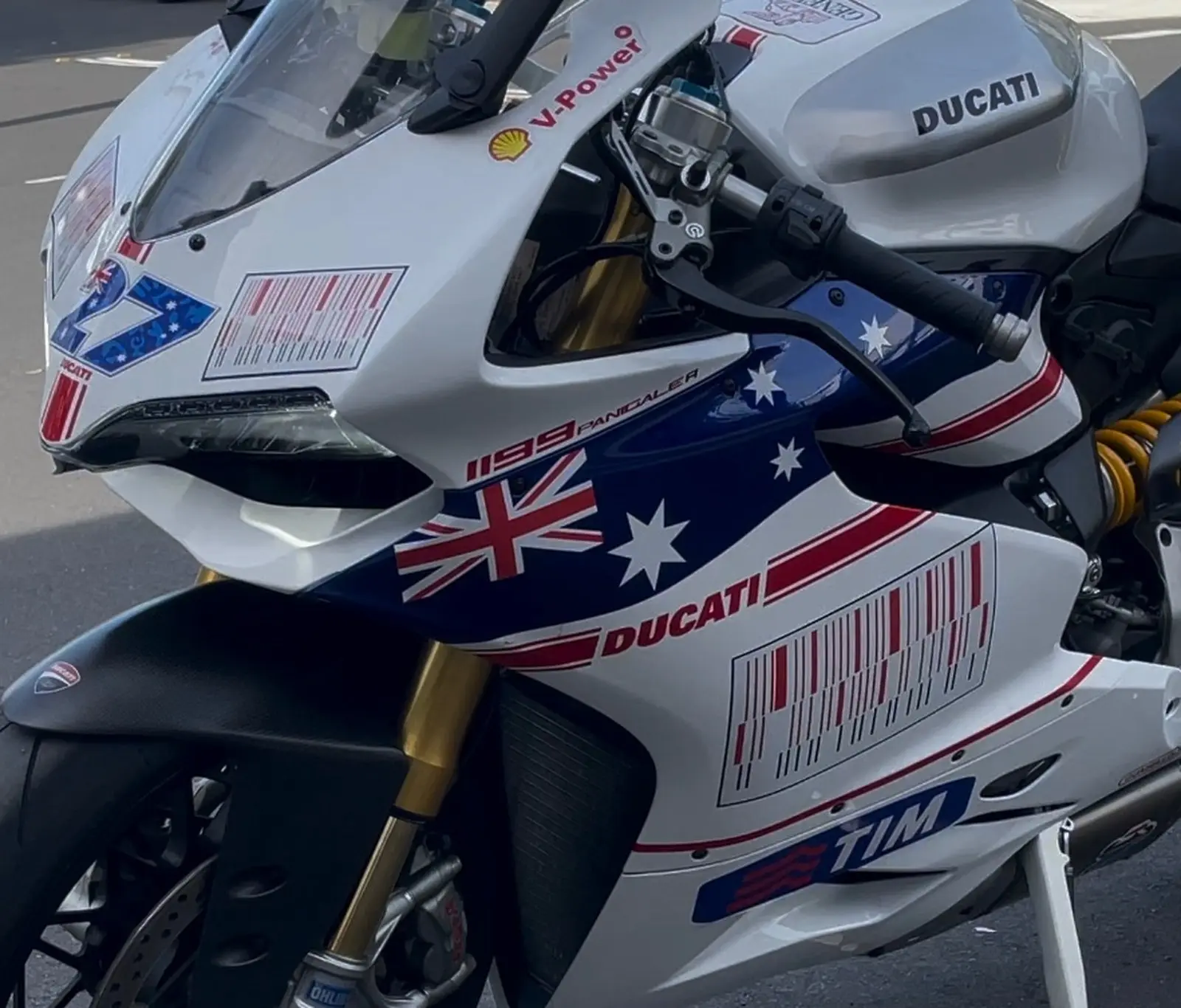
The Ducati 1199R is a superbike for experienced riders, and its character suits a rider who reads the road carefully rather than one who relies on a single number. Its V-twin and 143 kW of power make it a bike that rewards smooth, well-timed inputs. On a road with many changing signs, that means slowing early, settling the bike upright and letting the power come back in steps as the road opens.
The gold front forks and black forged wheels give the bike a planted feel on the road, which helps when the surface changes from smooth sealed tarmac to a patch of worn or cold asphalt. Pay particular attention to the transitions between surfaces, because the bike is most sensitive when you move from one grip level to another. Keep the inputs gentle and let the bike show you what the road is offering.
The bike is not the only way to approach this type of riding, and the Yamaha MT-09 SP is a good alternative for a rider who wants an upright position and premium adjustable suspension on a road with many towns. Whichever bike you choose, the principle is the same: the signs are the start of a plan, and the bike is the tool that carries it out.

Best time of day, season, fuel and food stops
Early weekday mornings, once it is fully light, are the easiest time to practise reading signs on a rural road. Traffic is light, the school run is over, and you can spend more attention on the signage without a crowd of vehicles behind you. Afternoons in the hinterland often bring heavier tourist and weekend traffic, so plan your harder sections for the quieter parts of the day.
Autumn and spring are the most comfortable seasons for this kind of ride. Winter brings shorter days and damp mornings, and fog can settle in the valleys, which makes the reduced visibility signs more relevant. Summer afternoons can be hot and busy, and the bike and the rider both benefit from an early start with plenty of water.
Fuel and food stops are part of the reading routine. Fill up before you leave the outer suburbs, because the rural stretches can be a long way between service stations. Stop at a clear, safe pull-off with good sight lines for your lunch, rather than in a town centre where parking is tight. A short break gives you time to review the route you have just ridden and to notice which signs you missed.
Safety, fatigue and the hire terms that apply
Protective gear makes a real difference when you are scanning a changing road. A well-fitted helmet, a jacket with armour, gloves, boots that cover the ankle and motorcycle trousers all matter, and you should feel comfortable enough to keep your head up and your eyes moving. Fatigue reduces the amount of attention a rider can give to signs, so take a short break every hour or so and step away from the bike before you start to feel distracted.
Wildlife is a constant concern on rural roads, particularly around dawn and dusk when kangaroos and wallabies move toward the verges. Treat the signs for animals as an instruction to slow down and scan the grass, and remember that a dusk ride needs a wider margin than a midday one. Carry water, watch for fallen branches after storms and do not ride after drinking alcohol.
Bikes are self-drive from our Parramatta base, and the minimum hire is three days. You must hold a full motorcycle licence for at least 3 years and be aged 25 or over on every bike. Helmets (Shark, AGV or Bell) can be hired from us in small, medium or large for $50 per hire, or you can bring your own. We do not supply jackets, gloves, pants or boots, so bring your own riding gear. Riding 30 km/h or more over the posted limit ends the hire and the bond is forfeited, and we may end a hire if we judge a rider unsafe.
Before the first fuel stop, have a look at Transport for NSW for anything that might affect the route.
Reading the road for your next ride
Good sign reading comes from practice, and the most useful practice is on a route you know well. Ride it once with the sole purpose of noticing every sign, then ride it again and check how many of the changes you anticipated. Over a few weekends this exercise makes reading the road feel automatic, which frees your attention for the things that matter most.
When you are ready to try the approach on a bike built for focused, well-timed inputs, the Ducati 1199R is available from our fleet. Use the Book Now button on this page to reserve it, and plan the route with the signs in mind before you set out. The best rides are the ones where you notice the warning long before it becomes a problem.
Frequently asked questions
Are posted speed limits a target for riders to aim for?
No. The posted limit is the most that is allowed in ideal conditions, and it does not tell you whether a bend is clear, the surface is wet or a vehicle is about to pull out. Use signs as cues about what is ahead, then adjust your attention, lane position and gap to traffic. Treating the sign as a starting point for thinking keeps you safer than watching a single figure.
What is the most useful sign for a rider to notice?
Chevron boards and curve warning signs are among the most valuable, because they show the direction and sharpness of a bend before you reach it. Read the number of boards together with the direction, then decide where your braking and your line should begin. Advisory signs beneath the warning add useful context, though they assume dry, daylight conditions.
Why do I need to watch the edges of a town?
Villages and towns bring pedestrians, cyclists, driveways and side roads close to the carriageway, and the road surface often changes without much warning. Entrances and exits are where drivers are most likely to pull out or overtake unexpectedly. Keep your lane position steady, scan the footpaths and hold back from overtaking until the road ahead is clearly open.
Should I slow down for every sign I pass?
Not automatically. Slow when a sign tells you something about the road ahead, such as a sharp bend, roadworks, a junction or reduced visibility, and keep a steady pace where the road is clear. Constant braking for every sign unsettles the bike and distracts you, so the aim is to plan calmly rather than react to each change.
How often should I take a break on a rural ride?
A short break roughly every hour helps keep your attention sharp, especially on rural roads where signs are spread out and the stretches between them are long. Stretch your shoulders and wrists, drink water and check your route. Tiredness reduces how well you read signs, so a break is part of the riding routine rather than an interruption to it.
What is the best time of day to practise reading signs?
Early on a weekday, once it is fully light, is usually the best time. Traffic is lighter, the school run has finished and you have room to notice the signage without a crowd of vehicles behind you. Afternoons in the hinterland can be busy with tourists, so save the more demanding sections for the quieter parts of the day.
Ready when you are. Pick your dates and book the Ducati 1199R online, or call us and we will sort it with you.
Book NowCall 0468 011 118