
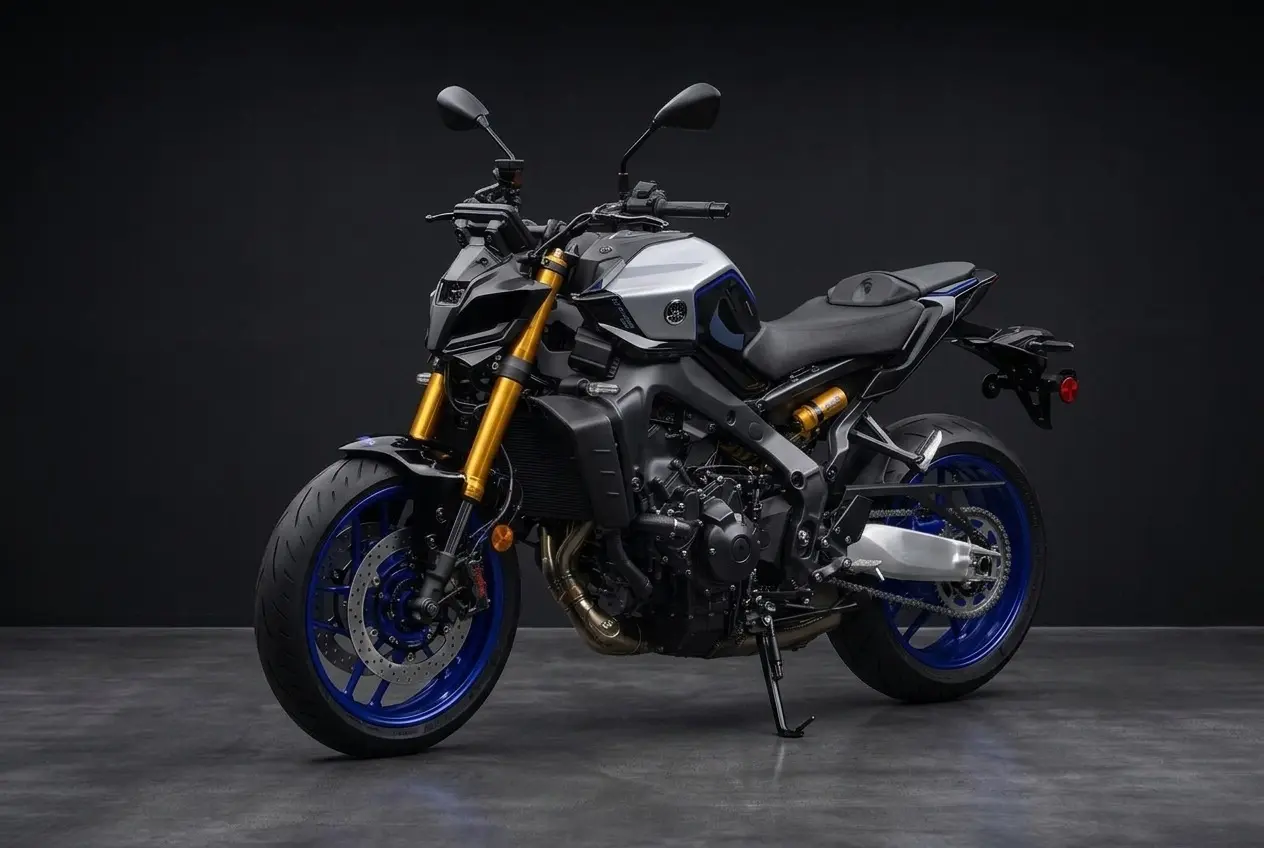
Book the Yamaha MT-09 SP. Pick your dates and book the Yamaha MT-09 SP online, or call us and we will sort it with you.
Book NowCall 0468 011 118Rain changes everything about stopping. Painted lines turn to glass, oil lifts off the road and the car in front brakes just as the sky opens. The Yamaha MT-09 SP has strong brakes and a planted feel, but no bike can stop faster than the tyres allow. This guide explains why wet braking takes longer than most riders expect, how to read traffic in the rain and how to leave the space that gives you a real chance to react.
Everything to know before you book, from the licence rules to the bond, is on our Sydney motorbike hire page.
Why wet roads lengthen every stop
Braking depends on how much grip the tyres can find, and water reduces that grip sharply. A thin film of rain sits between rubber and road, and the tyres must work hard to push through it before they can bite. Until they do, the bike keeps travelling forward, and the distance it covers before slowing grows noticeably. Riders who have only braked on dry bitumen are often surprised by how much longer the stop takes in rain.
The first rain after a dry spell is the most treacherous. Oil and dust that have built up on the road mix with the water and form a slick layer that can feel fine one moment and greasy the next. Intersections, painted lines, bridge decks and manhole covers are the usual trouble spots in Sydney traffic, and they often appear right where traffic is already stopping and starting.
Good stopping in the wet is less about hard braking and more about planning. Smooth, early inputs keep the tyres working, while sudden grabs of the lever can lock the wheel and send the bike sideways. Treat the road as slippery from the first drop of rain, and you will be ready when the traffic ahead moves unpredictably.
The MT-09 SP's brakes and how to use them
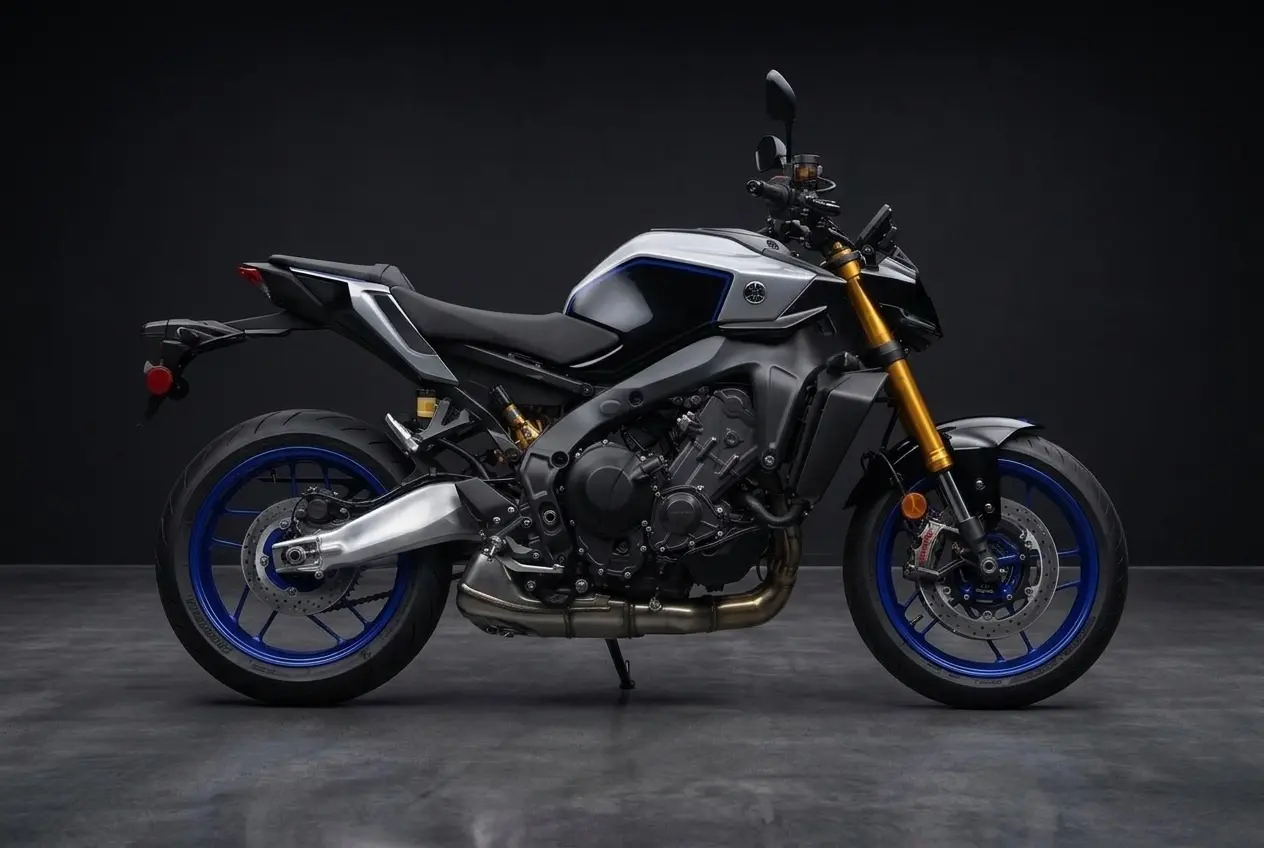
The MT-09 SP has strong brakes, and they give a rider plenty of stopping power on a good surface. That power is only useful when it can be applied smoothly. In the wet, squeeze the front lever progressively and ease off a touch if you feel the front begin to slide. Use the rear brake to help settle the bike, and keep the bike upright while you slow, because braking in a lean asks more of the tyres than they can give on a slippery road.
Premium adjustable suspension helps keep the bike composed under braking. When the weight moves forward, the front settles and the rider gets better feedback through the bars. Pay attention to that feeling, because it tells you how the tyre is coping with the surface beneath it.
Gold front forks look good, but they do not add grip. What matters is the rubber on the road, and the way you ask it to work.
Reading Sydney traffic in the rain
In rain, traffic behaves differently. Drivers brake earlier, increase their following distance and sometimes slow sharply for no obvious reason. Watch the brake lights of several vehicles ahead rather than just the car directly in front, because a ripple of braking often travels back through the queue. Anticipating those ripples gives you the time you need to ease off gently.
Look for signs of trouble before they reach you. Spray lifting from a truck, cars slowing down on a rise or drivers pulling wide to avoid a puddle all tell you that the road is worse than it looks. Riders who scan ahead in this way tend to make smaller, calmer adjustments rather than late emergency stops.
Remember that drivers may not see you clearly in the rain. Keep your lights on, position yourself so you are visible in the mirrors, and avoid sitting in a vehicle's blind spot for longer than necessary.
- Watch several vehicles ahead, not only the one in front
- Note spray from trucks as a warning sign
- Ease off early when traffic starts to bunch
- Keep lights on and stay visible in mirrors
Leaving the space that buys you time
The most effective safety tool in wet traffic is space. A generous gap to the vehicle in front gives you time to notice a change, decide on a response and brake smoothly without locking the wheel. Many riders aim for a longer gap in the wet than they would leave in dry weather, and they increase it further when the road is painted, shaded or near a crossing.
Space also protects you from the vehicle behind. Where possible, avoid sitting directly behind a large vehicle, because its spray and its shadow can reduce your view. Choose a position that lets you see the road ahead and keeps you clear of any hazard the larger vehicle may be about to pass.
Think of space as a margin you can always adjust. If the traffic opens up, you can move closer again. If it slows, the extra room is what allows you to stop calmly.
The same logic applies at a set of lights in the wet. Stop with a generous gap, keep the bike upright and avoid sitting on painted arrows or lines where grip can be poor. When the light changes, pull away smoothly rather than snapping the throttle, because a sudden spin of the rear in the wet can catch a rider out just as traffic begins to move.
Sydney routes where wet braking gets tested
Many inner-city routes combine stop-start traffic, painted lines, tram tracks, rail crossings and busy intersections. Each of these demands careful braking in the wet. Keep your braking in a straight line where you can, and avoid braking across painted arrows or lines, which can be very slippery when rain first arrives.
Arterial roads leading out of the city can be quicker, but they often carry heavy vehicles, sudden lane changes and surfaces that wear unevenly. Expect the road to change between the wheel tracks and the centre of the lane, and be cautious when the rain has only just started.
Check road conditions with Transport for NSW before you set off, particularly after heavy rain or when works are underway. Plan a route that suits your confidence, and be ready to change it if conditions worsen.
Want the Yamaha MT-09 SP for your date? Pick your dates and book the Yamaha MT-09 SP online, or call us and we will sort it with you.
Book NowCall 0468 011 118Tyres, pressure and what you can check
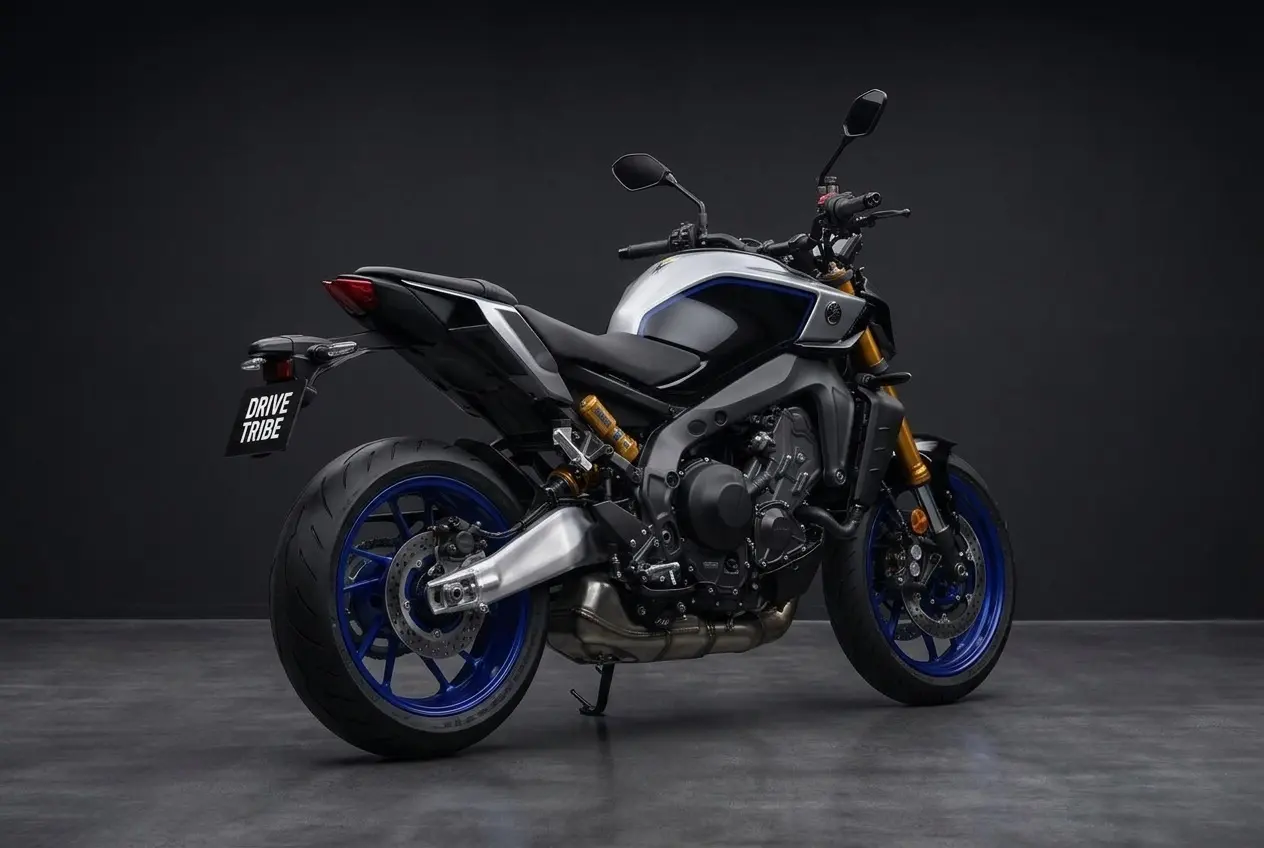
Tyres are the only contact with the road, so their condition matters more than any other part of the bike in the wet. Look for worn tread, cuts and uneven wear before you ride, and make sure the pressures are right for the bike. Tyres that are past their best lose their ability to clear water, and that loss shows up first under braking.
Keep an eye on the surface itself as well. Patches of repair, grey polished sections and metal covers can all carry less grip when wet. Approach these areas with a light touch on the brakes and a relaxed upper body, so the bike can settle naturally.
If you are unsure about the tyres or the brakes, speak to our team before you ride. We would rather check a concern early than have you discover a problem on a wet road.
Gear, visibility and staying composed
Wet riding is cold, and cold hands and shoulders make smooth braking harder. A waterproof jacket with armour, a certified helmet with a clear visor, gloves that keep your hands warm and boots that cover the ankle form the core of a sensible kit. Helmets (Shark, AGV or Bell) can be hired from us in small, medium or large for $50 per hire, or you can bring your own. We do not supply jackets, gloves, pants or boots, so bring your own riding gear.
Visibility is as important as grip. Keep your visor clean, and carry a cloth to wipe it when spray builds up. Rain can cloud a visor quickly, and a few seconds of blurred vision at a traffic light can be the moment a rider misjudges a gap.
Stay composed when traffic gets messy. Breathe slowly, keep your grip light and resist the urge to rush. Calm riding is the best way to manage the unexpected, and it leaves you more room to respond when something changes.
Hire terms for this ride
Before you hire, make sure you understand the basic requirements. Licence and age come first: a full motorcycle licence held for three years or longer, and a rider who is at least 25. The bikes are collected from our Parramatta base, and the hire period starts at three days. Passengers are welcome on the MT-09 SP only, and they must be aged 16 or older. Overnight, the bike must be kept in a locked garage or secure off-street parking between 9pm and 6am, so plan your return with that rule in mind.

Wet-weather riding and booking the MT-09 SP
Wet braking is a skill that improves with practice and respect. Start in light rain on quiet roads, build your awareness of how the bike responds and gradually take on busier traffic as your confidence grows. There is no shame in choosing a drier day for a longer ride, and in many cases that is the wisest decision.
The Yamaha MT-09 SP is a capable bike in the wet when it is ridden with patience. Its brakes and suspension give you the tools, and your judgement determines how well you use them. Keep that judgement honest by reviewing each wet ride with a simple question: where could I have left more space, and what would I do differently next time?
When you are ready, book the Yamaha MT-09 SP through its fleet page, or see the full range on the fleet index. Our team will help you choose the right bike and plan a route that suits the day.
Frequently asked questions
How much longer does the MT-09 SP take to stop in the rain?
Stopping distance grows in the wet because the tyres have less grip to work with. Exact figures depend on the road, the tyres and the rider, so there is no single number to rely on. The safest approach is to assume the stop will take noticeably longer and to leave a generous gap that gives you time to brake smoothly.
Should I use the front or rear brake in the rain?
Both brakes help, but the front provides most of the stopping power. In the wet, squeeze the front lever progressively and use the rear brake to help settle the bike. Avoid grabbing the lever, because a locked wheel can cause the bike to slide. Keep the bike upright while you slow, and ease off early if you feel the front begin to slip.
How far back should I stay behind a truck in the rain?
Stay well back from heavy vehicles, because their spray reduces your view and their braking distance is longer. Choose a position that lets you see the road ahead and keeps you clear of any hazard the vehicle may pass. Avoid sitting in a blind spot for long periods, and increase your gap if the road is painted or shaded.
What should I do if the bike starts to slide under braking?
Ease off the brake pressure gently and keep the bike upright. Avoid sudden movements of the bars and let the tyre regain grip before you reapply the brake. Look where you want to go, not at the hazard, and keep your body relaxed. Practise progressive braking on quiet wet roads so the response is familiar when you need it.
Are painted lines dangerous in the wet?
Yes, painted lines, arrows and road studs can be very slippery when rain first arrives. Avoid braking across them where you can, and approach them calmly if you must cross. Manhole covers and metal plates can also be slippery, so give them extra room and keep the bike steady over them.
Can I take a passenger in the rain?
Passengers are welcome on the MT-09 SP only, and they must be 16 or older. In the wet, a passenger should be briefed carefully, because their movements affect how the bike handles under braking. Ask them to sit still, hold on firmly and avoid leaning against you at stops. Consider a drier day for two-up riding if the forecast is uncertain.
Ready when you are. Pick your dates and book the Yamaha MT-09 SP online, or call us and we will sort it with you.
Book NowCall 0468 011 118