

Book the Ducati 1199R. Pick your dates and book the Ducati 1199R online, or call us and we will sort it with you.
Book NowCall 0468 011 118Picture leaving Parramatta on a clear weekday morning, the city thinning behind you and the first blue ridgeline rising ahead. Three days is enough to turn a single mountain run into a proper journey, with a lookout at every stop and a different road character on each leg. This plan covers the Great Western Highway, the winding Bells Line of Road and the quieter country back toward Sydney, with stops, rest points and a clear picture of what to expect on the way.
Still choosing a bike? Start with our guide to motorcycle hire in Sydney, which sets out the licence, age and pillion rules.
Day one: from Parramatta up the escarpment
The first leg follows the Great Western Highway west from Parramatta. The road runs through Penrith and Emu Plains, where the suburbs slowly give way to bush and the escarpment begins to fill the windscreen. Expect roughly 90 kilometres to Katoomba, which is about an hour and a half at a relaxed pace without long stops. Traffic is heavy with trucks and commuters early on, so settle into a steady rhythm, keep a generous gap ahead and let faster cars pass when it is safe to do so.
Once you climb past Lapstone and the land starts to lift, the character of the ride changes. The road bends more often, the air cools by several degrees, and the shoulders of the highway fill with tall eucalypts. This is a good stretch to find your line through the sweepers, because the surface is mostly smooth bitumen with patched sections where the ground has shifted. Ease off before a bend you cannot see around, and keep your eyes lifted to the road ahead rather than the scenery.
Plan your first afternoon around the lookouts. Echo Point at Katoomba gives you the Three Sisters rock formation across the valley, and it is busy from late morning onwards. Blackheath has its own viewpoints along the escarpment edge, including Govetts Leap, where the cliffs drop away in a wide amphitheatre. Arrive early for parking, park well clear of the lookout roads, and take your time walking to the edge.
Day two: Bells Line of Road and the orchards
Day two is the most rewarding ride of the three, and it is also the most demanding. From Katoomba you head out along Bells Line of Road, which crosses the range towards Bilpin and the Mount Tomah area, with long climbs, tight hairpins and sudden views into the valleys. The surface varies, with patches of worn asphalt and some loose gravel on the edges after rain or roadworks. Keep your speed down before the corners, and never assume the next bend will look like the last one.
Bilpin is known for its apple orchards and the roadside stalls that sell fruit in season. Stopping here gives you a natural break before the more demanding sections. The cool air at this altitude makes it feel several degrees colder than Parramatta, so a warm layer and a windproof outer are worth having in your pack on day two. Mount Tomah Botanic Garden is a short detour where the cold-climate plantings and the view over the valley make a good place to rest your legs and check your gear.
Keep the pace sensible, particularly on the shaded sections where moss and leaf litter can make the edges slippery. Riding within your ability matters most on this road, because a corner taken a little too fast on unfamiliar ground leaves little room to recover. Look far through each bend, choose a smooth line, and remember that other vehicles may drift over the centre line on the tighter corners. Patience is the best skill to bring to this day.

Day three: the descent back to Parramatta
The return leg can be gentler, but it still asks for focus. Leave Katoomba once the morning frost has lifted and ride the Great Western Highway east and downhill, where the road character shifts from mountain bends to a steady descent through the outer towns. The air warms quickly as you come off the high ground, and the sun can make the late-morning light hard on the eyes. Keep the visor clean, carry sunglasses in your pocket and watch for trucks and cars pulling out from side roads and service lanes.
Once you reach Penrith, the road runs through the outer edge of the city, with a mix of wider roads, traffic lights and suburban corners. Traffic builds steadily through the morning and into the afternoon, so plan the final stretch for a time when you can ride at a steady pace rather than in stop-start congestion. Keep your head up at every intersection and cover the brake as you approach, because drivers pulling out from side streets do not always spot a motorcycle until it is close.
A good return also means a good finish. Park somewhere secure, check the bike over, and take a few minutes to note which corners you enjoyed and which ones you want to ride again with more confidence. Three days in the mountains rewards riders who pace themselves, and the best trips often end with a rider thinking about the next road they want to explore, not the one they have just finished.
Hire terms for a three-day plan
Because this itinerary runs over three days and two nights, the hire terms matter, so here they are stated once. Bikes are self-drive and hired from our Parramatta base, with a three day minimum hire. You must hold a full motorcycle licence, have held it for at least 3 years, and be aged 25 or over on every bike. Between 9pm and 6am the bike must be kept in a locked garage or secure off-street parking, so book accommodation that offers safe storage before you set out.
Plan each overnight stop around that garaging requirement. Look for accommodation that offers a locked garage or secure off-street parking, and confirm the arrangement before you arrive rather than after dark. Keep your evening plans simple, so you are not searching for a secure space in a crowded town at the end of a long day in the saddle.

The best time of day and season
Spring and autumn are the best seasons for this plan. Temperatures are mild, the road surfaces are usually drier, and the bush looks its best in the early light. Summer days can be hot in the western suburbs, and afternoon storms sometimes build over the mountains, so an earlier start helps you finish the day before the clouds gather. Winter mornings are crisp, and you should expect frost in the shaded hollows along the Bells Line stretch, with the air staying cold until the sun gets above the trees.
Ride between mid-morning and mid-afternoon when you can, because the temperature is more comfortable and the light is steady. Weekends and long weekends bring heavy crowds to the lookouts at Katoomba and Blackheath, and the car parks fill by late morning. A weekday trip gives you calmer roads, easier parking and more space to enjoy each viewpoint at your own pace. Riders who want quiet bends should aim for a weekday in the shoulder season.
Want the Ducati 1199R for your date? Pick your dates and book the Ducati 1199R online, or call us and we will sort it with you.
Book NowCall 0468 011 118Fuel, food and rest stops along the way
Fuel is the detail that most often catches out a first multi-day rider. Top up in Penrith or Emu Plains before the climb, and fill again at Katoomba or Blackheath, since the mountain towns are small and fuel can be harder to find at certain times. Plan the Bells Line leg with a full tank, and fill again in Katoomba before the run back down the highway. Keep a note of your planned stops so you can check the range against the distance between towns.
For food, the cafes and bakeries in Blackheath and Katoomba have outdoor tables, a good place to stretch your legs and check your gear. Bilpin's roadside stalls are a fine lunch option in apple season, and the grounds at the botanic garden offer shade and a chance to sit down. Build a rest every hour or so, drink water and eat something light rather than a heavy meal before a mountain climb.

Safety for a multi-day ride
Fatigue is the biggest risk on a three-day plan, not the bends. Stop at least once an hour, stretch your shoulders and hands, and never ride after drinking alcohol. If you feel your attention drifting, pull into a safe space and rest before continuing. Riding within your own ability on every stretch matters more than covering the planned distance, and a slower day with a good rest is worth more than a rushed run to the next town.
Wildlife is most active at dawn and dusk, and kangaroos can cross the roads in the valleys without warning. Keep your speed under control in the late afternoon, scan the verge and the tree line, and cover the front brake when you approach a shaded section. Carry a warm layer, a waterproof layer and an anti-fog cloth, since the mountain weather can change within an hour and fog on the visor is a common problem in cool, damp air.
Planning your three days with us
Use the three days to set your own pace. Day one builds your confidence on the highway and the lookouts, day two challenges you on the Bells Line and the orchards, and day three rewards you with a calmer return to the city. Build in a midday break on each day, and let the weather decide whether the lookouts or the bends come first. Share your route with a friend before you leave, and keep your phone charged and secured in a holder that does not block your view.
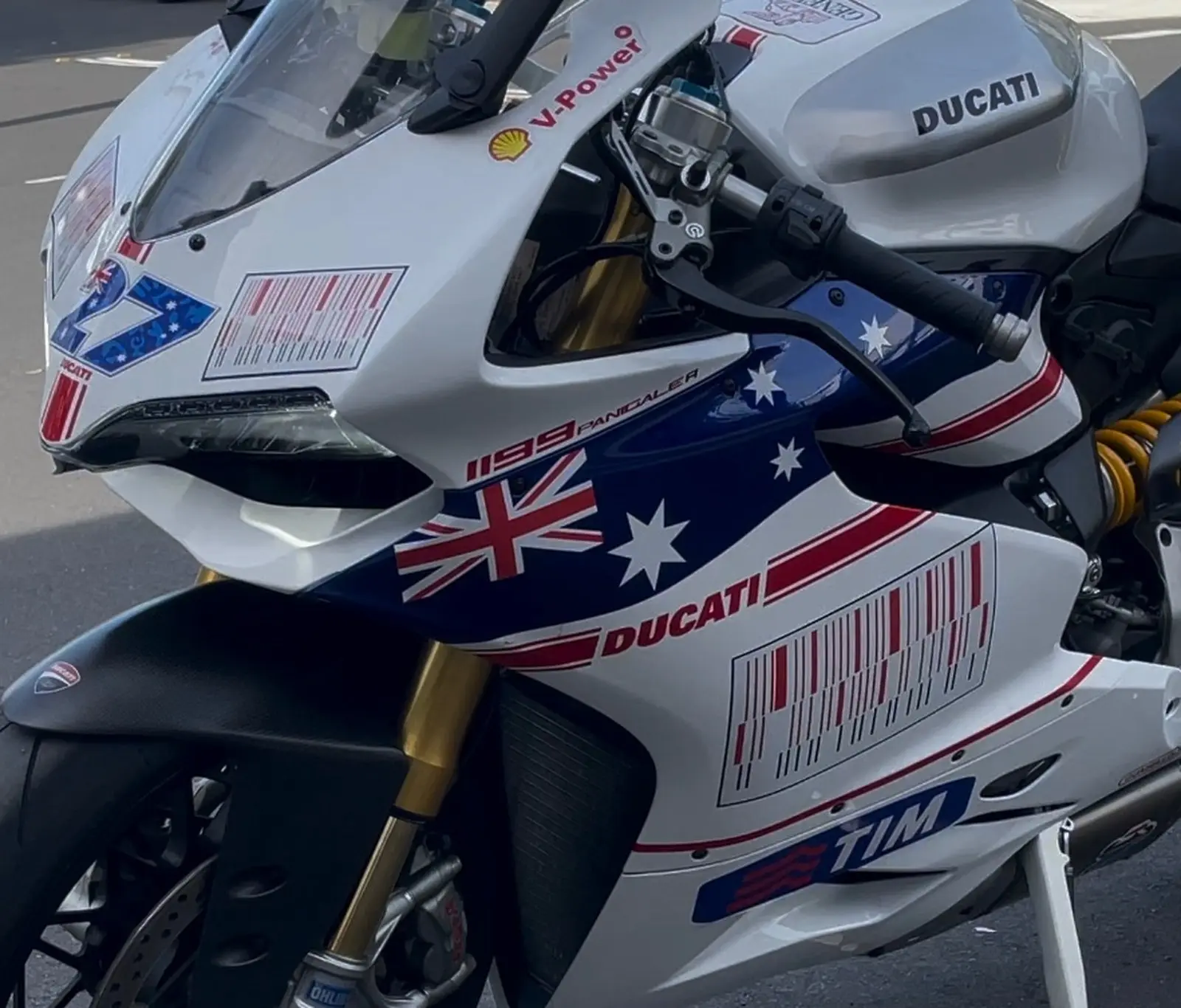
If you are ready to plan the trip, the Ducati 1199R is a superbike for experienced riders, with a V-twin engine producing 143 kW and an Australian flag livery that is a tribute to Casey Stoner, the Australian rider who won his first MotoGP World Championship on a Ducati in 2007. Its gold front forks and black forged wheels give it a striking look on the mountain roads. Book the Ducati 1199R for your three days and ride the Blue Mountains with a plan you can trust.
Frequently asked questions
How long should I plan for a Blue Mountains motorbike trip?
Three days gives you a balanced route: a highway day with lookouts, a day on the winding Bells Line of Road, and an easier return to Sydney. Two days can work for a quick loop, but a third day lets you ride at a comfortable pace and take proper breaks. Build in time for weather, fuel and rest, and do not treat the distances on the map as a timetable. The mountains reward riders who slow down and enjoy the views.
Is the Bells Line of Road suitable for a first multi-day trip?
It is best tackled once you have some time in the saddle and feel comfortable through a series of bends. The road has long climbs, tight sections and changing surfaces, including loose gravel at the edges after roadworks or rain. Take it slowly, keep your eyes well ahead, and avoid trying to set a rhythm on the first run. Plenty of riders choose to do it on day two, when they have warmed up on the highway.
What should I pack for a three-day mountain ride?
Pack light enough to move the bike easily, but make sure you have a warm layer, a waterproof layer and an anti-fog cloth. A spare pair of gloves and a small tool kit are useful, and a phone holder that keeps the screen visible helps with navigation. Carry sunglasses for the warm, bright return leg. Keep everything secured in your luggage so it does not shift on the bends.
Is it safe to ride in the mountains at dusk?
Dusk needs extra care because kangaroos and other animals are most active in the valleys as the light fades. Reduce your speed, watch the verge and the tree line, and keep your visibility high with bright gear. Plan your day so you are off the mountain roads before the light goes, if you can. If you must ride at dusk, take your time, stop for a break in a safe place and keep your attention on the road.
Where should I stop for lunch on the route?
Mid-route stops in Blackheath and Katoomba offer cafes and bakeries with outdoor seating, which is ideal for a relaxed break. In apple season, the roadside stalls near Bilpin make a good stop on the Bells Line leg, and the botanic garden offers shade and a quieter place to sit. Choose a spot where you can park clear of the traffic, and avoid heavy meals before the climbs, since a light lunch keeps you alert on the bends.
Can I ride the Blue Mountains on a weekday?
A weekday ride is often the calmest choice. Lookouts and car parks fill quickly on weekends and long weekends, and the highway traffic can be heavier with tourists and commuters. Weekdays give you more room to enjoy each stop and smoother roads through the towns. Check road conditions with Transport for NSW before you leave, and allow time for the forecast to change while you are on the mountain roads.
Ready when you are. Pick your dates and book the Ducati 1199R online, or call us and we will sort it with you.
Book NowCall 0468 011 118