

Book the Mercedes-AMG G63 White with a chauffeur. Send us the date, the times and where you are going, and we will confirm the Mercedes-AMG G63 White for your night.
Book NowCall 0468 011 118A white Mercedes-AMG G63 gives a formal photo something rare: a clean, graphic backdrop that makes people stand out. Its squared-off body and crisp panels work like a frame, and the paint picks up evening light in a way that adds polish to every picture. Good results still depend on planning, though. Angle, light, posing and timing decide whether the photos feel effortless or forced. This guide explains how to plan the session, how to read the light, how to pose a student with the car and how to get strong results on a phone, always with a chauffeur at the wheel.
Start with the light and the sky
Light drives everything in a car photo, and white paint is especially sensitive to it. Direct sun can create hard highlights and deep shadows that hide the car's shape, while a soft, low sun brings warmth and gentle gradients across the panels. Check the sunset time for your formal date and aim to begin about forty minutes before it. That window gives the sky colour and keeps the faces evenly lit.
Once the sun has dipped, the mix changes. Street lamps, shop fronts and the venue entrance all cast their own colour. A white car can take on an orange or blue cast depending on the lighting, so take a few test frames and look at them on a larger screen. Adjust the position of the car until the reflections look clean and the colour sits where you want it.
Overcast skies create a soft, even light that suits a glossy white finish. Avoid standing the car in deep shade under a tree, because the faces can turn dark while the bodywork goes flat. A position that receives open sky on the front of the car and a little light on the face usually gives the best balance.
Angles that flatter a squared body
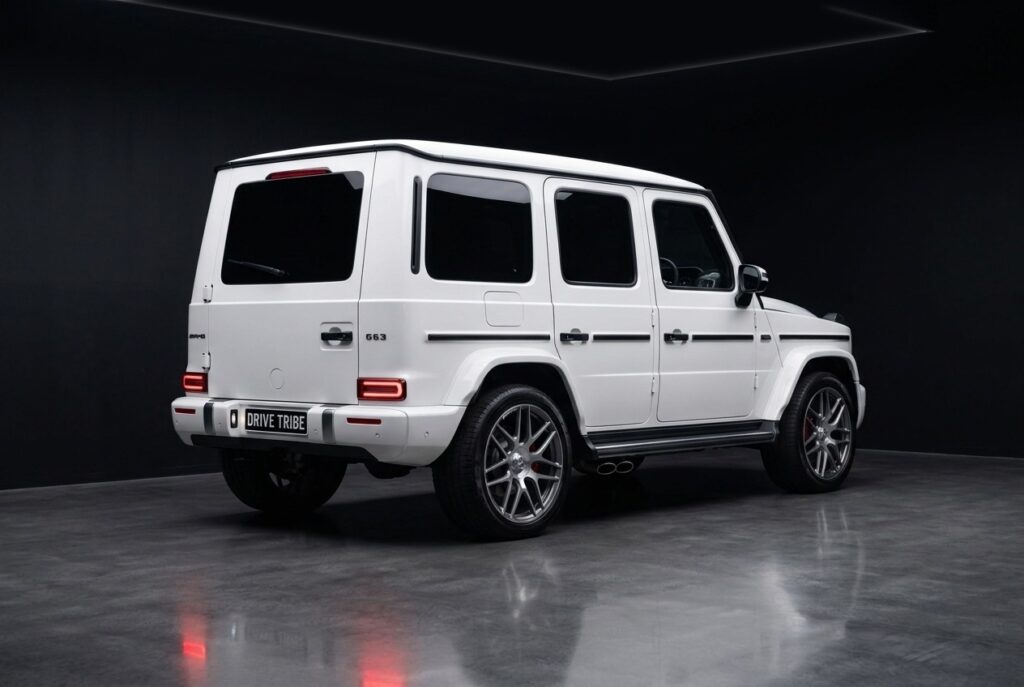
The G63 has strong vertical lines and flat side panels, which makes angle choice important. A three-quarter view from the front corner shows both the grille and the side profile, and it is the most flattering frame for a car with this shape. Stand a few metres back and move slightly to one side of the bonnet so the car's proportions read clearly without distortion from a wide lens.
A low viewpoint suits a confident student. Crouch to about the height of the front wheel and frame the car so the sharp edges rise above the subject. Keep the horizon level, because a tilted frame makes the vertical lines look unbalanced. This angle works well for a solo portrait with the car behind the student.
Try a straight-on shot of the front for a bold, symmetrical picture. Ask the student to stand just off-centre, and let the car fill the background. Symmetry is powerful with a boxy vehicle, but keep the background tidy so the composition feels intentional.
Posing a student beside the car
A good pose makes the car look like part of the story, rather than a prop. Start with the student leaning lightly against the rear door, weight on one leg and shoulders loose. This keeps the outfit natural and shows the cut of a suit or the fall of a dress. Ask the student to breathe out, relax the jaw and look just past the lens rather than straight into it.
Vary the set. One picture with the student standing tall by the front wheel, one with a hand resting on the roof edge, and one walking towards the camera give different moods. A candid laugh as the student steps off the kerb often becomes the favourite frame, because it feels unplanned and true to the night.
Watch the light on the face. Turn the student so the light falls across the cheek instead of straight from above, and check the background for bright patches beside the head. A small shift of a few centimetres can change a flat picture into one with depth.
Group shots across the bonnet
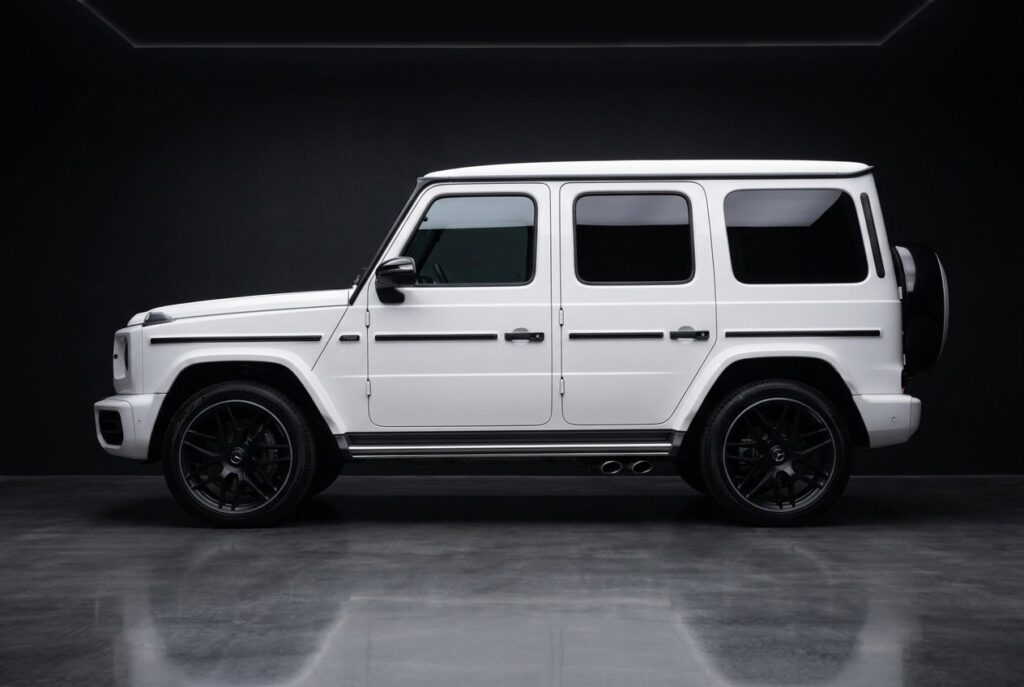
Group photos work well when the car is used as a horizontal anchor. Ask the group to stand in a loose line beside the side profile, with the car running behind them. Shorter people can sit or kneel at the front, while taller people stand behind. This layout keeps every face visible and lets the car's length create a sense of scale.
The open rear door adds a natural frame. A pair of friends seated sideways on the edge, a parent standing close with a hand on the door and the student in the centre can tell the story of the arrival in one picture. Give clear, simple cues such as turn your shoulders, lean in or step closer, so the group settles quickly.
Check what sits behind the group. Bins, passing traffic and bright signs can pull attention away from the faces. If something distracting appears, ask the driver to shift the car a little, and take one quick test frame before everyone steps into place.

Handling reflections on the paint
Reflections are the main challenge with a white car. Shiny paint mirrors whatever stands in front of it, including the photographer, the sky and parked cars. Before you start, walk around the vehicle and notice what it reflects from each angle. Moving the car by a metre or two often removes a distracting reflection of a lamp post or a bright window.
A polarising filter is useful on a camera, but most phone photographers will not have one. Instead, change the position of the phone. Lowering the camera slightly can remove a reflection of the sky, while raising it a little can reduce a reflection from the ground. Small changes in height make a noticeable difference.
Keep the paint clean before the session. A soft cloth removes dust and fingerprints, and a quick wipe of the lower panels helps the reflections look smooth rather than smeared. Ask guests to keep hands off the bodywork, since a single handprint is easy to see in a bright photo.
Want the Mercedes-AMG G63 White for your date? Send us the date, the times and where you are going, and we will confirm the Mercedes-AMG G63 White for your night.
Book NowCall 0468 011 118Phone settings for sharp, even photos
A modern phone can produce excellent car portraits when a few settings are right. Turn on the grid to keep the car's vertical edges straight, and tap the screen on the student's face to set focus and exposure together. Lock the exposure when the light looks right, so the phone does not brighten the car and wash out the white paint as you move.
Hold the phone steady and use both hands where possible. For group shots, take a short burst so there is a better chance of every face having its eyes open. Avoid digital zoom, which softens detail, and step closer instead. If the phone offers a wide lens, use it for the car and the group, and switch to the standard lens for close portraits.
Night photos need a steady hand and patience. Rest the phone on a flat surface or against the car roof if the surface is clean and safe, and use the timer to avoid shake. Save the original files, so you can choose the best frame later without losing quality.
Timing the session around pickups
Timing decides whether the photos feel relaxed or rushed. Work backwards from the planned departure, allowing time for the outfit to be finished, the hair to settle and the group to gather. The photo session should wrap up with enough room for final checks, so the car leaves on schedule and nobody is left behind on the footpath.
Build a small buffer into the plan for the unexpected. A missing shoe, an urgent phone call or a grandparent asking for one more frame can all take time. A buffer of about fifteen minutes gives room to recover without hurry, and the photographer should know the stop time so the session ends on a calm note.
Plan the final departure as a picture too. Once everyone is seated, a short frame through the open door can capture the moment the car pulls away. Those last pictures are often the ones families return to, so keep the camera ready until the door closes.
Care for the car during the session
Respect for the car keeps the session safe and the paintwork clean. Keep guests clear of the kerb while the driver moves the car, and never ask anyone to lean on the bonnet, the roof or the wheel arches. Drinks and food should stay away from the car, since a spill on white paint is far easier to avoid than to remove.
Check outfits before the group steps outside. Loose threads, glitter or dust can transfer to the car and the seats, so a quick brush or a lint roller in the kit solves most problems. Shoes with sharp heels should be kept off the sills and the door edges, which protects the finish and the student's footing.
Agree the rules for the session with the group. Phones should be kept clear of the driver's view, and everyone should know when the photos end. A calm, respectful session protects the car, keeps the group relaxed and gives the photographer room to work.

A set that tells the whole story
The strongest formal photos with a G63 tell a simple story: the student, the people they love and the car that carried them into the night. Pick a handful of frames from each stage of the session, such as the front three-quarter view, the candid laugh, the group line and the moment of departure. Together they describe the evening in a few pictures that the family will keep for years.
Good car photos come from good planning rather than expensive equipment. Decide the shot order early, use the light the evening gives you, choose angles that suit the squared lines and manage the reflections with small movements. A phone and a little preparation can deliver results that look polished and natural.
If you are picturing this arrival for your own formal, the featured car is a natural place to start. Our Mercedes-AMG G63 White is chauffeured only, so the student can focus on the photos while the driver takes care of the road. Get in touch with your date and group size, and our team will help you plan the car, the timing and the session.
Frequently asked questions
What time of day suits formal photos with a white G63?
The hour before sunset gives warm, soft light that flatters both the paint and the faces. Start about forty minutes before sunset and keep the car away from deep shade. After dark, test a few frames under the streetlights, since white paint can take on a coloured cast from nearby lamps.
How do we stop reflections spoiling the car shots?
Move the car a metre or two to change what it reflects, and adjust the height of the camera slightly. Keep a soft cloth ready for fingerprints and ask guests to keep their hands off the bodywork. A quick walk round the car before you begin shows which reflections need to be avoided.
Do we need special equipment for photos with the G63?
No. A modern phone takes strong pictures with a clear plan, a steady hold and a few simple settings. Lock the exposure when the light looks right, use the grid for straight lines and take short bursts for group shots. A dedicated camera adds flexibility but is not essential.
Can the driver move the car to get a better background?
Yes. Share your shot list with the driver before the night so the car can be positioned for the light and the background. The driver can also wait out of shot during the session and return at the agreed time, which keeps the group relaxed and on schedule.
Is it safe for the group to pose near the car?
Posing beside the car is safe when it is parked and the driver is present. Keep clear of the road, stay on the footpath when the car moves and never climb on the bonnet or roof. Ask the driver to pause all movement while the group is set up.
Can a student under 18 be photographed in the car?
Yes, while the car is stationary and the driver is present. A student under 18 always travels as a passenger, so any time spent in the car is with a chauffeur at the wheel. Plan the photos around the pickup and keep the car still for the pictures.
Ready when you are. Send us the date, the times and where you are going, and we will confirm the Mercedes-AMG G63 White for your night.
Book NowCall 0468 011 118Want a car nobody else will arrive in? See the Private Signature Collection: rare chauffeured wedding and formal cars, by appointment.