

Book the Rolls-Royce Phantom with a chauffeur. Send us the date, the times and where you are going, and we will confirm the Rolls-Royce Phantom for your night.
Book NowCall 0468 011 118In the United States, prom sits near the centre of the high school year. It usually arrives in spring, it is often a dinner and a dance, and for many families it is the first time the wider community sees a teenager in a gown or a tuxedo. Australians know the Year 12 formal well, so the comparison is a natural one. Both events mark a finish line, both are planned for months and both ask families to think hard about travel, safety and what the night should feel like.
What prom is, and why it matters so much
Prom is a big evening in American school life, and it carries a weight that is hard to explain to people who did not grow up with it. The word suggests a formal dance, but in practice prom is a whole event: planning, preparation, a meal, music, photographs and, for many students, the first night that feels like a real celebration of growing up. Schools, families and local businesses all notice it.
Prom is not one thing. Traditions differ between states, between towns and between families, and some students choose not to attend at all. Some schools hold a modest gathering in the gym, while others book a larger venue with a band and a sit-down dinner. Families bring different means and different ideas about what a teenage celebration should look like, and that variety is worth remembering before anyone draws conclusions.
This article describes the typical shape of an American prom, then compares it with the Australian Year 12 formal that most Sydney families know. The aim is to describe both events fairly, to show what each does well and to explain why the arrival of an Australian formal deserves its own place in the story. Nothing here is a ranking, and both traditions have real strengths.
When prom happens and who is invited
Prom usually falls in spring, often in the weeks before the school year closes. The timing gives students a natural milestone, because exams are approaching or finishing, the weather is warming and the group is preparing to move on. Many schools hold the event for juniors and seniors, although the rules vary, and some schools set different arrangements for different year levels.
Invitations are usually handled by the school, the student council or a committee that includes parents and staff. Tickets are often sold in advance, and many schools set rules about guests, including whether a student can bring a date from outside the school. Those rules differ from one school to the next, so families should check them early rather than discovering a restriction at the ticket table.
Because each school runs its own event, the experience varies widely. A small country school may hold the dance in its own hall with a local band, while a large city school may book a function room for the evening. Both can be memorable, and both show how much the surrounding community can shape the night.
The promposal and the ritual of the invitation
One of the most distinctive parts of American prom culture is the promposal, a creative invitation to attend the dance with someone. Students plan them carefully: a handmade sign, a small gift, a short performance or a gesture in front of classmates. The idea is to ask in a way that feels personal and memorable, and the result is often shared with friends and family afterwards.
Not every student takes part, and not every promposal is public. Some students prefer a quiet conversation, and others choose to go with a group of friends rather than as a pair. Schools and families sometimes talk about kindness in these moments, because a public invitation can be uncomfortable for the person being asked, especially if the answer is no.
The Australian equivalent is generally less formal. Many Year 12 students make arrangements through friendship groups, and the question of who to bring is usually settled in conversation over a few weeks. Both approaches reflect the same wish to share the night with someone important, but the public spectacle of a promposal is a distinctly American flourish.
Dressing for prom: gowns, tuxedos and the family photograph
Dress is central to prom. Many students choose a long gown, often bought months in advance and sometimes altered by a family member or a seamstress. Young men typically wear a tuxedo or a suit, with a bow tie or tie, and a boutonniere or corsage is a common detail. Shoes, jewellery and hair are planned with the same care as the outfit itself, and the planning can start early in the year.
The family photograph is a big part of the evening. Before the car arrives or the group leaves for the dance, families often gather in a front yard or a living room to take pictures. Some households invite neighbours or grandparents to join in, while others keep the photographs private, and both approaches are common. That variety reflects the many different family customs across the country, and none of them is more correct than another.
Australian students tend to dress for the formal with similar care, though the styles and colour choices may differ. A Year 12 formal often sees students in gowns, dresses, suits and dinner jackets, with a strong focus on the photographs taken before the night begins. The shared interest in getting the look right is one of the strongest links between the two traditions, and it is a good place for families to start a conversation.

Getting there: limousines, party buses and the family car
Transport is one of the most talked-about parts of prom. The limousine has long been part of the American picture, with groups arriving together in a stretched car and stepping out at the venue. Some groups now choose a party bus instead, while others ask a parent to drive or take a car they already own. Each choice reflects the family's circumstances, the distance and the wishes of the students.
Safety shapes many of these choices. Schools and families often encourage students to plan a trip that keeps drinking and driving entirely apart, and some communities run organised events after the dance to keep students safe through the night. A group that plans its transport in advance, with a clear pickup and a clear return, tends to enjoy the evening more and worry less about what happens after the photographs.
In Australia the formal arrival is planned around the same questions, but the answer often leans toward a chauffeured car for the whole group. Under-18s travel chauffeured, and families are encouraged to keep the night simple: one car, one timetable and one clear arrival at the venue. That structure is part of what makes the Australian formal feel calm for families, even when the group is large and the evening is busy.
Dinner, the dance floor and the after-party
A typical prom evening combines a meal with a dance. Some groups book a table at a restaurant before the dance, others eat at the venue and some skip dinner altogether. The dance itself might include a slow song for couples, a set of crowd favourites and a few group photographs under the lights. For many students the highlight is the moment the whole room is dancing together and nobody is watching the clock.
After-prom events are a distinctive feature of American school life. Many schools and parent groups organise a late-night gathering with food, games and activities, often in a supervised location, with the aim of keeping students together and safe until the early hours. Attendance is voluntary, and families differ on whether to take part, but the idea reflects a strong commitment to student wellbeing.
The Australian formal ends differently. Most groups head home or to a private gathering once the venue closes, and the late part of the night is usually planned by families and students rather than by the school. Both endings are about keeping the celebration going, but the American model often puts more structure around the late hours, which some families find reassuring and others find unnecessary.

Want the Rolls-Royce Phantom for your date? Send us the date, the times and where you are going, and we will confirm the Rolls-Royce Phantom for your night.
Book NowCall 0468 011 118Safety rules, school policies and the late night
Prom comes with rules, and the rules matter. Schools often set expectations about conduct, guests, alcohol and the times students must arrive and leave. Families should read those policies carefully and talk them through with their children before the night. A rule that is explained clearly is far easier to follow than one that is simply announced at the door.
Our own position is simple: there is no alcohol for anyone under 18, in any car, and students under 18 always travel chauffeured. Those are our standards for every formal we help plan. They sit comfortably alongside the spirit of the American after-prom model, which also puts safe travel and supervised fun first. Families in both countries can share the same goal, which is a night that ends well for everyone.
Families differ on how strict they want to be, and that is a reasonable difference to discuss openly. Some parents want a tight timetable and a clear end time, while others prefer a looser evening with more freedom. Whatever the approach, the safest plans are the ones agreed in advance and written down where everyone can see them, so nobody is improvising at midnight.
How prom differs from an Australian formal
The biggest difference is structure. Prom is usually run by the school as a single event, often with a committee, a chosen theme and a set of traditions that repeat each year. An Australian Year 12 formal is also organised by the school, but many of the arrangements, from the group photographs to the transport, are made by families and students in the weeks before the night.
Timing is another difference. Prom sits in the spring, while the Australian formal often falls later in the year, when final exams or the Higher School Certificate are close. Students may feel a different mix of excitement and pressure on each occasion, and the exam calendar shapes how the night feels, including how much students are ready to celebrate.
Transport and photographs are where the two traditions often feel closest. Both involve a group arrival, a short photograph session and a moment at the venue door. The difference is mostly one of emphasis: the American prom is widely known for its promposal and its after-party, while the Australian formal is often remembered for the arrival and the group's first look at the venue together.

What an Australian formal can borrow, and what it should keep
Every tradition has ideas worth learning from. The promposal shows how much students value being asked in a memorable way, and a short, thoughtful invitation can be a lovely addition to an Australian formal. A group photograph session with a few planned moments, rather than a scramble at the door, is another useful habit to borrow from the American model.
The after-party idea also deserves attention. Some Australian families already plan a supervised gathering after the formal, and a shared plan for the late hours helps everyone sleep well. A clear end time, a confirmed ride home and a responsible adult in charge are simple steps that do not take away from the fun. They simply make the night safer for the people who matter most.
What should an Australian formal keep? The calm arrival, the chauffeured ride for students under 18 and the focus on the evening rather than the spectacle. The Australian formal has a distinct character, built around a single timetable, a shared plan and an arrival that feels special without being loud. Those are qualities many families value, and they are well worth protecting as traditions continue to change.
Close: a closer look at the arrival, and the featured Rolls-Royce Phantom
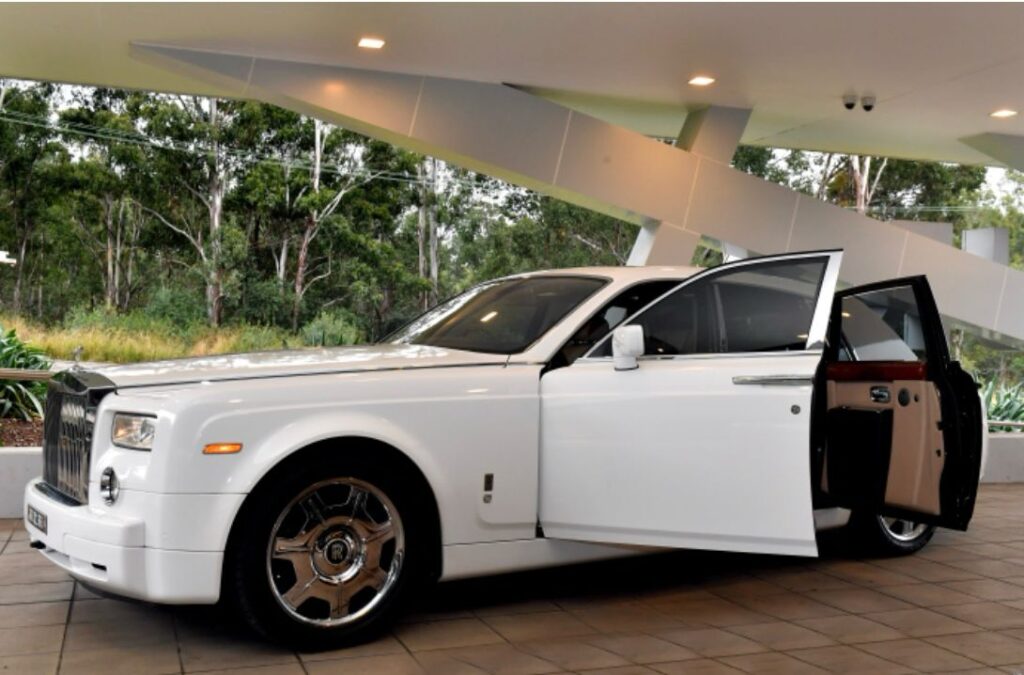
If the arrival is the part of the night you most want to get right, the car you choose matters a great deal. Our featured choice for a formal arrival is the Rolls-Royce Phantom, chauffeured only, which gives a group a stately and composed entrance. The car carries the calm and formal feeling many Australian families look for, and it suits both a family photograph and the walk into the venue.
Compare it with the other options before deciding. A stretch limousine suits a sociable group, a van keeps a larger group together and the Mercedes-AMG G63 White offers a bold alternative for a group that wants a strong first photograph. Use the fleet page to compare the cars, and use the chauffeur planner on the site to lay out the pickups and the timing.
Whether you are planning an Australian formal or simply comparing the two traditions, the same principles apply: plan the timetable early, keep students chauffeured and let the arrival be the moment the group shares. When you are ready, visit the Rolls-Royce Phantom page to see its details and send a request. Every booking turns on the date, the hours and the route, and the car page or a quote confirms the detail.

Frequently asked questions
When is prom held in the United States?
Prom usually takes place in spring, often in the weeks before the school year ends. Timing varies by school and by region, and many schools hold it for juniors and seniors. Families should check the date with the school early, because the calendar can shape travel plans, dress shopping and the booking of transport for the night.
Do American students arrive at prom in limousines?
Some do. Limousines have long been part of the prom picture, and some groups now choose a party bus or a family car instead. The arrival depends on the family's circumstances, the distance and the students' wishes, and each choice is valid. For Australian families, a chauffeured car remains one of the simplest ways to keep a group together for the whole journey.
How does prom differ from an Australian Year 12 formal?
Both are school events that mark the end of a stage, and both involve dressing up, dinner, dancing and photographs. Prom is usually held in spring and often comes with a promposal tradition and after-prom events. An Australian formal is usually held later in the year, and the arrival and group photographs are often planned around a single chauffeured journey.
What is a promposal?
A promposal is a creative invitation to attend prom with someone. Students may plan a sign, a gift or a short performance to ask in a memorable way. Not every invitation is public, and some students prefer a quiet conversation. Kindness matters in every version, because the person being asked should feel free to say yes or no without pressure.
Are the rules for under-18s the same in Australia?
Rules differ between schools, families and places, so the details should always be checked locally. Our own rule is simple: there is no alcohol for anyone under 18, in any car, and students under 18 always travel chauffeured with one of our drivers. Schools set their own rules, and families should follow them alongside the plan for the night.
Can an Australian family book a chauffeured car for a formal arrival?
Yes. A chauffeured arrival suits families who want the group to travel together, with one of our drivers at the wheel for every student. Send a request with the pickups, the venue time and the return plan, and the booking team will confirm the details for your date. The Rolls-Royce Phantom is our featured choice for a stately arrival.
Ready when you are. Send us the date, the times and where you are going, and we will confirm the Rolls-Royce Phantom for your night.
Book NowCall 0468 011 118