

Book the MV Agusta F4. Pick your dates and book the MV Agusta F4 online, or call us and we will sort it with you.
Book NowCall 0468 011 118A cold Blue Mountains morning is the hardest test a sports tyre faces before it has any heat in it. Frost sits in the valleys, shaded bends stay damp until midday, and the first corners out of town come before the rubber has done any real work. On the MV Agusta F4 that matters, because the bike rewards patience and punishes haste. This guide shows how to bring the tyres up to temperature safely.
For the bikes we hire, who can ride them and how a hire runs, see motorbike hire in Sydney.
Why cold tyres behave differently
A sports tyre is built to work hot. The compound is designed to grip once it reaches its operating temperature, and until then it is firmer, less willing to deform and less forgiving of a sudden input. On a warm afternoon on the coast that transition happens within a couple of kilometres. On a cold morning in the mountains it can take considerably longer, especially when the air sits near freezing and the wind comes up the valley from the creek lines.
The surface is the other half of the problem. Overnight dew and frost settle on the road, and in the shade of tall eucalypts the bitumen can stay wet long after the sun has cleared the ridge. Painted lines, manhole covers and the dark patches where water has run across the road all lose grip before the rest of the surface does. Treat every one of them as a low-grip surface until you have ridden over it several times and felt the bike settle.
This is why we ask riders to think of the first hour as a warm-up for the rider as much as the bike. Your hands, your shoulders and your concentration all need time to switch on. A cold morning ride that starts gently gives the tyres a chance to come up to temperature, and gives you a chance to read the road before the road asks anything of you.
Checks at the kerb before the first corner
Start with the tyres while they are still cold, before you ride. Check the pressures against the figures in the owner's handbook and on the sticker, not against memory or a guess from a previous trip. Look for any cuts, embedded stones or flat spots, and make sure the tread is still in good order across the whole width of the contact patch. A tyre that looks fine on the bench can still show a problem once it is hot.
Next, check the final drive, the brakes and the lights, and give the forks a few firm presses to confirm they move smoothly. Cold air can make a worn brake pad feel vague, so pump the lever until it firms up and listen for anything unusual. If anything is not right, do not ride it to the first lookout to find out. Tell us, and we will sort it before you go.
Dress for the cold before you leave. Layers that block wind work better than one thick jumper, and a riding jacket with proper armour does the most important job at low temperatures: keeping the body relaxed. Stiff hands and tight shoulders are the first things to fail on a cold morning. Gloves must be warm enough to work the controls with full feeling, and your helmet should sit snug with no pressure points that will ache after an hour.

Hire rules for this ride
Before we hand over the keys, a few hire rules apply to every ride. Every hire is self-drive, collected from our Parramatta base, and runs for at least three days. Every rider must hold a full motorcycle licence, have held it for at least three years, and be aged 25 or over on every bike.
The F4 is a single-seater, so there is no passenger seat to plan around. Helmets (Shark, AGV or Bell) can be hired from us in small, medium or large for $50 per hire, or you can bring your own. We do not supply jackets, gloves, pants or boots, so bring your own riding gear. A helmet replacement fee applies if a helmet is lost or damaged, and a security bond is held, set by the class of bike. Optional damage cover offered on cars is not available on bikes.
Any cover for personal injury above the compulsory third-party layer is something you would need to organise yourself. Overnight the bike must be kept in a locked garage or secure off-street parking between 9pm and 6am, and trackers are fitted to all the bikes. We can stop a hire if we think a rider is not safe on the road. Going 30 km/h or more above the posted limit also brings the hire to an end, and we keep the bond.
Warming the tyres in the first kilometres
The first few kilometres are where the warm-up happens, and the way you ride them matters more than how long you wait. Leave the driveway at a steady pace in a low gear with the throttle held smooth. Avoid sudden openings, and keep the revs moderate so the engine and the tyres come up together. Let the bike do the work rather than forcing it through the first bends.
Use straight sections and gentle gradients to build heat. Brake lightly several times in a straight line, so the front tyre warms evenly and you feel how much the bike bites. Shift weight gradually, and make small lean inputs on wide, open bends before you ask for anything more. Each sensible input tells you how much grip is on offer today.
Give the tyres time. Most riders should expect the first ten or fifteen kilometres to feel different, and the bike to feel more planted once the rubber has heated up. Do not treat a good feeling as a green light. Keep the early corners slow, and only build pace when the front feels sure and the rear is hooking up cleanly on the throttle.
Blue Mountains roads on a cold day
The mountain roads around Katoomba and Leura are a mix of wide open sweeps and tight, shaded corners that stay cold for much longer. The Great Western Highway carries heavy traffic, including trucks, and the surface changes from new seal to older patches within a few hundred metres. Give trucks space, and expect slower vehicles on the long climbs.
Bells Line of Road has longer sustained bends and is a long-standing favourite with riders, which is also why it draws weekend crowds. Some sections are shaded by tall trees, and the moss and leaf litter that gather at the edges can be slippery in the morning. Keep your line tidy and avoid braking mid-corner.
Corners on any mountain road can throw up gravel from maintenance work or from the verges. Scan the road ahead through each bend, and look where you want to go rather than at the edge of the seal. Road conditions can change quickly, so check road conditions with Transport for NSW before leaving.
Want the MV Agusta F4 for your date? Pick your dates and book the MV Agusta F4 online, or call us and we will sort it with you.
Book NowCall 0468 011 118Best time of day and season
For cold-morning warm-ups, the best window is late morning, once the frost has lifted and the sun has reached the road. Early starts are beautiful in the mountains, but they are also when the surface is coldest and the shade is deepest. A later start in winter often gives you dry, clear roads and a far more confident first hour on the bike.
Autumn and spring are the most forgiving seasons for a fast bike in the hills. Mornings are cool rather than icy, the air is clear, and the roads are usually drier. Summer afternoons are warm enough that the tyres come up quickly, but weekend traffic and bushfire conditions in dry periods need watching. Winter demands the most care of all.
Plan your day around the warm-up. Let the first stretch be a quiet, flat run so you can settle in, then head into the bends once the bike has settled. Avoid returning on exposed roads in the dark, when wildlife becomes more active, especially kangaroos and wallabies near the edges of the bush.
Fuel, food and rest stops
Fuel range matters on a high-performance bike, and the F4 is thirsty when it is ridden hard. Fill up in Parramatta or at a service station on the way out, and do not rely on being able to top up in the hills. Note the distances between towns and plan a fuel stop before the fuel warning comes on.
Food stops in Katoomba, Leura and Blackheath are easy to find, with bakeries and cafes around the main streets. Take a break every hour or so, stretch your legs, and drink water even when it is cold. Your concentration drops quickly when you are chilled and dehydrated, and that is when mistakes happen.
Rest stops are also where you check the tyres again. Once the bike has been ridden for a while, run a hand over the tread and check for any change in feel. Hot brakes, a bike that feels different or a loose fitting all deserve attention before you head back down the mountain.
Riding within your ability
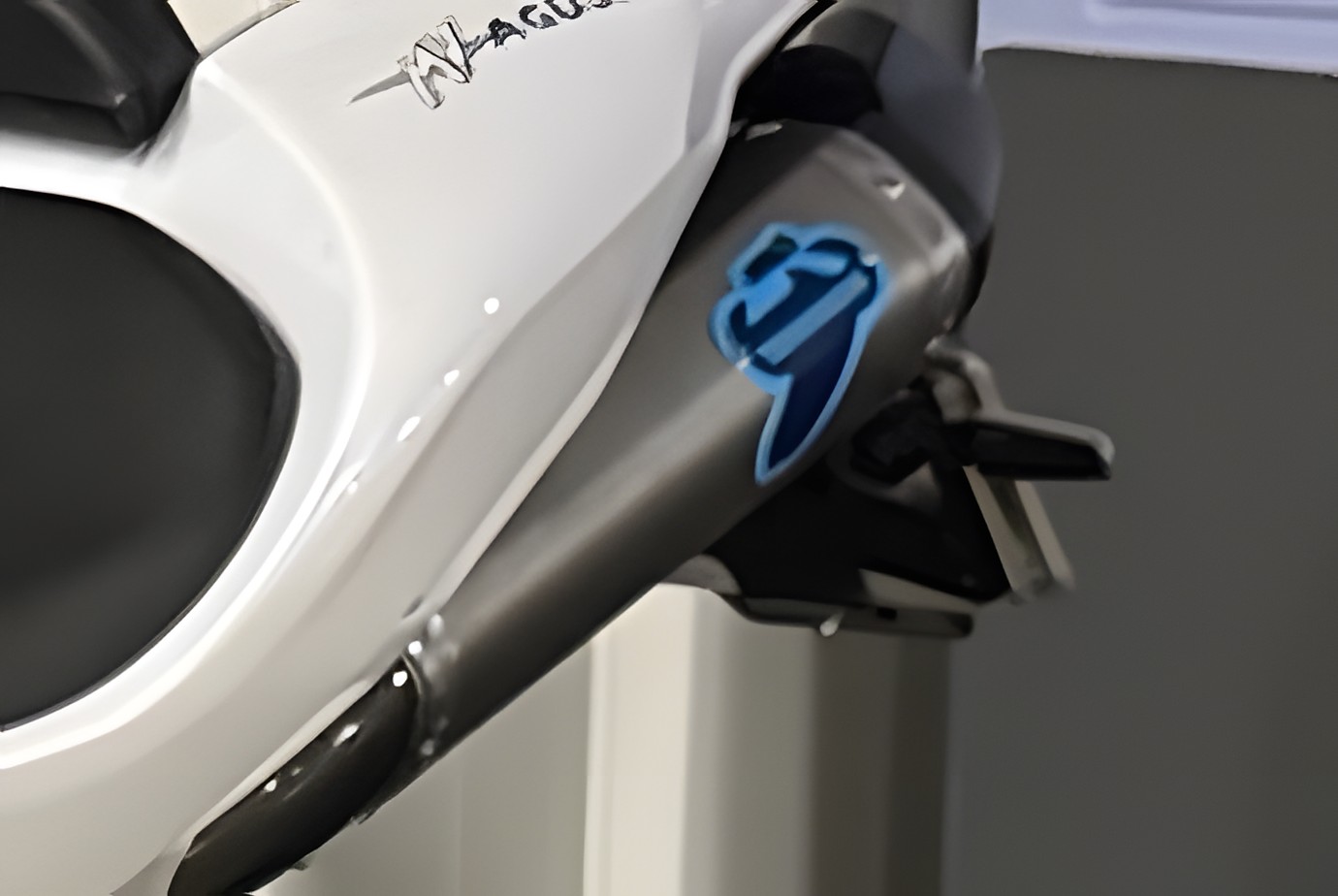
The MV Agusta F4 is a 998cc inline four rated at 143 kW, with a performance exhaust, and it is a rider's bike in every sense. It is not the place to test a cold tyre for the first time, and a rider who is not yet comfortable on a high-output machine should choose a gentler option. Ride within your ability on every corner, and never let the bike set your pace.
Alcohol and riding never mix. Even one drink can slow your reactions and cloud your judgement on a cold, damp road. Save the celebration for the end of the day, after the bike is back in its secure location. Riders who arrive home the same way they left are the ones who enjoy the next ride.
Three things catch riders out most often in the hills: wildlife, gravel and fatigue. Ride with your eyes up, keep a safe gap to the vehicle ahead, and slow for shaded corners. If you feel tired, stop. Cold, fatigue and speed together is a dangerous mix, and the mountains punish every shortcut.
Plan the ride and book the F4
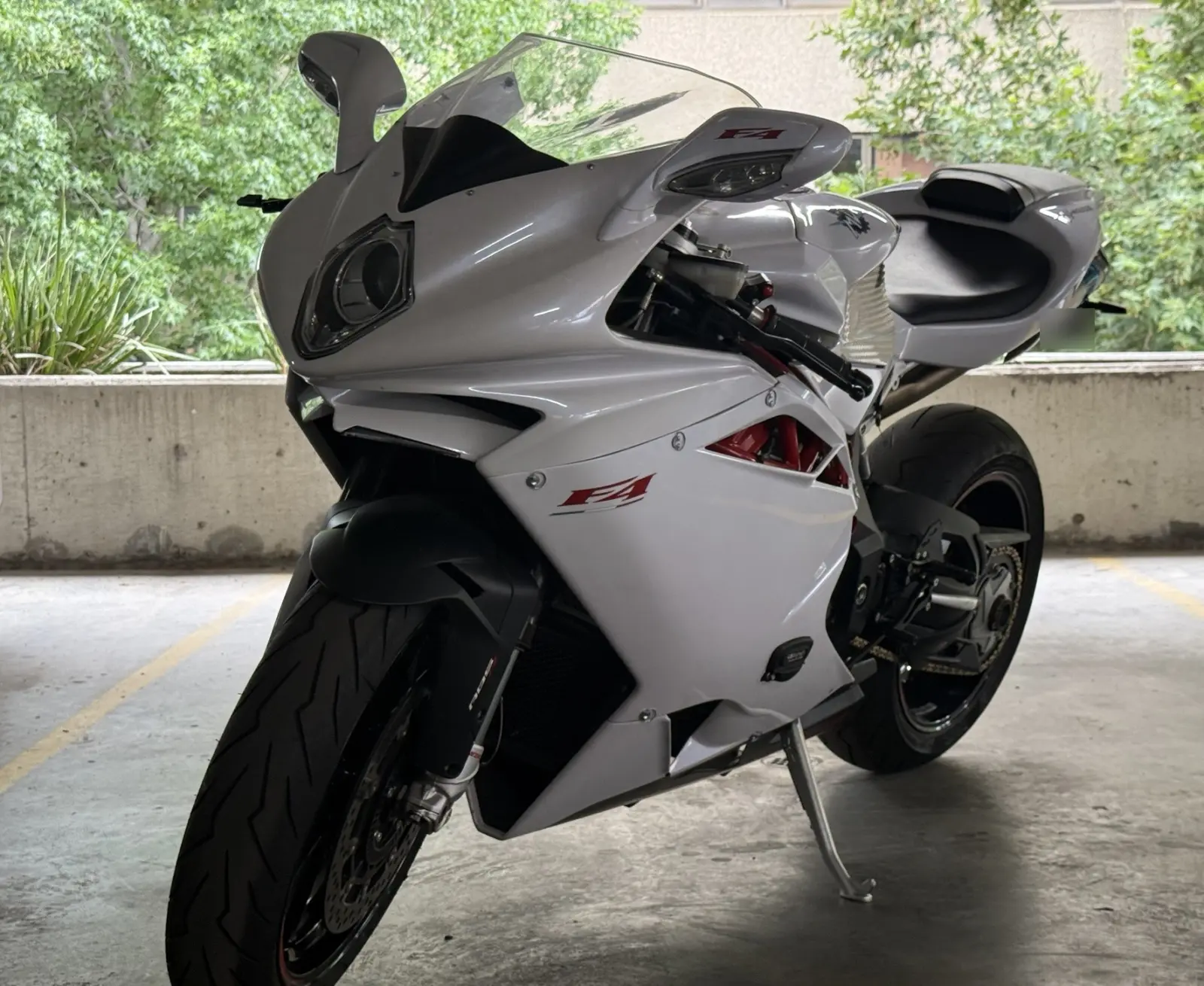
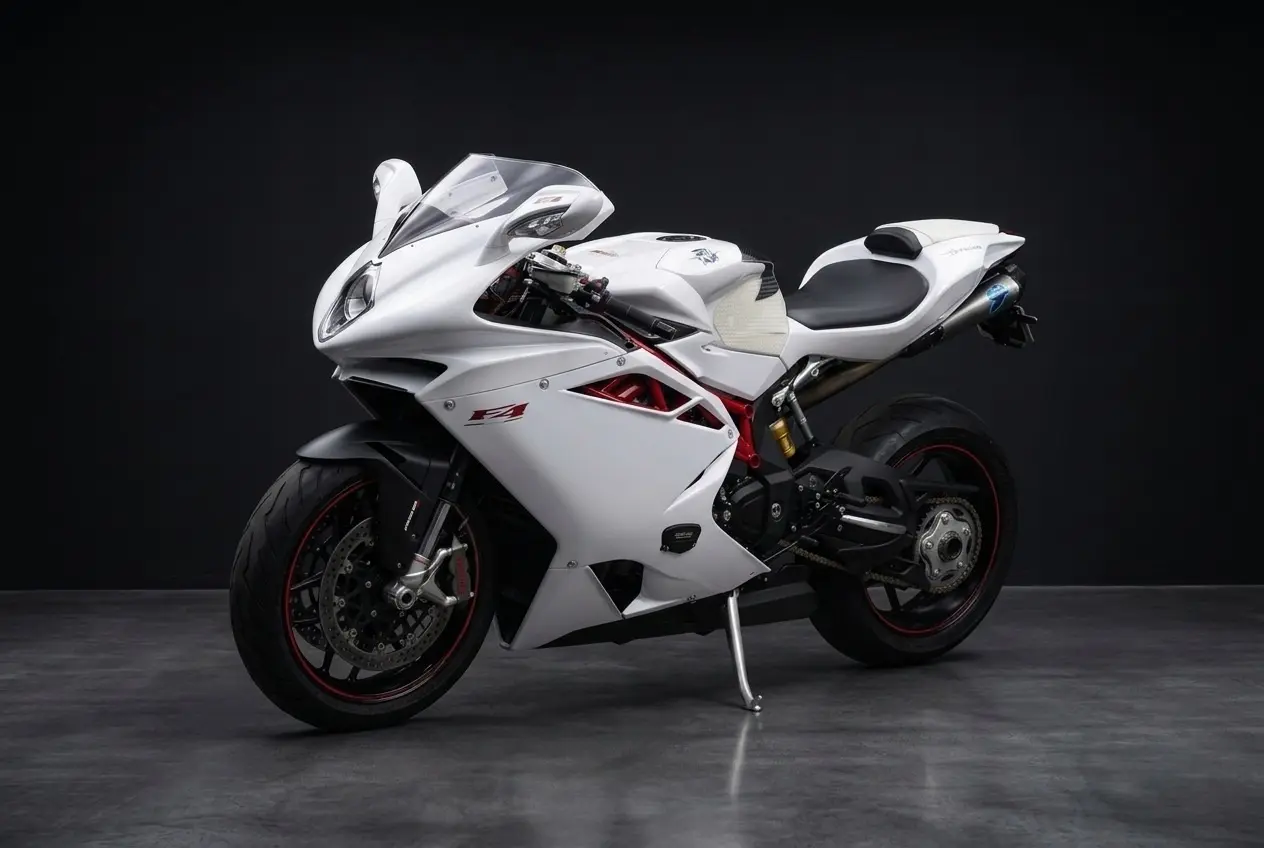
The MV Agusta F4 is a stunning bike for a cold morning in the mountains, provided it is ridden with respect for the cold. Its pearl white finish and red trellis frame stand out at every lookout, and the performance exhaust gives the ride a voice that suits the setting. Once the tyres are warm and the road is clear, it is hard to beat.
If you want a bike that can carry a passenger, the Yamaha MT-09 SP is the only one in our fleet that takes one. The Ducati 1199R suits experienced riders who want an unmistakable superbike for longer days. Browse the full range on our fleet page and choose the bike that fits your ability and your plans.
When you are ready to plan the trip, book the MV Agusta F4 and let us help you prepare for the cold mornings ahead. We will talk through the route, the gear and the warm-up plan, so your first kilometres feel calm and controlled, and the rest of the day can be the ride you came for.
Frequently asked questions
Why do the tyres feel slippery on a cold Blue Mountains morning?
Cold rubber is firmer and takes longer to reach the temperature where it grips well. Frost, dew and shade add to the problem, because the road surface itself stays damp and cold. Painted lines and manhole covers are often the most slippery parts of a corner. Ride gently until the bike feels settled, and treat every low-grip surface as a surprise until you have tested it.
How long should I warm up a sports tyre before riding hard?
There is no fixed time, because it depends on the temperature, the wind and the road. In practice, most riders should expect the first ten or fifteen kilometres to feel different. Keep your inputs smooth, brake lightly on straight sections, and only build pace once the front feels sure and the rear hooks up cleanly. If the bike feels uncertain at any point, ease off and let it warm further.
Is it safe to ride a high-performance bike in the mountains in winter?
It can be, provided you respect the conditions and ride within your ability. Winter brings colder tyres, frost in the shade and a higher chance of wet patches, so the sensible approach is a later start, a slower first hour and careful checks before you leave. A bike with this much output rewards a calm, controlled rider and punishes anyone who rushes the bends in cold conditions.
What should I check before leaving on a cold morning?
Start with the tyre pressures while the tyres are cold, and look for cuts, embedded stones or flat spots. Check the final drive, the brakes, the lights and the forks. Pump the brake lever until it firms up. Dress in warm layers that block wind, and make sure your gloves let you work the controls with full feeling. If anything feels wrong, do not ride it until it is sorted.
Is the morning or afternoon better for riding in the Blue Mountains?
Late morning is usually the sweet spot. The frost has lifted, the sun has reached the road and the tyres will warm quickly once you start. Early mornings are beautiful but also the coldest and shadiest part of the day. Afternoons can bring heavier traffic and tourist crowds on the main routes, so plan your ride to suit the road as well as the weather.
How much fuel should I plan for a day in the mountains?
Plan a fuel stop before you climb, rather than relying on being able to top up at the top. High-performance bikes often use fuel quickly when ridden hard, so fill up before you leave Parramatta or at a service station on the way out. Look at the distance between towns, allow a margin for detours, and never ride until the fuel warning comes on. A full tank is always the easy option.
Ready when you are. Pick your dates and book the MV Agusta F4 online, or call us and we will sort it with you.
Book NowCall 0468 011 118