
The Mazda rotary engine began with Felix Wankel's idea of a triangular rotor spinning inside a housing, and Mazda turned it into a production reality with the 1967 Cosmo Sport, the first twin-rotor production rotary car. It went on to power the RX-7 through three generations and, in 1991, win the 24 Hours of Le Mans in the Mazda 787B. No other maker has won Le Mans with a rotary.
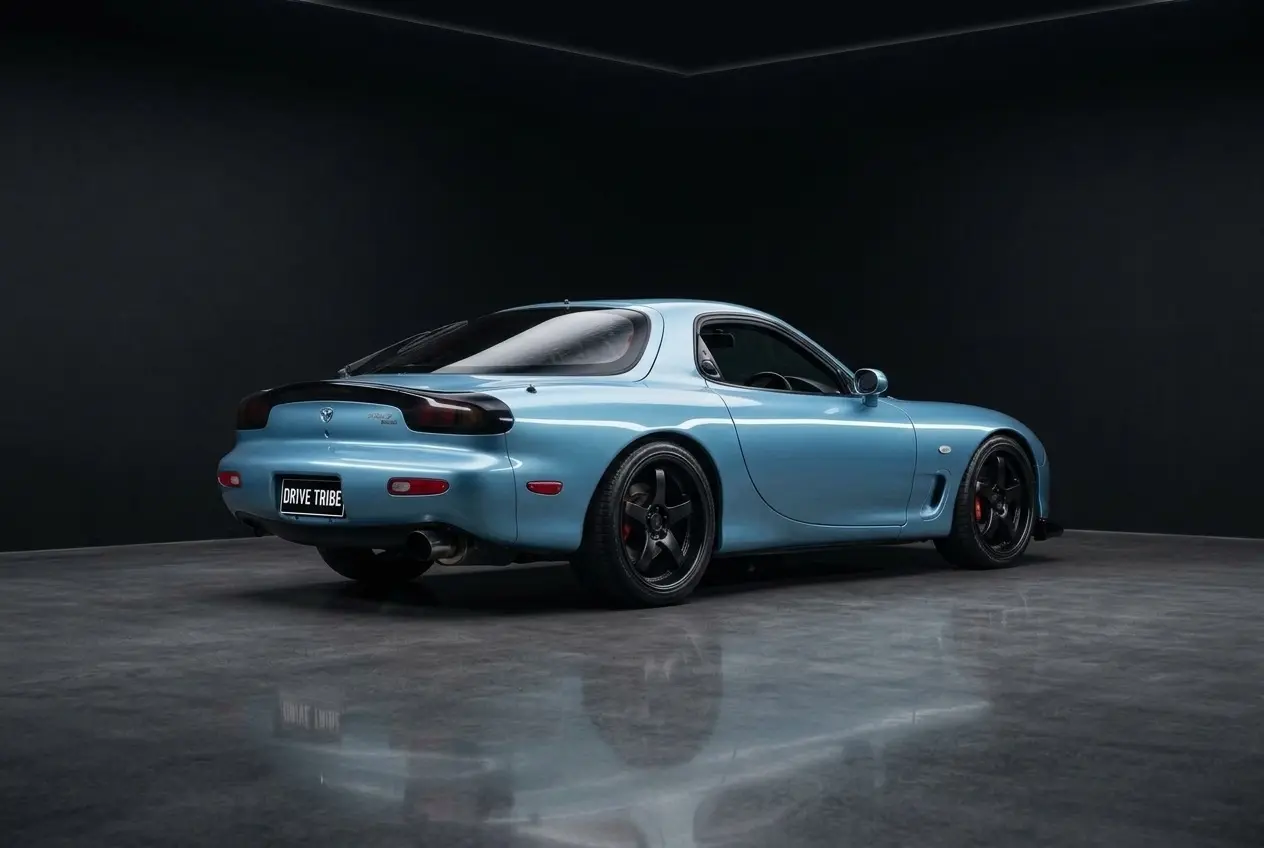
Where the idea came from
Felix Wankel invented the principle of the rotary engine. Instead of pistons moving up and down, a rounded triangular rotor turns inside an oval housing, and the gaps between the rotor and the housing become the chambers where air is drawn in, compressed, ignited and pushed out. The appeal was obvious: fewer moving parts, smooth rotation and a compact size for the power. The difficulty was equally clear: sealing the tips of the rotor, which is the job of apex seals, and keeping the housing cool and lubricated.
Many manufacturers looked at the idea. Mazda is the one that stuck with it, and its commitment turned a curiosity into a signature.
The 1967 Cosmo Sport
The Cosmo Sport arrived in 1967 as the first twin-rotor production rotary car. It was a low, narrow coupe that looked like nothing else on the road, and it proved the engine could be built, sold and driven by ordinary customers. For Mazda it was a statement: this technology was not a laboratory project but a way of building cars.
Building a rotary range
After the Cosmo, Mazda put rotaries into a range of cars, from small coupes to saloons. The format suited sporty models especially well, because the engine is compact, sits low and revs freely. Customers came to expect a rotary Mazda to be light, smooth and keen to rev, and the engines developed a distinctive sound. The family names that matter to enthusiasts today include the 12A and, later, the 13B, which became the best-known rotary of all.
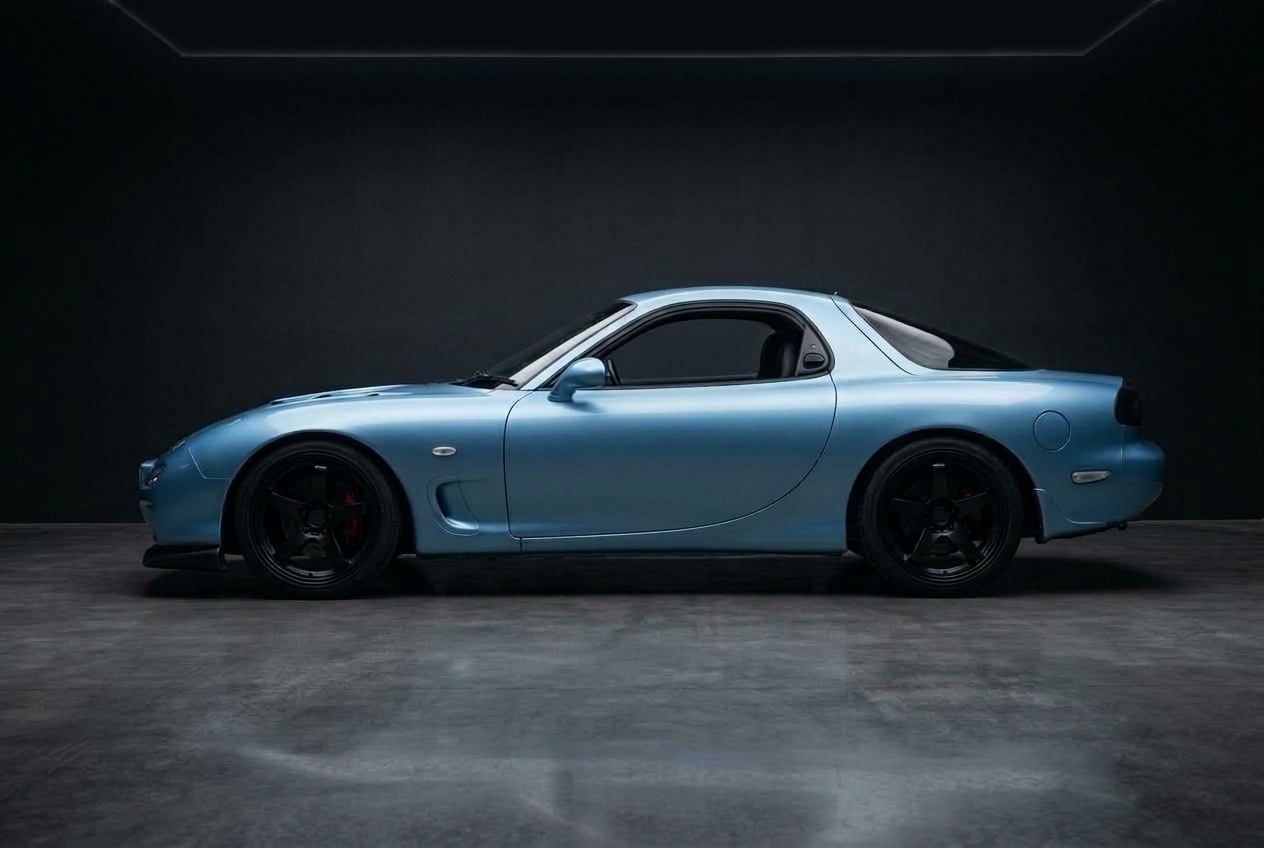
The RX-7 generations
- SA22C: the first RX-7, a lightweight coupe with a rotary behind the front axle.
- FB: the continuation of that first-generation design.
- FC: the second generation, with a more modern shape.
- FD3S: the third generation, running from the early 1990s until 2002, and the one with the sequential twin-turbo 13B-REW in standard form.
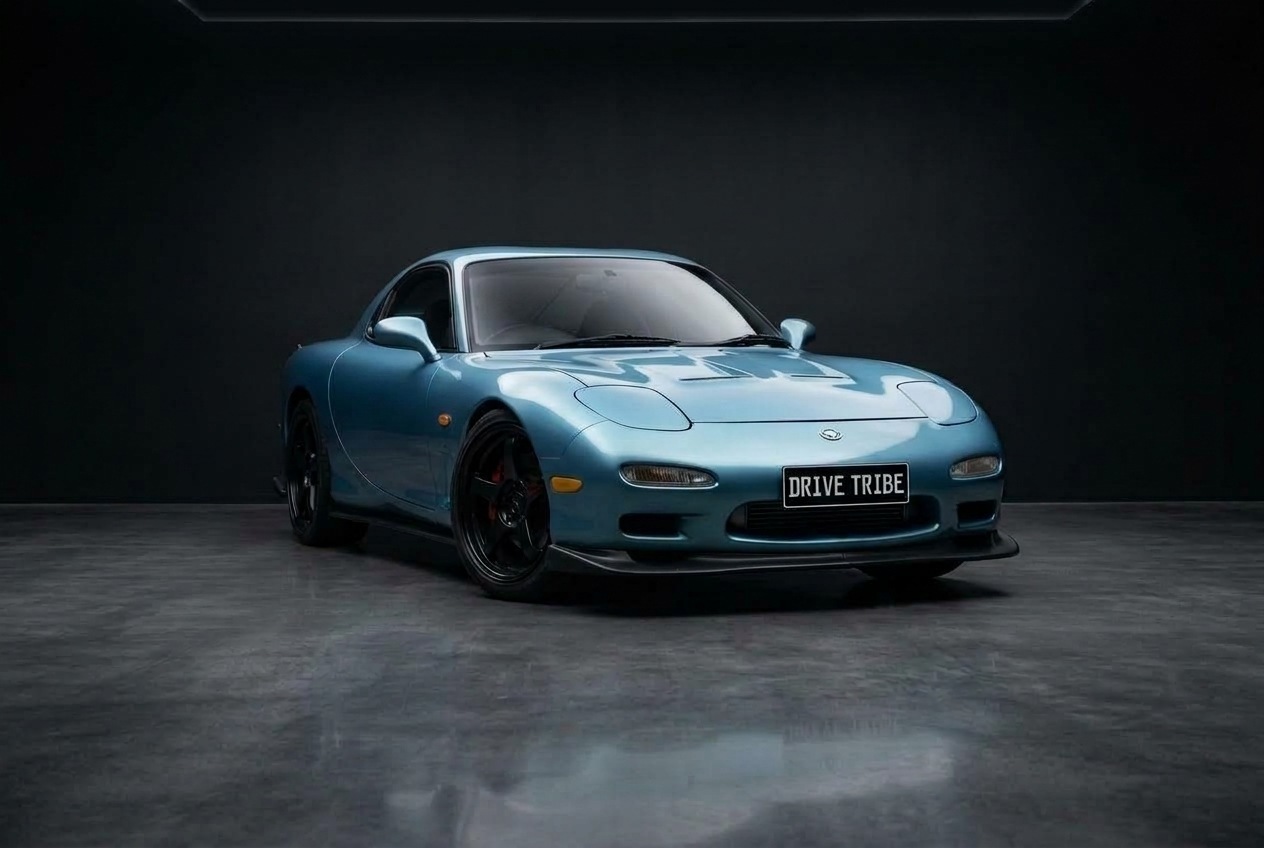
Each generation refined the same recipe: light weight, balance, a rotary up front and rear-wheel drive. The FD is the one most people picture when they hear RX-7, and ours is a bridgeported example. Our RX-7 FD history article goes deeper into that generation, and bridgeport rotary explained covers the modification.
Le Mans, 1991
The Mazda 787B won the 24 Hours of Le Mans in 1991. It remains the only Le Mans win by a rotary-powered car. The high-pitched scream of a 787B is part of racing folklore, and it remains one of the most recognisable engine sounds. It also helped fix the idea that the rotary belongs at the top end of the rev range, which carries into how road rotaries feel and sound.
Why the rotary still matters
The rotary is more than nostalgia. It is a different way of making an engine, and it creates a different kind of car: compact, balanced, smooth and loud in a way that stands out. Enthusiasts value it for those traits, and tuners value it because it responds to modifications like bridgeporting. It also shows up in culture, with the FD RX-7 appearing in the Initial D anime and the Gran Turismo games, and an RX-7 in the first Fast and the Furious film.
Experiencing a rotary yourself
History is easy to read about, but a rotary is meant to be heard. Our Mazda RX-7 FD Bridgeport is a bridgeported 13B rotary on a single G42 turbo in light metallic blue, available chauffeur driven for a wedding arrival, formal, corporate transfer, special event or a weekend run up the coast road, and as a guided drive where you take the wheel with an experienced driver of ours beside you. See the Mazda hire page for more.
A guided drive stays on public roads at the posted speed limit. Our driver keeps it relaxed and legal, and fast driving belongs on a track. We never support speeding or street racing. For the process, read how a guided drive works.
What made the rotary special to drive
Beyond the history, the rotary changed the character of the cars it powered. It is compact, so it can sit low and further back in the chassis. It has no reciprocating pistons, so it turns smoothly. And it revs freely, with a sound that builds in a way piston engines do not copy. Those traits are why enthusiasts forgive its reputation for thirst and its need for attentive maintenance.
- Weight and balance: a small, light engine low in the car helps handling.
- Smoothness: continuous rotation rather than up-and-down piston motion.
- Sound: a distinct, higher-pitched note, rougher once the ports are enlarged.
- Tuning potential: modifications such as bridgeporting and turbocharging have a strong effect.
For a modern look at how it plays out, read what a rotary sounds like up close in an RX-7, or first ride in a rotary: what to expect if you have never sat in one. The 90s JDM comparison puts the RX-7 alongside its rivals from the same era.
FAQ
Who invented the rotary engine?
Felix Wankel invented the principle. Mazda developed it into a production engine.
What was the first Mazda rotary car?
The 1967 Cosmo Sport was the first twin-rotor production rotary car.
Did a rotary win Le Mans?
Yes. The Mazda 787B won in 1991, and Mazda is the only maker to win Le Mans with a rotary.
How many generations of RX-7 were there?
Three: the first (SA22C and FB), the FC and the FD3S.
Can I experience a rotary in Sydney?
Yes, in our RX-7, as a chauffeur ride or a guided drive.
Ready to ask? Hear a piece of rotary history in person. Request a guided drive quote on the car's page, message us on WhatsApp, or phone 0468 011 118. Tell us the date, the times and where you would like to go, and we will plan the route and stops with you.
More in our Mazda RX-7 category, and the RX-7 in pop culture. You can also see the RX-7 on its car page.