
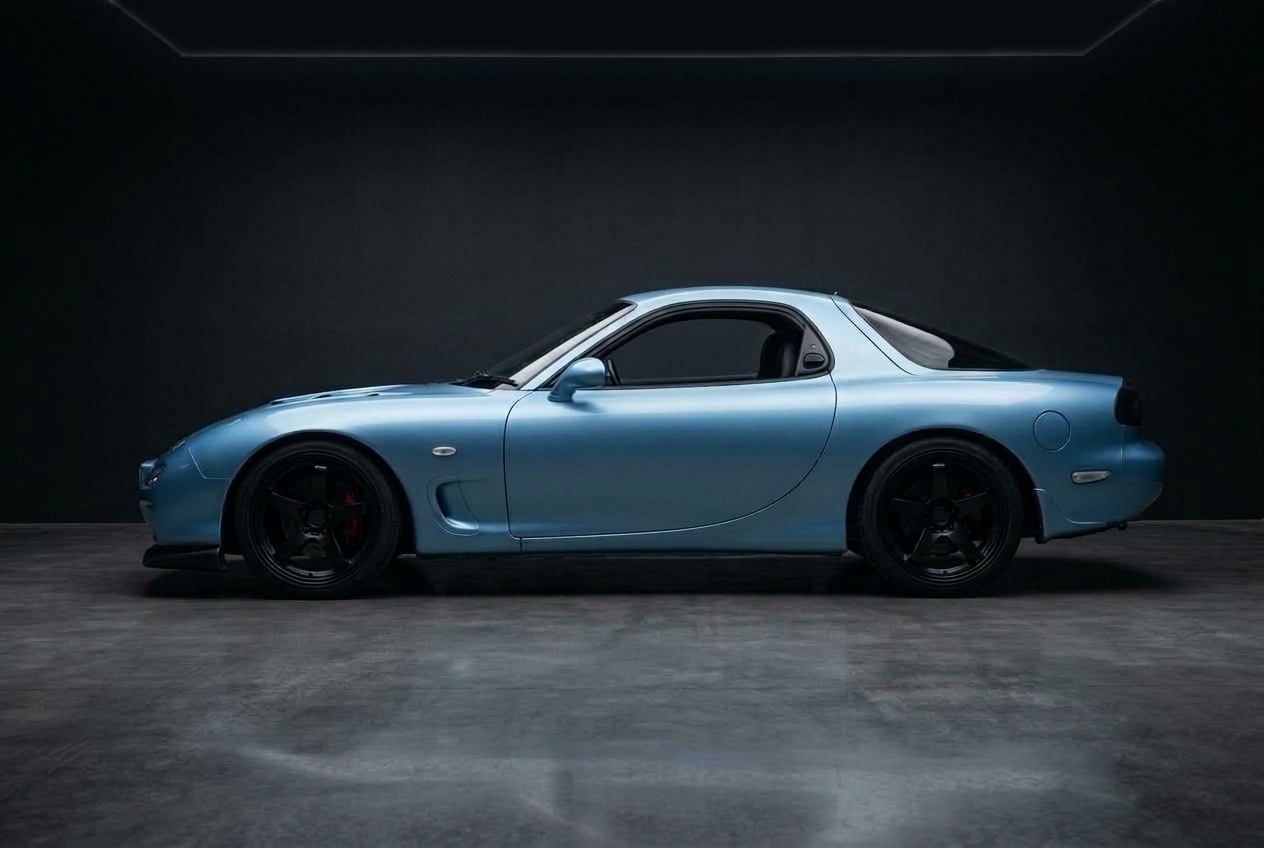
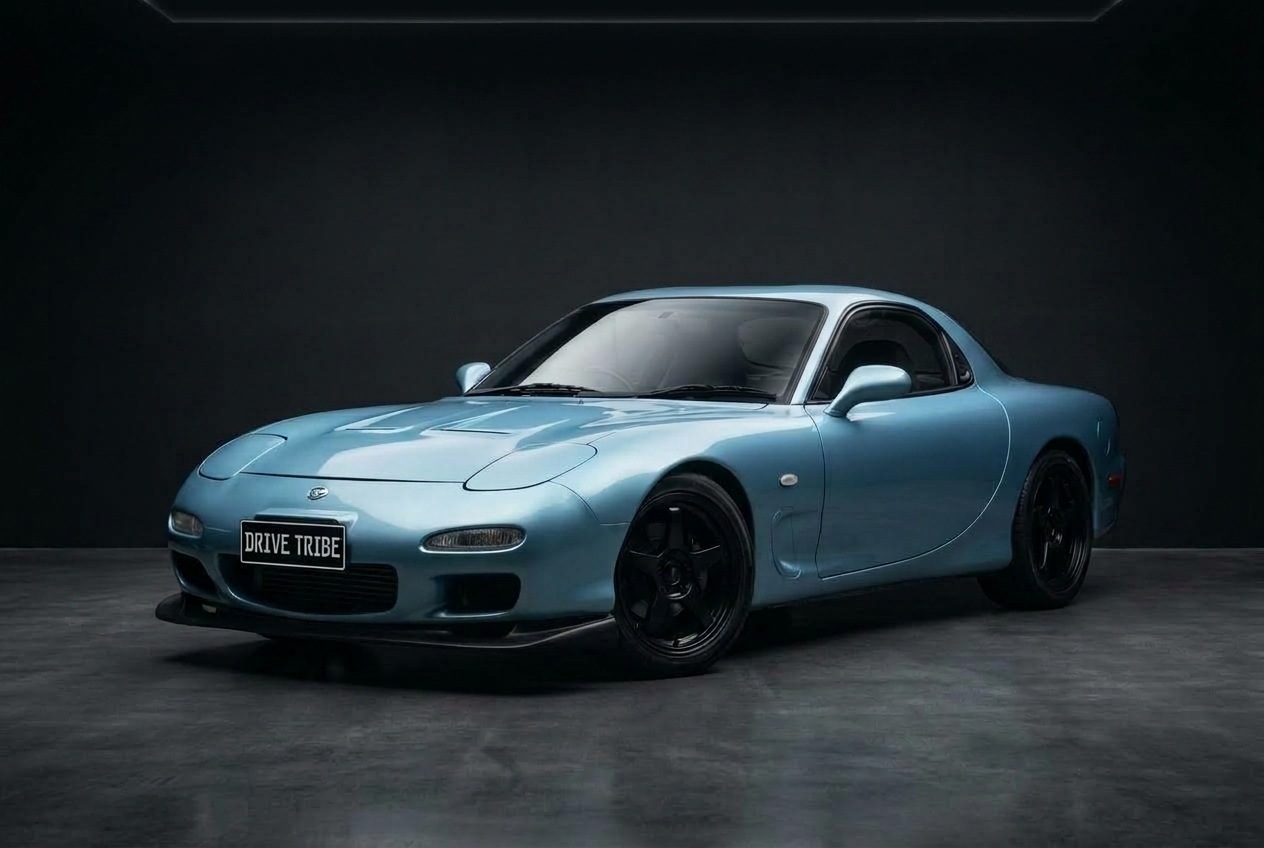
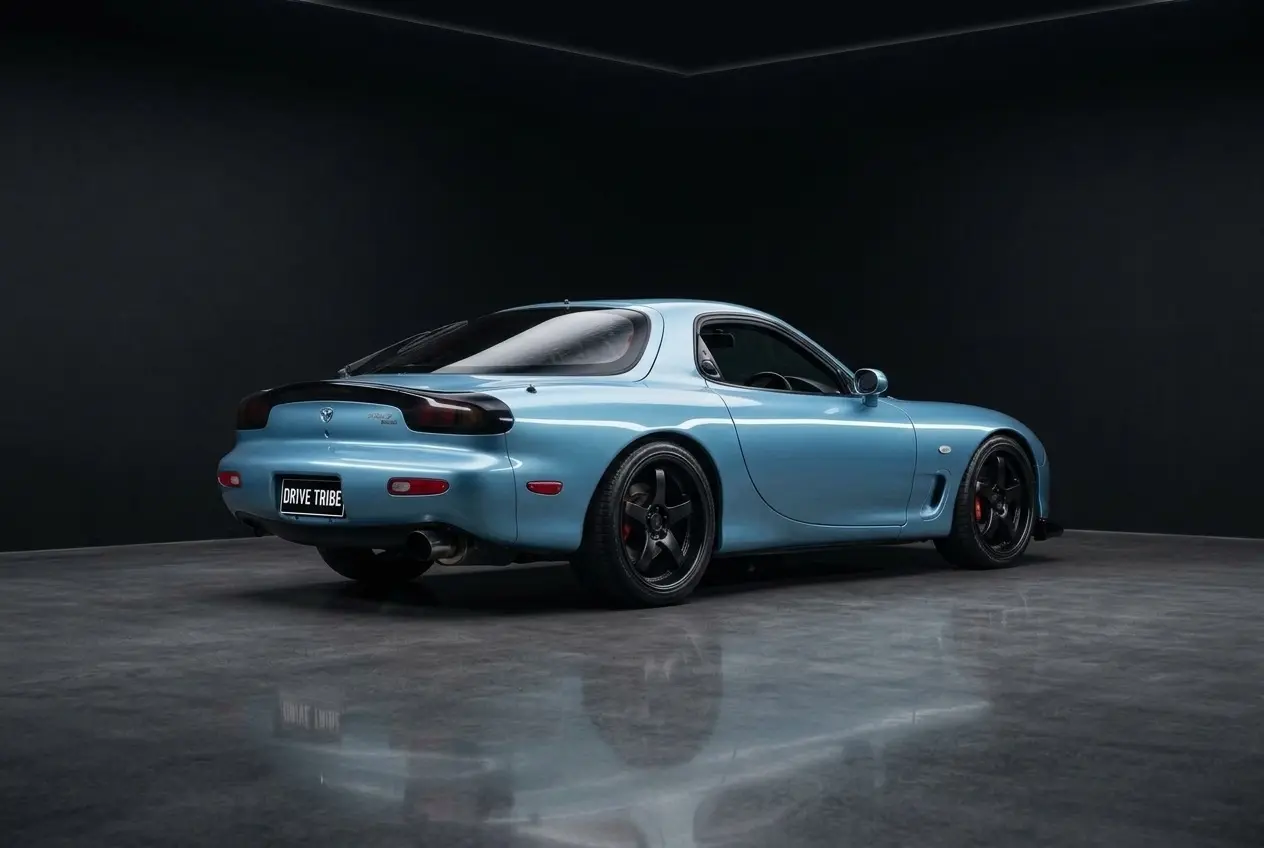
A bridgeport rotary is a Wankel rotary engine whose intake and exhaust ports have been enlarged and re-shaped in the rotor housing so the engine can breathe more freely. In plain terms, it lets more air and fuel in and more exhaust out. That is why a bridgeported 13B revs hard, sounds raw and has the character our Mazda RX-7 FD Bridgeport is known for.
First, how a rotary works
A piston engine pushes pistons up and down in cylinders and turns that straight-line motion into rotation with a crankshaft. A rotary does not have pistons. Instead, a rounded triangular rotor spins inside an oval-shaped housing. As it turns, the three faces of the rotor create chambers that grow and shrink, drawing in air, compressing it, firing and pushing it out. All four stages of the cycle happen around the housing as the rotor goes round.
Felix Wankel invented the principle, and Mazda is the maker that took it furthest. The tips of the rotor are sealed against the housing by apex seals, which are central to how a rotary runs, and to the reputation it has for needing careful maintenance.
What is a port?
A port is a hole in the housing through which air and fuel enter or exhaust leaves. In a piston engine, valves open and close to control flow. In a rotary there are no valves. The rotor itself covers and uncovers the ports as it moves. Where the ports sit and how big they are decides how the engine breathes, which in turn shapes how it makes power and how it sounds.
The main types of porting
- Peripheral port: exhaust and intake ports are cut in the outer rim of the housing. This allows plenty of flow at high revs but rough running at low revs.
- Side port: ports are in the side housings, which gives smoother idle and better low-speed behaviour. Standard rotaries generally work this way.
- Bridgeport: a mix. The ports are enlarged and re-shaped, with a bridge of material left between the openings, to improve breathing without giving up as much driveability as a full peripheral port.
A bridgeport is the middle path that many tuners prefer, because it gains flow while keeping the engine closer to something you can actually drive on the road.
Why bridgeporting changes the sound
Larger, differently timed ports mean more overlap between intake and exhaust, and a rougher idle. The note changes from the smooth hum of a stock rotary to something more urgent and uneven, with a hard edge when the revs build. Because a rotary revs freely and loves the top of its range, the sound climbs quickly and keeps climbing. Our companion piece what a rotary sounds like up close in an RX-7 describes it from the passenger seat.
What this means in the RX-7 FD
In standard form the FD RX-7 used a sequential twin-turbo 13B-REW. Our car is a bridgeported 13B rotary on a single G42 turbo, so it builds on that layout with the ports enlarged. We do not publish power figures, because the tune is not published, and we do not guess. What matters for a passenger or driver is the character: a light, wrapped-around cabin, a free-revving engine and a sound that stands apart from the V8s and V12s at most meets.
If you want the wider story, read Mazda rotary engine history and the RX-7 FD history.
Why it needs expert hands
A modified rotary asks more of the people who look after it. Apex seals, heat, fuelling and tune all matter more than in a mild piston car. That is part of why the RX-7 is chauffeur only for normal hire, and why a guided drive pairs you with an experienced driver. More in why a bridgeported rotary needs expert hands.
Experiencing one properly
You can ride in the car chauffeur driven for a wedding arrival, formal or special event, or ask us for a guided drive, where you take the wheel with an experienced driver of ours beside you. A guided drive stays on public roads at the posted speed limit. Our driver keeps it relaxed and legal, and fast driving belongs on a track. See how a guided drive works and the Mazda hire page.
Common myths about bridgeported rotaries
- "They are always unreliable." Rotaries have a reputation for needing attentive maintenance, particularly around apex seals, cooling and fuelling. That is different from being hopeless. A well-maintained engine looked after by people who know it is a different proposition from a neglected one.
- "Bridgeporting is just about power." It changes how the engine breathes, which affects its sound, idle and response as much as its output. Many owners choose it for the character.
- "A rotary is a small piston engine." It is a different design altogether, with no pistons, no crankshaft in the usual sense and no valves.
- "It is only for racing." Mazda won Le Mans with a rotary in 1991, but the engine also powered road cars from the 1967 Cosmo Sport onwards.
A guided drive suits this kind of car well because the person beside you can explain what you are hearing and feeling as it happens. If you are curious about the first-time experience, read first ride in a rotary: what to expect, and for a look at the full range of Japanese performance cars, our JDM drive experiences guide sets out what we offer.
The basic point is simple. Bridgeporting is a way of tuning how a rotary breathes. The cost is some low-speed smoothness; the reward is a freer-revving, louder and more characterful engine. Our RX-7 is the example, and you can experience it as a passenger or as a driver on a guided drive.
FAQ
What does bridgeport mean?
It means the intake and exhaust ports in the rotor housing have been enlarged and re-shaped for better breathing.
Does a rotary have pistons?
No. A triangular rotor spins inside a housing, and apex seals at its tips seal the chambers.
Is a bridgeport rotary reliable?
It asks for more careful maintenance than a mild piston engine, which is why the car is looked after by people who know it.
How much power does your RX-7 make?
We do not publish a figure because the tune is not published.
Can I drive it?
Yes, on a guided drive with an experienced driver from our team beside you. We confirm eligibility, bond and cover in the quote.
Ready to ask? Hear the explanation in person. Request a guided drive quote on the car's page, message us on WhatsApp, or phone 0468 011 118. Tell us the date, the times and where you would like to go, and we will plan the route and stops with you.
Browse our Mazda RX-7 articles and the RX-7 car page.