
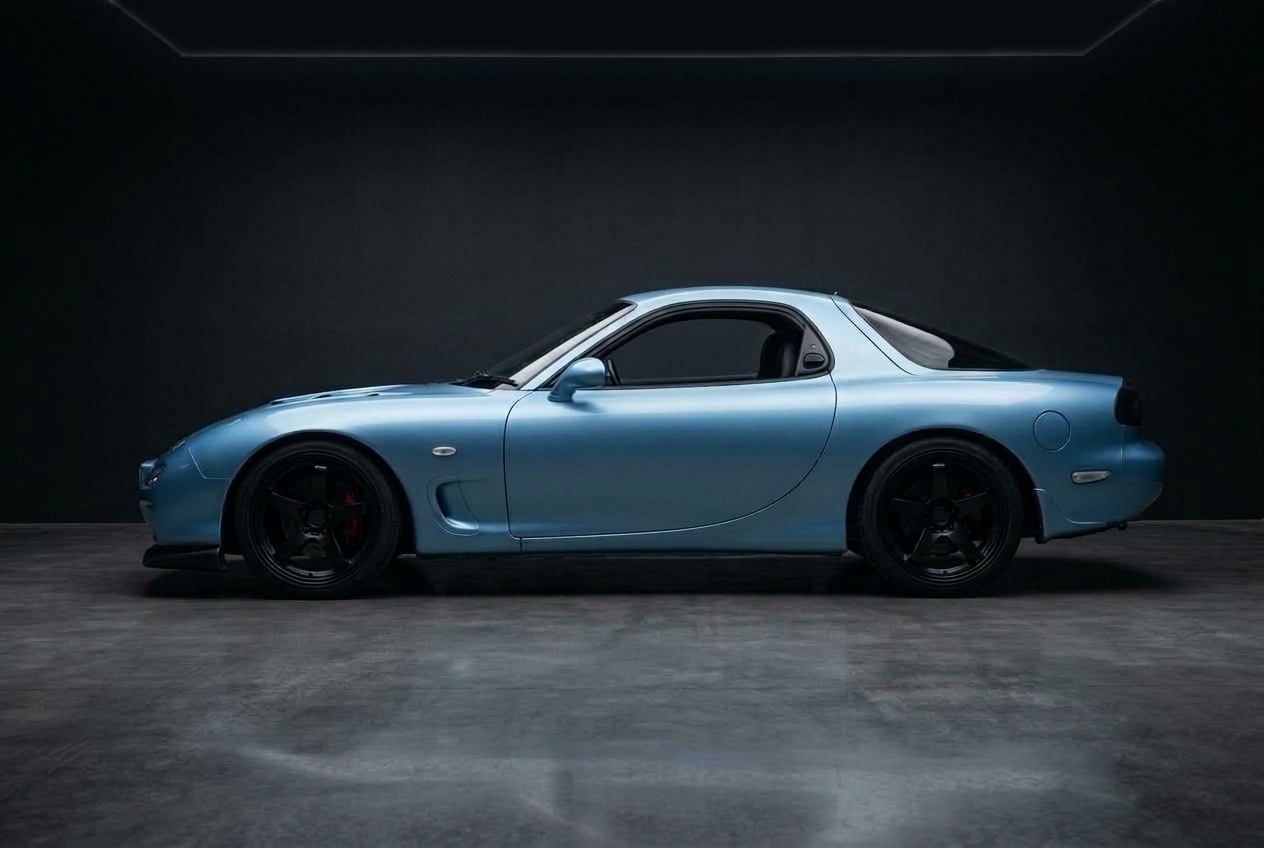
A bridgeported rotary sounds nothing like a piston engine because it has no pistons, no valves opening and closing, and no up-and-down firing stroke to make a beat. What you hear is a continuous, raspy, almost tearing note that climbs smoothly and keeps climbing. At Drive Tribe you can hear it properly in the Mazda RX-7 FD Bridgeport, either from the passenger seat on a chauffeured run or through a guided drive, where you hold the wheel and one of our experienced drivers sits beside you.
Why a rotary sounds the way it does
A conventional engine pushes a piston up and down, so each cylinder fires in a rhythm and the exhaust pulses out in a pattern. A rotary uses triangular rotors turning inside oval housings. The rotor spins rather than reciprocates, so the combustion events overlap and the sound is smoother and busier at the same time. People describe it as a buzz, a rasp or a ripping sheet of fabric, and it is one of the reasons rotary owners are so devoted to the engine.
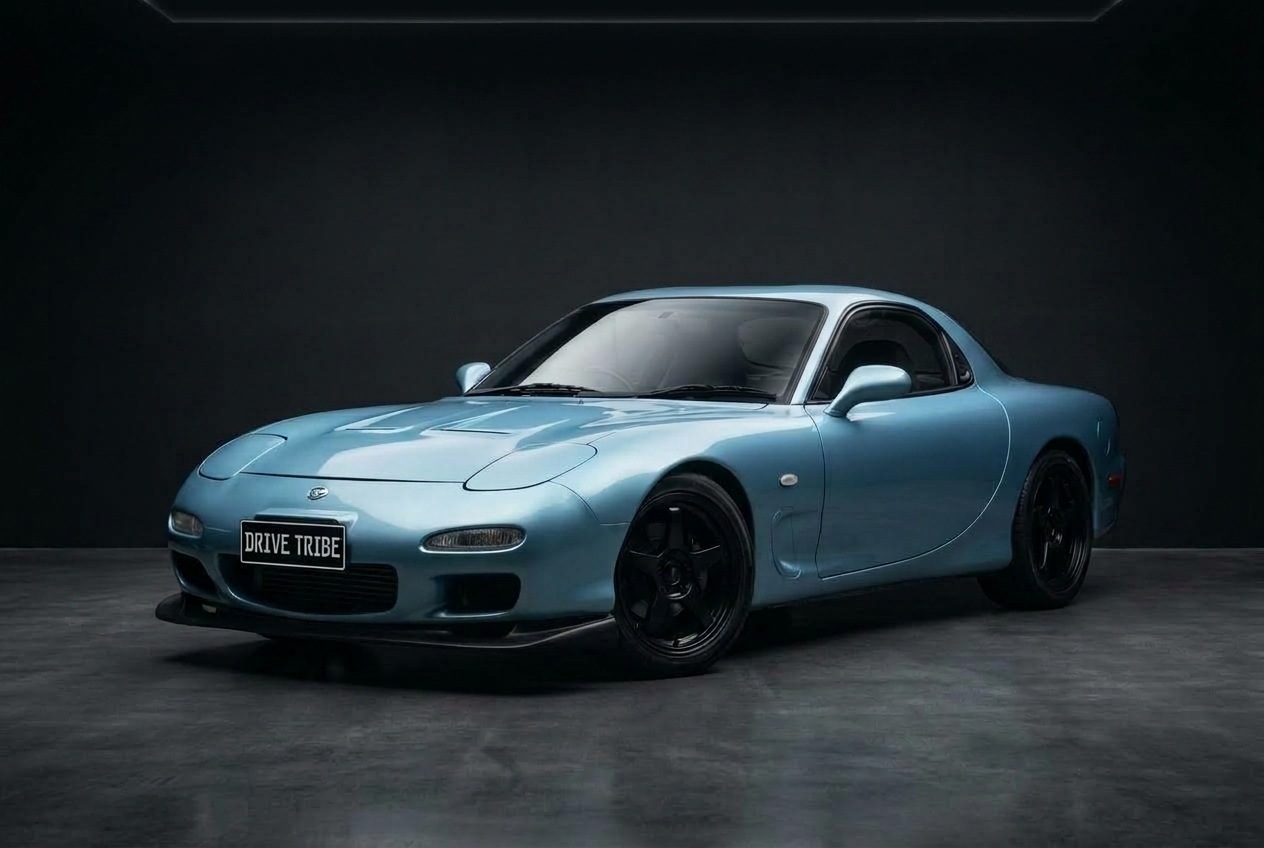
The standard FD RX-7 used a sequential twin-turbo 13B-REW, and even in that form it had a distinct voice. Our car is built around a bridgeported 13B rotary on a single G42 turbo, which changes the character again.
What bridgeporting does to the note
Bridgeporting means enlarging and re-shaping the intake and exhaust ports cut into the rotor housing so the engine breathes more freely. Bigger, differently timed ports let the exhaust leave in a harder, sharper burst and push the engine toward a rougher, more aggressive idle. That lumpy, uneven tick-over is a signature of a ported rotary: it sounds a little angry before you have moved an inch.
- Idle: rougher and more urgent than a standard rotary, with a slightly irregular burble.
- Off the throttle: a crackle and pop as the engine settles, which is the sound the car is known for.
- Under load: a rising, ripping note as the turbo spools and the engine climbs. A rotary revs freely and loves the top of the rev range, so the sound builds without the flat spots you get from a piston engine.
The exhaust, the turbo and the flames
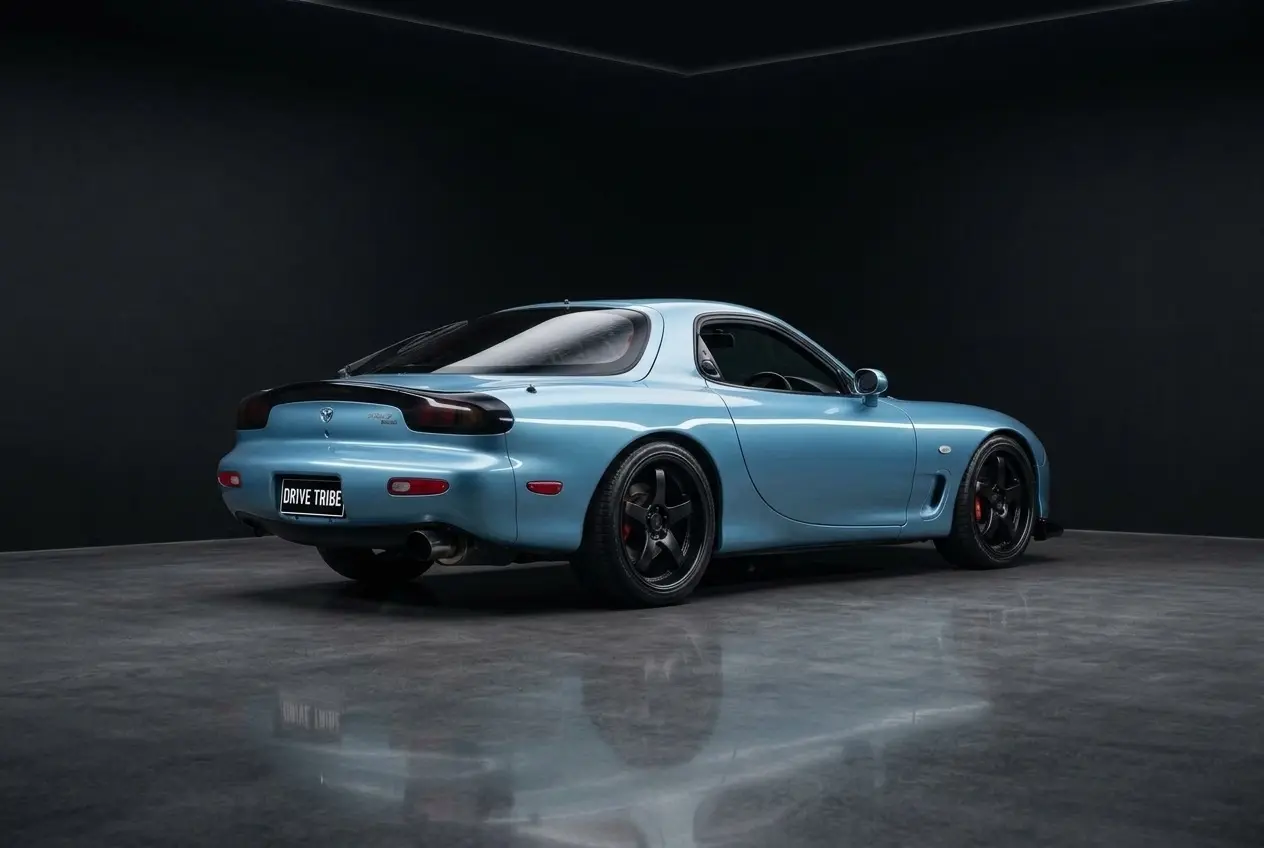
With a big single turbo feeding the engine, a good deal of the exhaust energy is spent spinning the turbine wheel before it reaches the pipe, and you can hear the whistle and flutter of the turbo layered under the engine note. James calls the car flame throwing, because on the overrun it can throw flames from the exhaust. That is an exhaust effect, best seen at a meet or a photo shoot, and it is not promised on any drive or hire. We never encourage chasing it on the road, and our driver will not either. If you are curious about the mechanics, read why the RX-7 spits flames.
How to hear it properly
Sound is the thing photos cannot give you, so the setting matters. A few things make the difference:
- Stand outside first. Watching the car start and idle from a few metres away gives you the full, raw character.
- Listen from the driver's seat. On a guided drive you hear the engine with your own foot controlling it, which is a different thing from hearing it from outside.
- Pick a road with some variety. Gentle changes in speed, hills and the occasional tunnel make the note come alive. Our best JDM drive routes in Sydney guide has ideas.
- Give it quiet. A short pause with the music off tells you more about the engine than an hour of chat.
For a deeper listen with no distractions, read what a rotary sounds like up close.
Keeping it lawful and relaxed
A loud, characterful car invites bad habits, so we are plain about this. A guided drive is on public roads and you obey road laws and the posted speed limit at all times. Fast driving belongs on a track, and we do not do speeding or street racing. Part of why our driver sits beside you is to keep the drive relaxed and legal, so you can enjoy the sound at normal road speeds, where a rotary sounds wonderful anyway. We plan the route with you, and the guided supercar tour page explains the format. Noise matters to neighbours too, so we pick routes and stops with that in mind.
FAQ
Is the RX-7 loud?
It is distinctive rather than simply loud. The note is raspy and busy, and a bridgeported engine is rougher at idle than a standard one. It is part of the appeal.
Why does a rotary sound different from a V8 or a flat-six?
There are no pistons or valves. The rotors spin, the combustion events overlap and the exhaust arrives as a continuous rasp rather than a rhythm of beats.
Will I see flames from the exhaust?
The car can throw flames on the overrun, but it is an exhaust effect seen at a meet or a shoot. It is not promised on any drive or hire and we do not chase it on the road.
Can I drive the RX-7 to hear it myself?
Yes, through a guided drive. You drive and one of our experienced drivers sits beside you. We confirm eligibility, bond and cover in your quote. See how a guided drive works.
Is it quieter inside the car?
Not by much. You hear the engine, the turbo and the exhaust clearly, which is exactly why people ask for this car.
Want to hear it for yourself? Ask for a guided drive quote on the RX-7 page, message us on WhatsApp, or phone 0468 011 118. Tell us the date, the times and where you would like to go, and we will plan the route and stops with you. You can also browse the Mazda RX-7 articles or the Mazda hire page.