
A bridgeported RX-7 can throw flames from its exhaust because unburnt fuel reaches the hot exhaust and ignites there, usually when the driver lifts off the throttle on the overrun. It is an exhaust effect, not a sign of anything dramatic inside the engine, and it is part of why James calls our Mazda RX-7 FD Bridgeport "flame throwing". It is something to see at a meet or a shoot, not something promised on any drive or hire.
What is happening in the exhaust
Flames at the tailpipe need three things: fuel, air and heat. When a driver lifts off the throttle, the engine is still turning, but less air and fuel are being burnt inside it. Some fuel passes through unburnt into the exhaust, where it meets hot gases and oxygen and ignites at or near the tailpipe. The effect is brief, bright and loud, often with a crackle or a pop.
This is the overrun, the moment between hard acceleration and coasting. A turbocharged engine with a free-flowing exhaust tends to show it more clearly.
Why a bridgeported rotary does it so readily
- Port timing. Bridgeporting enlarges and re-shapes the ports in the rotor housing. Larger ports and more overlap between intake and exhaust let more unburnt mixture pass through into the exhaust.
- Hot exhaust. A rotary pushes out exhaust that is hot, which helps ignite any fuel that reaches it.
- Turbocharging. The FD RX-7 is a twin-turbo car in standard form, and ours is a bridgeported 13B rotary on a single G42 turbo, so the exhaust side is busy.
- Tune. How the engine is fuelled and mapped decides how much shows. We do not publish tune details.
To understand the ports, read bridgeport rotary explained. The short version is that a bridgeported rotary breathes freely, and a freely breathing engine can throw out more than the exhaust expects.
Is it dangerous?
In the right place, it is a spectacle, not a hazard. In the wrong place, it is a risk. Flames at the tailpipe can ignite dry grass, can startle other road users, and can look like something they are not. That is why we treat it as an effect for a meet or a shoot and nothing more. We never encourage chasing it on the road, and it is not promised on any drive or hire.
Where you can see it
The sensible places are an organised car meet, a controlled shoot or an event where the car is the centrepiece. See our RX-7 at car meets article and the RX-7 photo shoot guide, and the car hire for photoshoots page. If you have a particular occasion in mind, tell us and we will say honestly what is possible.
What a guided drive offers instead
A guided drive in the RX-7 is about the car's character: the rotary sound, the steering, the shape and the history. You take the wheel, an experienced driver from our team sits beside you, and we plan the route and stops with you. The drive is on public roads at the posted speed limit. Our driver keeps it relaxed and legal, and fast driving belongs on a track. We never support speeding or street racing, and no one should be provoking a car to throw flames on a public road.
For the full picture, read the RX-7 guided drive guide and how a guided drive works.
The sound that comes with it
The flames and the sound belong together. A bridgeported rotary has a rougher idle and a hard-edged note that climbs rapidly with the revs, and a rotary revs freely and loves the top of its range. That character is the real attraction. See what a rotary sounds like up close in an RX-7.
What the flames are not
There are a few common misunderstandings worth clearing up. Flames from a tailpipe do not mean the engine is on fire. They do not mean the car is out of control. And they are not a guaranteed feature of every rotary or every drive. They depend on the engine's state, its tune, the throttle and the exhaust, which is why we promise nothing.
- Not a party trick on demand. It happens under specific conditions, not whenever someone asks.
- Not a safe thing near people. Spectators should stay well back and clear of the tailpipe.
- Not for the road. Public roads have other drivers, pedestrians and dry vegetation, and the effect is out of place there.
- Not a measure of speed. It is an effect of fuel and heat in the exhaust, nothing more.
If you want it for a shoot or event
Anyone planning content for a film, clip or social post should talk to us first. Tell us the location, the date and what you are aiming to capture. We will say honestly whether we can help, and we may suggest alternatives. Our music video and film shoot hire article covers the practical side, and the event car hire page lists the wider options.
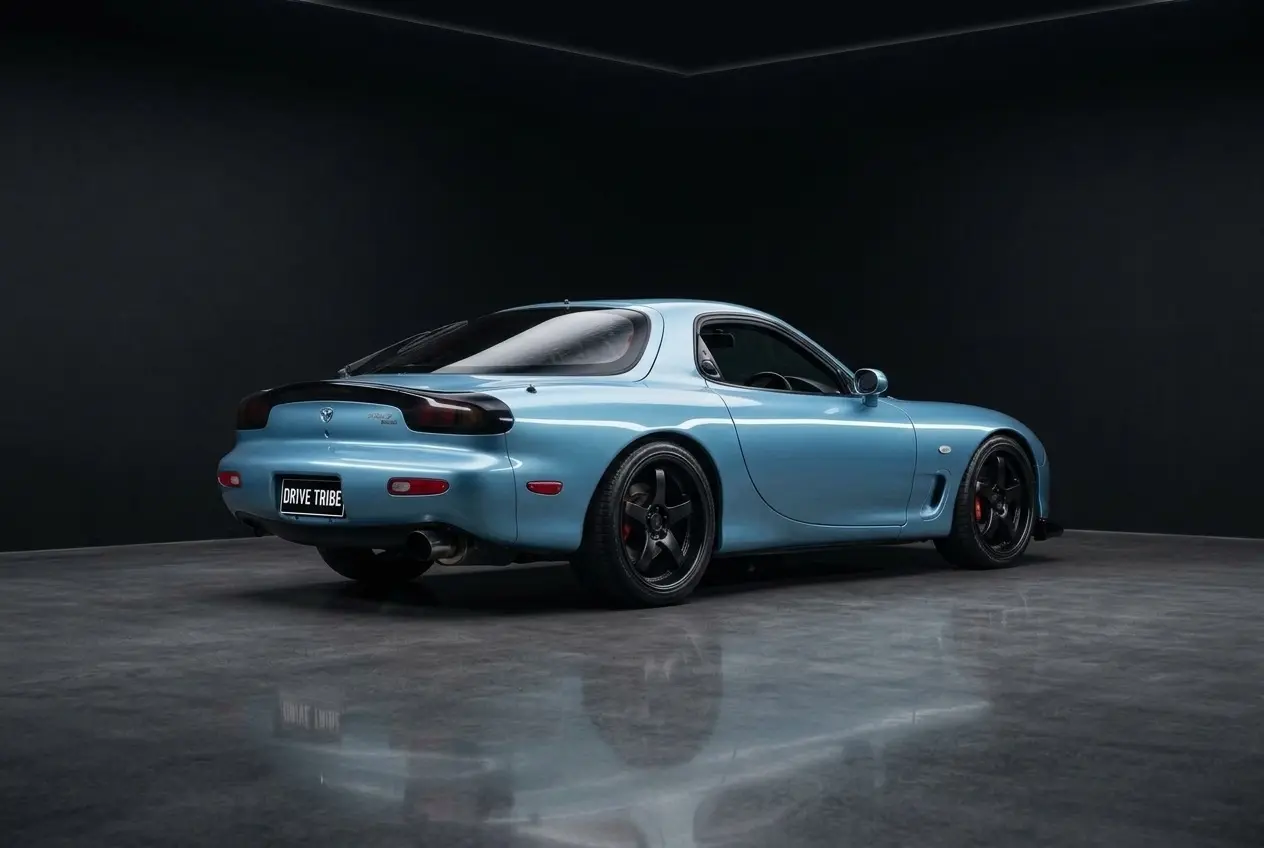
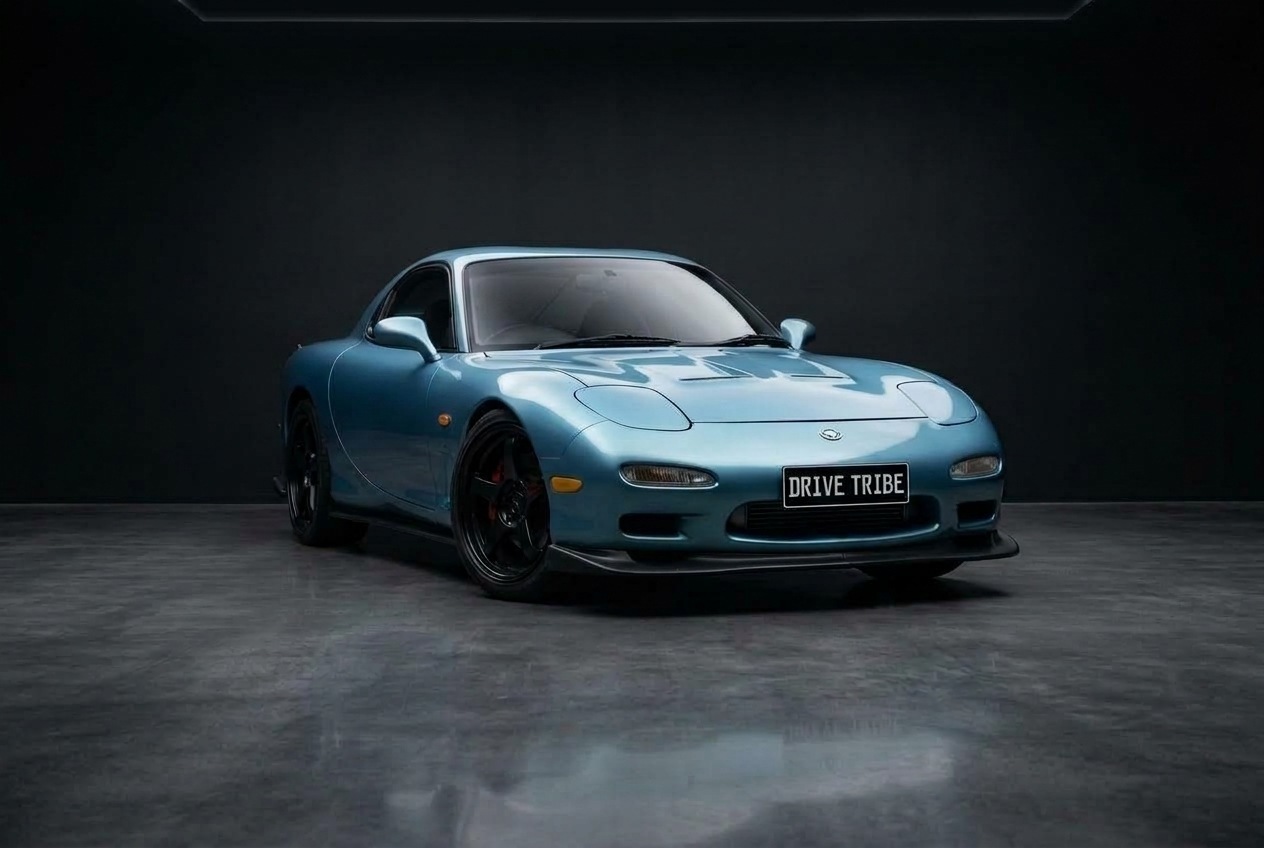
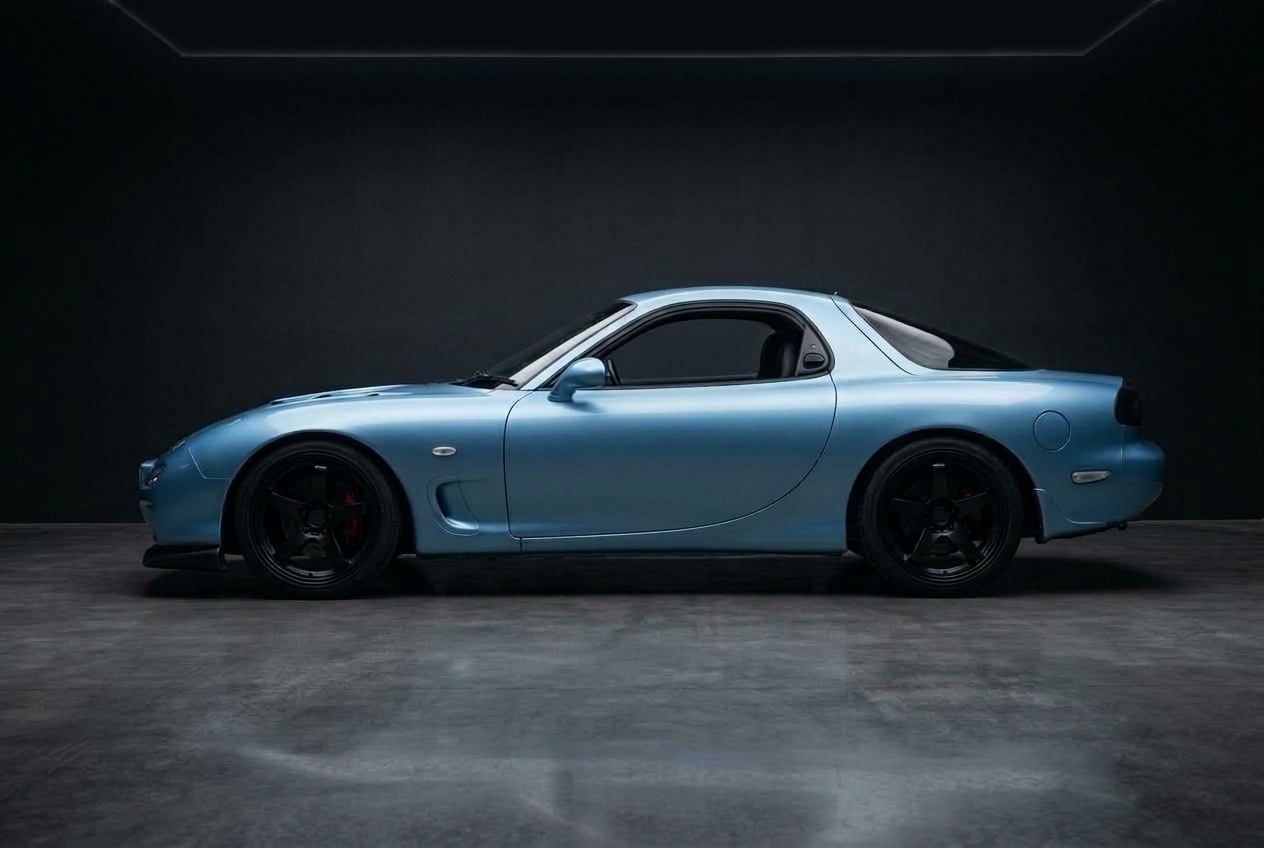
It is worth remembering that the car is as striking without the flames. The light metallic blue paint, the vented bonnet, the black front lip and the sound of a bridgeported rotary make it memorable on their own, and the baby blue styling is a good place to see why.
FAQ
Why do rotaries spit flames more than piston cars?
Port overlap and a hot exhaust let unburnt fuel reach the tailpipe, especially on a bridgeported turbo engine.
Will your RX-7 spit flames on my hire?
It is not promised on any drive or hire. It is an exhaust effect for a meet or a shoot.
Is it a sign that something is wrong?
Not by itself. It is a known effect of a modified rotary on the overrun.
Can I request it?
Tell us what you have in mind, such as a shoot, and we will say what is possible. We will not encourage it on the road.
Can I drive the car?
Yes, on a guided drive. We confirm eligibility, bond and cover in your quote.
Ready to ask? Tell us whether you are after a drive, a ride or a shoot. Request a guided drive quote on the car's page, message us on WhatsApp, or phone 0468 011 118. Tell us the date, the times and where you would like to go, and we will plan the route and stops with you.
More in our Mazda RX-7 category, and the Mazda hire page. You can also see the RX-7 on its car page.