

Book the MV Agusta F4. Pick your dates and book the MV Agusta F4 online, or call us and we will sort it with you.
Book NowCall 0468 011 118Thunderbolts Way climbs out of the Gloucester valley into country that changes character every few kilometres, from open grazing land to tight bends through tall timber. Matching the right bike to that mix matters more than most riders expect. A machine that feels brilliant for an hour can feel tiring by the end of a long day. Here is how we would pair our three bikes with the ranges, the time of year to pick, and the stops worth planning around.
Everything to know before you book, from the licence rules to the bond, is on our Sydney motorbike hire page.
Why the Gloucester Ranges Test a Bike
The ranges around Gloucester ask different things of a motorcycle within a single morning. The opening kilometres are wide and fairly open, which lets you settle in and hold a steady line. Then the road tightens, rises and drops, and every corner asks for a clean entry and a clear exit. A good bike for this country is not necessarily the quickest on paper. It is the one that stays calm when the road keeps changing shape.
Thunderbolts Way rewards patience. Traffic is usually light outside holiday periods, so you can ride at a pace that suits your confidence rather than the vehicle behind you. That also means that when something unexpected appears, such as loose debris after a storm or a truck drifting toward the centre line, you need to respond without drama. Choosing your bike with that in mind is the first step toward a day you will remember for the right reasons.
Before you choose, think about the length of your day. A ride of two hundred kilometres with good stops is a very different proposition from a longer loop with few services. Fatigue creeps in quietly, and the bike that makes the first hour feel easy may make the last hour feel long. Ask yourself how you ride when you are tired, not only how you ride when fresh, and let that guide the choice between our three machines.
The Ducati 1199R on the Climbs
The Ducati 1199R Panigale is the sharpest tool in our fleet, and on the climbs it shows why. Its V-twin delivers 143 kW with a focused, eager character that rewards a rider who is already comfortable on a superbike. Through the uphill sections the engine pulls cleanly, and the gold front forks and black forged wheels give the bike a planted feel when the road leans into a run of tight, stacked bends.
This is a bike for experienced riders, and Thunderbolts Way is best approached with that respect. The Ducati is most at home where the surface is good and the sightlines are clear, because it rewards precision and punishes hesitation. Think about your entry speed before each bend, keep your eyes well ahead, and use the throttle to settle the bike through the exit rather than to chase it. On a route with changing grip, that calm discipline matters more than any figure on a spec sheet.
The Australian flag paint scheme honours Casey Stoner, a countryman who claimed his first premier class crown on a Ducati in 2007 while wearing number 27. It is a tribute livery, not his machine, and carries no endorsement from him. Many riders like to stop at a roadside pull-off on the way up to take a photo, and it is a fine bike to have under you as the valley opens out below.

The MV Agusta F4 Through the Bends
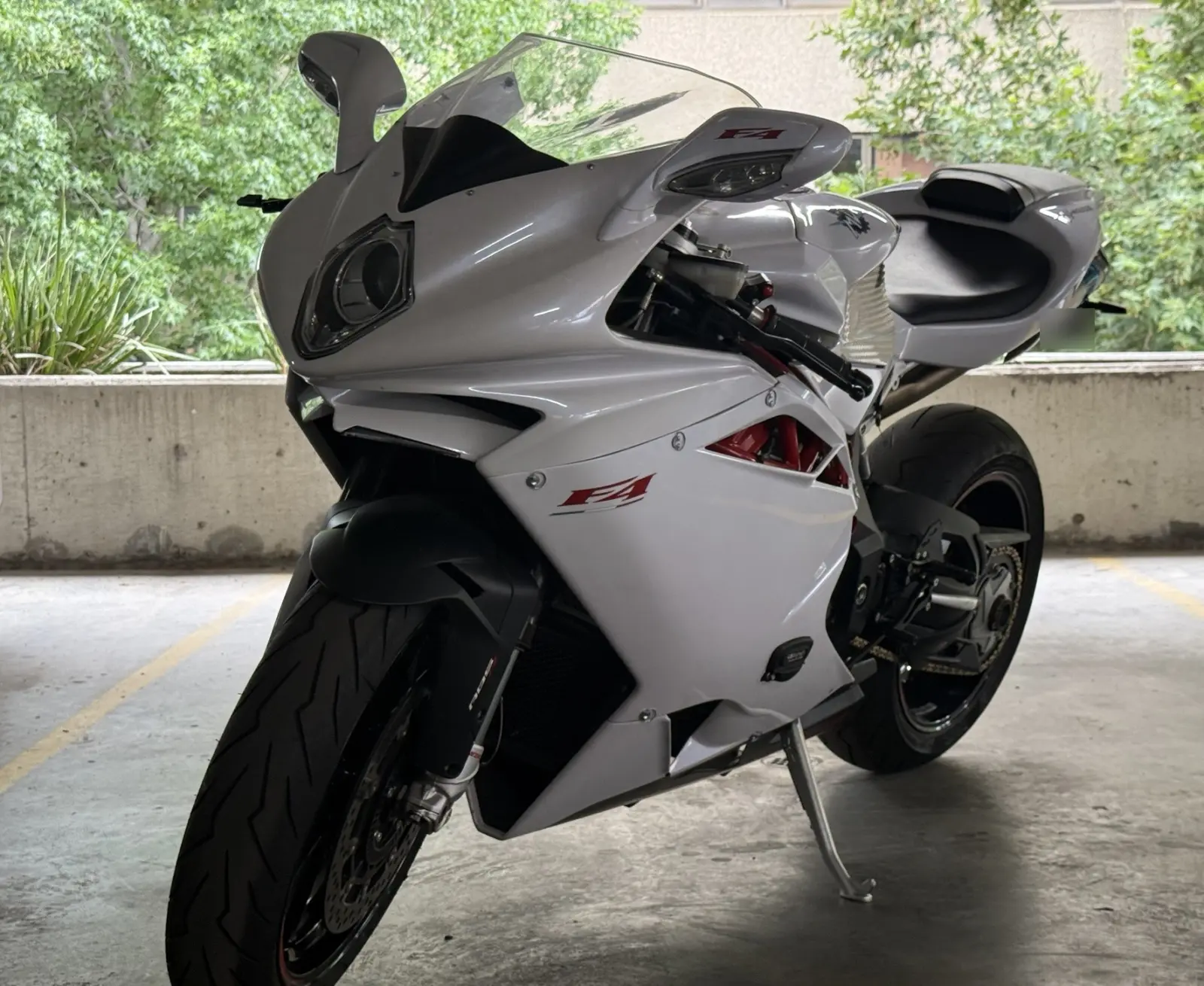
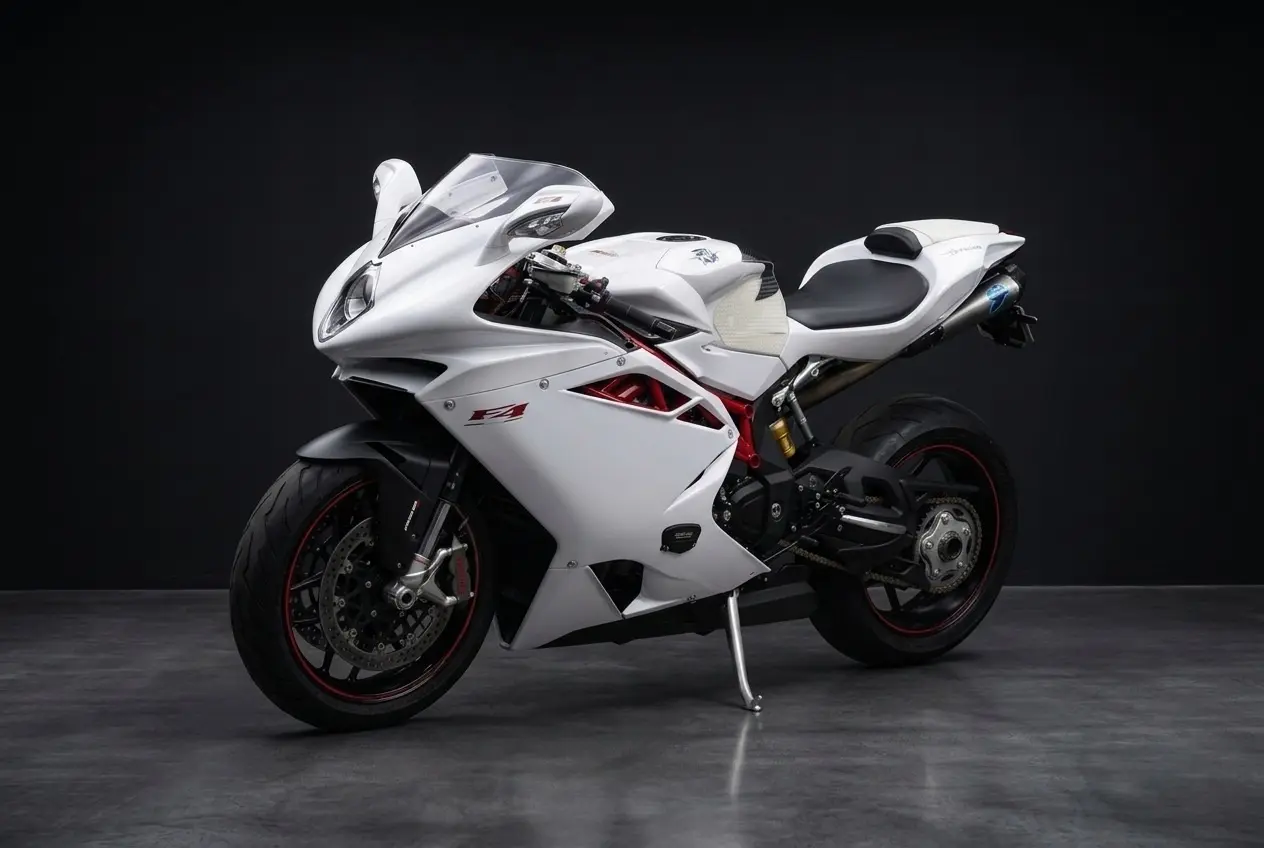
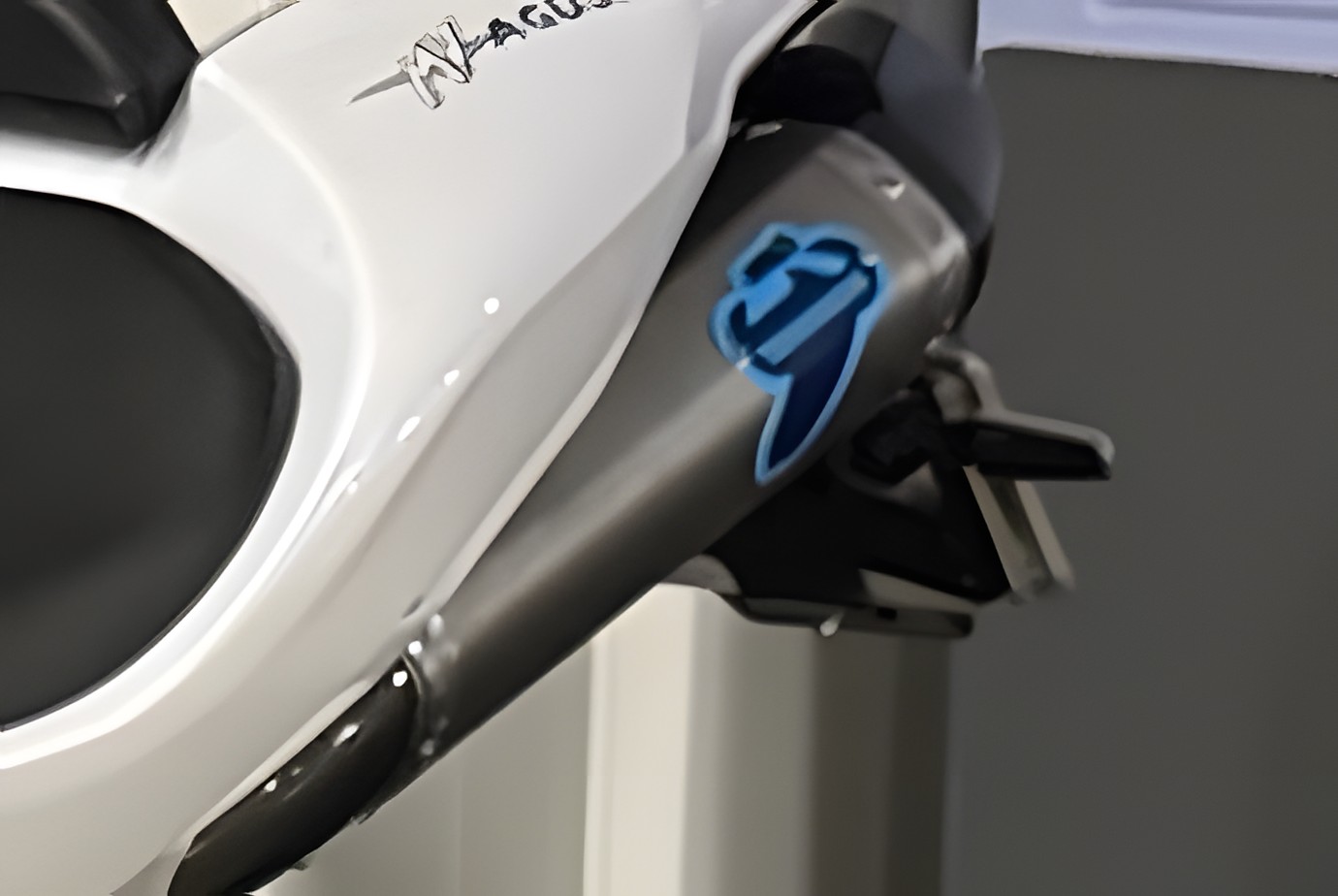
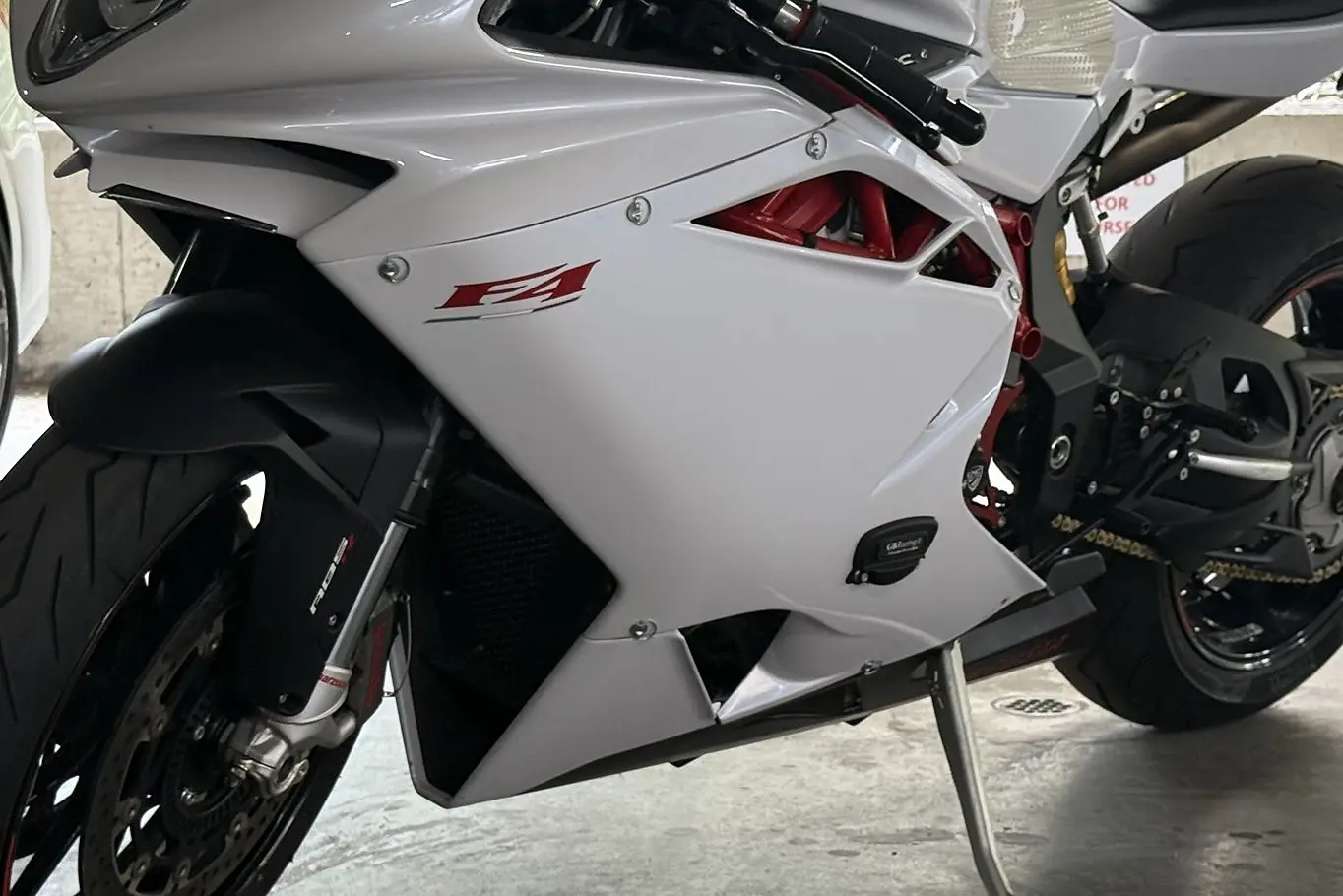
Our MV Agusta F4 is pearl white with a red trellis frame, and it is the bike we would point at the stretches where the road becomes a long run of linked corners. Its 998cc inline four is tuned with a performance exhaust, and the power arrives smoothly and muscularly once you open it up on a clear straight. With the trees close on both sides, the exhaust note carries well and adds to the atmosphere of the ride.
The F4 rewards a rider who likes to read the road ahead and carry momentum from one bend to the next. Set your line early, look through each corner toward the exit, and let the inline four do its work between apexes. Because the bike is so willing, it is easy to ride faster than the road warrants. Use the power where the surface and sightlines allow, and back off where a shadowed bend or a damp patch could catch you out.
The trellis frame and the bright finish make the F4 a bike people remember long after the ride. For a rider who wants a single machine to carry the whole route, from the valley floor to the high country and back, it offers a focused, sporty day with a character all of its own. Plan regular stops, keep your concentration on the descents, and the bike will repay that discipline on every run through the bends.
The Yamaha MT-09 SP for Relaxed Days
The Yamaha MT-09 SP is an inline three performance naked bike with premium adjustable suspension, gold front forks and strong brakes. It is the most adaptable of our three machines for this route, because it blends a lively engine with an easy-going feel when the road is long and the bends are gentler. The adjustable suspension lets you tune the setup to the surface, which matters on a road whose condition changes from one section to the next.
The MT-09 SP is the bike we would choose for a scenic, unhurried day where you want to stop often and take in the views. Its strong brakes give you confidence on the descents, where the road drops quickly and you need to scrub speed before the next turn. Use the brakes early and smoothly, then roll on the throttle as the bike settles through the exit. It does not need to be ridden hard to be enjoyed, which makes it a good match for riders who prefer a steady, confident pace across the full day.
If you want one bike that suits a varied route, the MT-09 SP is the most forgiving choice when the corners tighten and the surface becomes less predictable. It feels composed at a sensible pace and gives you room to adjust your line without feeling rushed. Many riders find that the bike keeps them relaxed on the middle hours of the day, when concentration can start to slip on a long loop through the hills.
Road Surface, Corner Character and Traffic
Thunderbolts Way mixes sections of smooth, well-maintained bitumen with stretches where the edge breaks up, the camber changes or the surface darkens after rain. Road conditions shift with the season, with maintenance work and with the weather, so check conditions with Transport for NSW before you leave, as we advise on every ride. Expect the unexpected in shaded sections, where moss, leaves and fallen timber can sit on the line well into the morning.
The corners come in several types. There are open sweepers where you can carry speed, tighter bends that need a slow entry, and linked sequences that test your line and your nerve. Each suits a different bike. The Ducati and the F4 are happiest on the open, well-surfaced sweepers, while the MT-09 SP is more forgiving when the corners tighten and the grip becomes less certain.
Traffic is a mix of local vehicles, farm trucks, weekend day-trippers on sports bikes and the occasional camper towing a trailer. Weekends bring the heaviest crowds, especially around the more popular lookouts, so give slower vehicles space and pass only where the sightline is clear. Keep to your own lane through the bends, and assume that oncoming traffic may drift onto your side of the centre line when the road narrows.
Best Time of Day and Season
Early mornings offer the cleanest roads, the lowest traffic and the best light through the valleys. The air is cold, however, and the shaded sections can hold frost or damp well after sunrise. Wrap up warmly, carry a layer you can add at a stop, and expect the first hour to feel colder than the forecast suggests. By mid-morning the valley warms, the mist lifts and the road becomes far more pleasant to ride.
Autumn is many riders' favourite season on this route. Daytime temperatures are mild, the trees turn colour in the higher country and traffic is usually lighter than in summer. Spring brings wildflowers and green paddocks, though showers can make the surface slippery, so plan for wet bends. Summer heat can be intense in the valleys, and the long climbs take a toll on riders in the afternoon, so ride early or late rather than in the middle of a hot day.
Winter is quieter, but cold mornings, frost and fog make the high sections demanding. If you ride in the cooler months, keep your speed down through shaded corners and treat any dampness as a warning. Whatever the season, watch for wildlife at dawn and dusk, when kangaroos and other animals move toward the roadside, and slow right down when you see movement near the verge.
Want the MV Agusta F4 for your date? Pick your dates and book the MV Agusta F4 online, or call us and we will sort it with you.
Book NowCall 0468 011 118Fuel, Food and Rest Stops
Fuel is the planning detail most riders underestimate on the ranges. Stations are spaced well apart in the higher country, and a bike that looks comfortably full at the start of the day can be running low by mid-afternoon. Fill up in each town you pass, even when the tank still looks healthy, and note the next station before you leave the last one. Do not assume a station will be open on a quiet weekday.
Food stops in the valley towns are simple and satisfying. A bakery or cafe in a small country town is a good place to break the ride and stretch your legs, and most have outdoor seating where you can hear the bikes come and go. Plan a longer break around the middle of the day, and eat something light before the high sections so that your concentration stays sharp through the final bends.
Rest stops are where you reset your focus. Pull off at a lookout or a wide verge, check your tyre pressures and look over the route for the next section. Drink water regularly, even in cool weather, because dehydration creeps up on riders who are concentrating hard. A ten-minute stop every hour or so keeps fatigue in check far better than pushing on until you are already tired.
Hire Terms That Shape Your Ride
Three hire terms matter most on this route, so it is worth knowing them before you choose a bike. Each rider must hold a full motorcycle licence, have held it for at least three years, and be aged 25 or over on every bike. A passenger is allowed only on the Yamaha MT-09 SP, with one passenger aged 16 or over, while the Ducati 1199R and the MV Agusta F4 are single-seaters. When the day ends, the bike has to be secured in a locked garage or off-street parking spot out of the way, and it stays there from 9pm until 6am.
Those terms shape the route more than many riders expect. If you are riding alone and planning a long loop, the single-seat bikes give you the full sporting character without any compromise. If you intend to share the day with someone, the MT-09 SP is the only option, and the day should be planned around that bike from the start. Either way, choose the machine before you lock in the rest of the itinerary.
Experience matters more than any term on paper. A rider who is still building confidence on long bends should pick the bike that feels most predictable, and extend the ride gradually across future trips. The best days on the ranges come from riders who know their limits and ride within them, not from those who push the route to its edge.
Riding Safely Through the Ranges
Gear is the first line of protection, and it should be worn for every kilometre of the day. Wear a properly fitted helmet, a riding jacket with armour, gloves, long trousers and boots that cover your ankles. Hot afternoons tempt riders to shed layers, but a fall on a rough surface is far worse without protection, and the cost of a fall is never worth the comfort gained.
Fatigue and concentration deserve the same respect as the bike itself. Take regular breaks, avoid riding when you are drowsy and keep a steady pace you can hold for the whole route. Wet weather changes the grip of every surface, so reduce your speed well before the corners and give the front tyre room to work. Never ride after drinking alcohol, and do not ride beyond what your experience can handle on a road you do not know.
Wildlife is a constant risk here, especially at dawn and dusk. Kangaroos, wallabies and livestock can appear suddenly beside the road, so slow down in the hour before sunrise and in the evening, and scan the verges on every bend. A cold morning on an open ridge changes how tyres and reactions feel, so warm up gently and let the bike settle before pushing hard.
Planning Your Ranges Ride With Drive Tribe
The Thunderbolts Way ranges reward a rider who matches the bike to the terrain and the day to the season. The Ducati suits an experienced rider who wants a focused, precise machine. The F4 gives a sharper, more engaging ride through linked bends. The MT-09 SP is the most adaptable of the three for long days, varied surfaces and frequent stops along the way.
If the F4 fits your plans best, it is the bike many riders remember most, thanks to its frame, its exhaust and its sporting character. Choose an autumn or spring date for the most comfortable conditions, allow for fuel stops in each town, and leave time for the lookouts. Build the day around the bike rather than squeezing the bike into the day.
When you are ready to plan your run, you can book the MV Agusta F4 through our site and we will help you line up the rest of the trip. You can also browse our full fleet to compare the three bikes side by side before you decide.
Frequently asked questions
How long does a Thunderbolts Way ride take?
Most riders allow the best part of a day for a relaxed loop with stops, and longer if you want to explore the lookouts properly. Times depend on the weather, road conditions and how often you pull over. Leave a buffer for slow traffic on weekends and for cold mornings in the higher country, and plan your fuel stops around the towns rather than the open road.
Which bike is best for a first long ride on these ranges?
The Yamaha MT-09 SP is the most adaptable choice for a first long day, because its engine is lively without being demanding and its adjustable suspension lets you tune the setup to changing surfaces. The Ducati suits experienced riders who want a precise, focused machine. Whichever you choose, ride within your ability and take breaks before you feel tired.
Are the tighter bends on Thunderbolts Way hard to handle?
The tighter bends are manageable if you slow properly before the corner, keep your eyes on the exit and stay off the brakes mid-bend. Linked sequences test your line more than your speed, so enter at a pace you can hold through the whole sequence. The Ducati and F4 reward smooth technique, while the MT-09 SP feels most composed when the corners tighten.
When is the best time of year to ride the ranges?
Autumn is widely considered the most comfortable season, with mild days and lighter traffic than summer. Spring is also pleasant, with green paddocks and wildflowers, though showers can leave the surface slippery. Summer afternoons can be hot in the valleys, so an early or late ride often feels better, and winter brings frost and fog that call for patience and a slower pace.
What should I wear for a cold morning in the ranges?
Dress in layers you can add or remove at a stop, and make sure the outer layer is windproof. Cold air on the high sections can chill you quickly, which affects grip, reactions and concentration. Gloves, a warm base layer and a well-fitted helmet make a real difference. Carry a spare layer for the afternoon, when the valleys can warm up quickly.
Can I ride Thunderbolts Way in wet weather?
You can, but wet weather demands a slower pace and more distance between you and the vehicle ahead. Reduce speed well before corners, avoid painted lines and dark patches of road, and be extra careful on shaded sections where moss and leaves collect. If conditions look poor, it is sensible to wait for a drier day rather than push through on an unfamiliar surface.
Ready when you are. Pick your dates and book the MV Agusta F4 online, or call us and we will sort it with you.
Book NowCall 0468 011 118