

Book the MV Agusta F4. Pick your dates and book the MV Agusta F4 online, or call us and we will sort it with you.
Book NowCall 0468 011 118A long descent tests a rider in a quiet way. The bike gains speed gently, the brakes start to feel hot and the temptation is to hold the lever on for minutes at a time. Constant braking leads to fade, and fade leads to surprise. The MV Agusta F4 is a performance machine for experienced riders, and a long descent is a place to show good judgement. This guide explains how to use gears, engine braking and short, firm applications of the brakes to hold a safe speed from top to bottom.
Everything to know before you book, from the licence rules to the bond, is on our Sydney motorbike hire page.
Why long descents catch riders out
Descents are deceptive. On a gentle slope the bike seems to hold its speed without effort, and a rider can easily drift past the limit without noticing. Gravity adds speed steadily, and by the time the brakes are needed, they may be working hard for a long period. That is when fade begins to show.
The risk builds with time. A rider who starts a descent at a comfortable speed can end it at a much higher one if the speed is not checked regularly. Regular checks, not dramatic corrections, are the key to a safe descent.
We see the long descent as a test of planning. The riders who handle it best are those who decide their speed before the slope steepens and then stick to it.
Use the gears before you use the brakes
Engine braking is your first tool. Select a lower gear before the descent steepens, so the engine holds the bike at a manageable speed. The effect is steady and does not heat the brake discs, which makes it ideal for long slopes.
Choose a gear that keeps the engine in a useful range without over-revving. A gear that is too high leaves you relying on the brakes, while one that is too low can unsettle the bike and cause the rear wheel to hop if the change is abrupt.
Shift down smoothly and early. Avoid making several sudden changes in a bend, because each change adds a small load to the drivetrain and can unsettle the bike at a sensitive point.

The F4's engine and how it helps on the slope
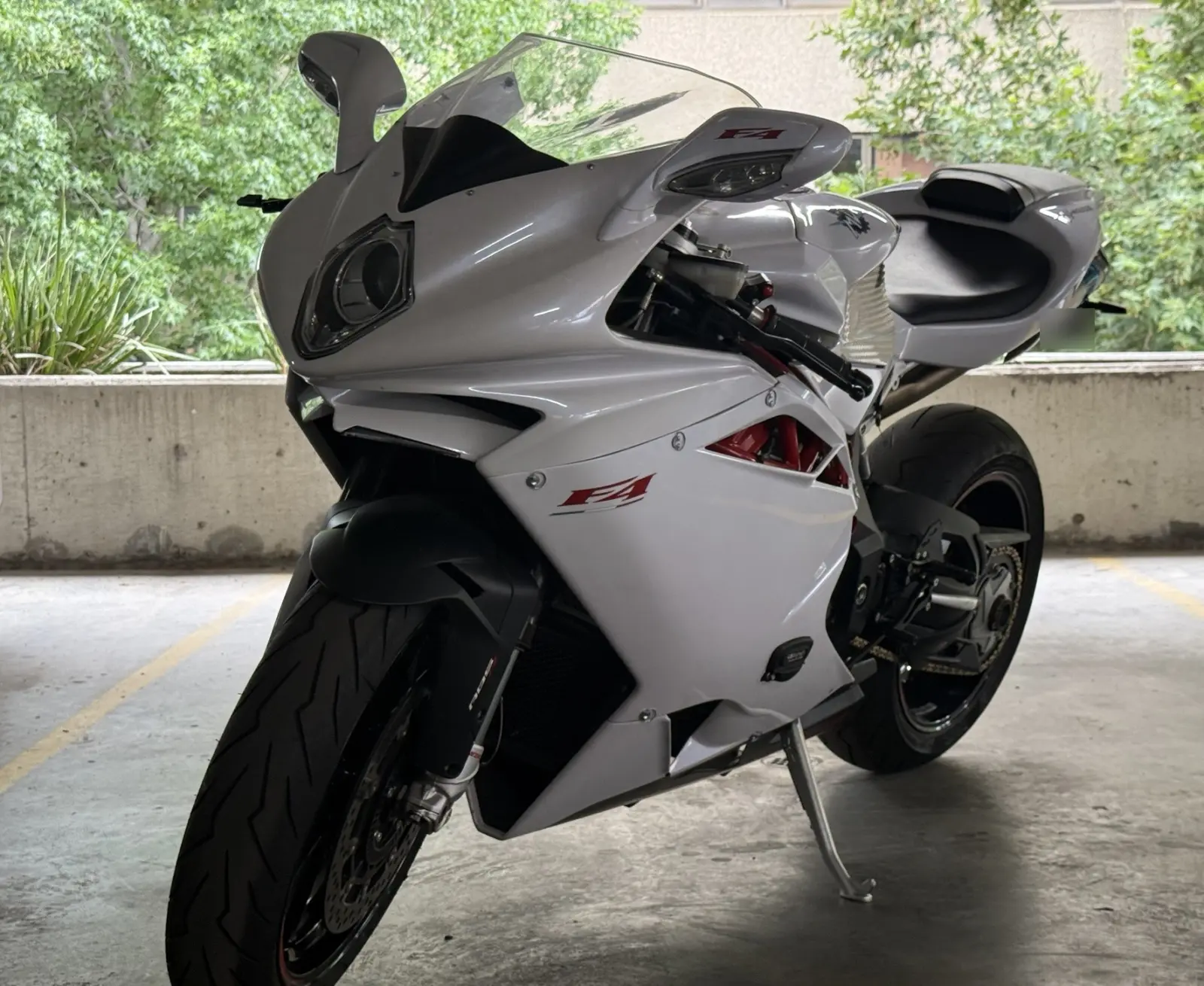
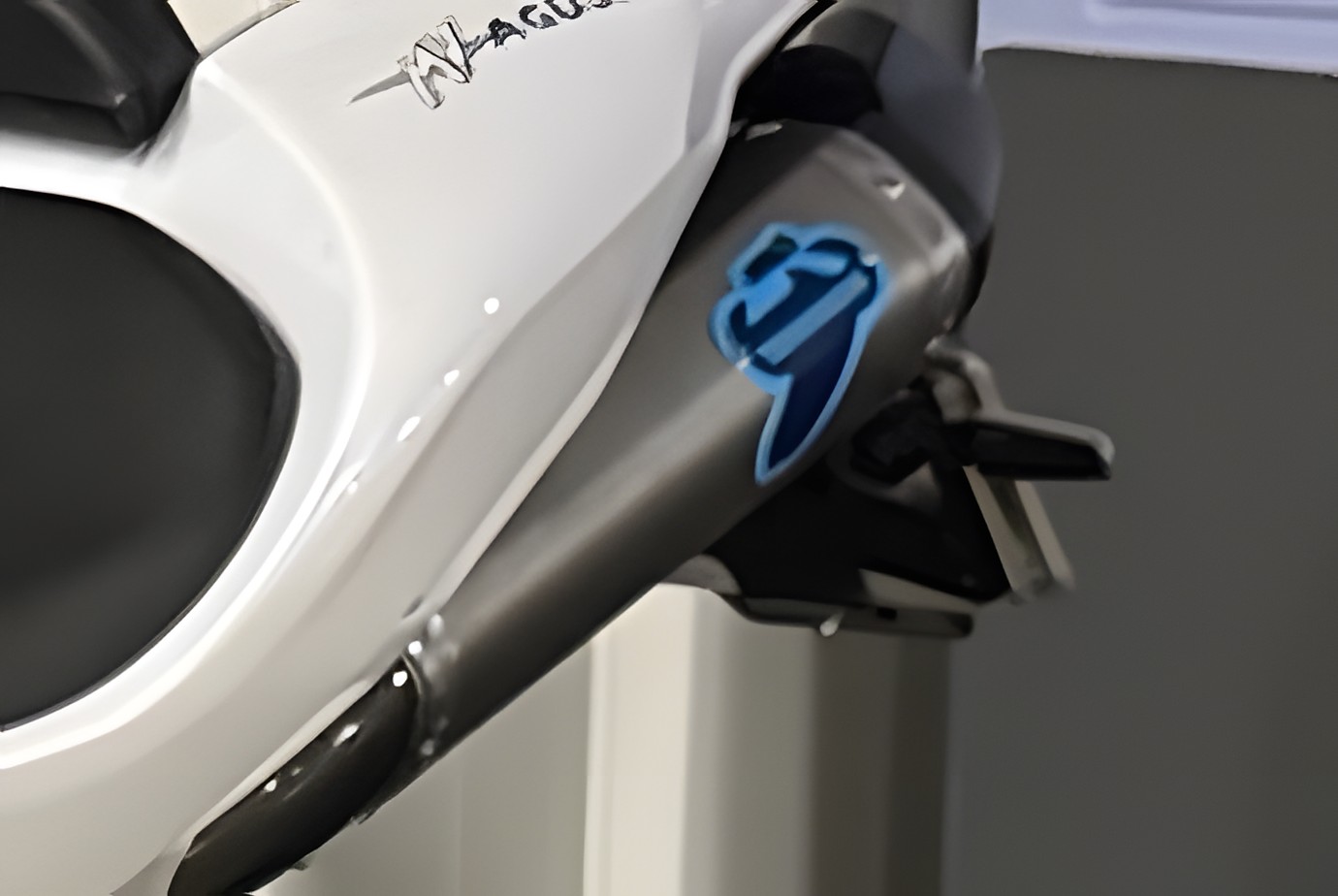
The MV Agusta F4 is a 998cc inline four with a tuned performance exhaust. An engine of that character offers good engine braking when you close the throttle in a suitable gear, and it helps keep the speed steady on a long, steady grade.
Use the engine to hold the speed between bends and save the brakes for the moments that demand them. A rider who lets the engine do the constant work will find the descent much less tiring and the brakes far more responsive when they are needed.
Keep the throttle movements gentle. A sudden closing of the throttle can unsettle the bike, especially in a bend, so roll off smoothly and let the engine slow the bike steadily.
- Select a suitable lower gear before the slope steepens
- Let the engine hold the speed between bends
- Close the throttle gently rather than abruptly
- Save firm braking for the moments that need it
Light, intermittent braking that protects the discs
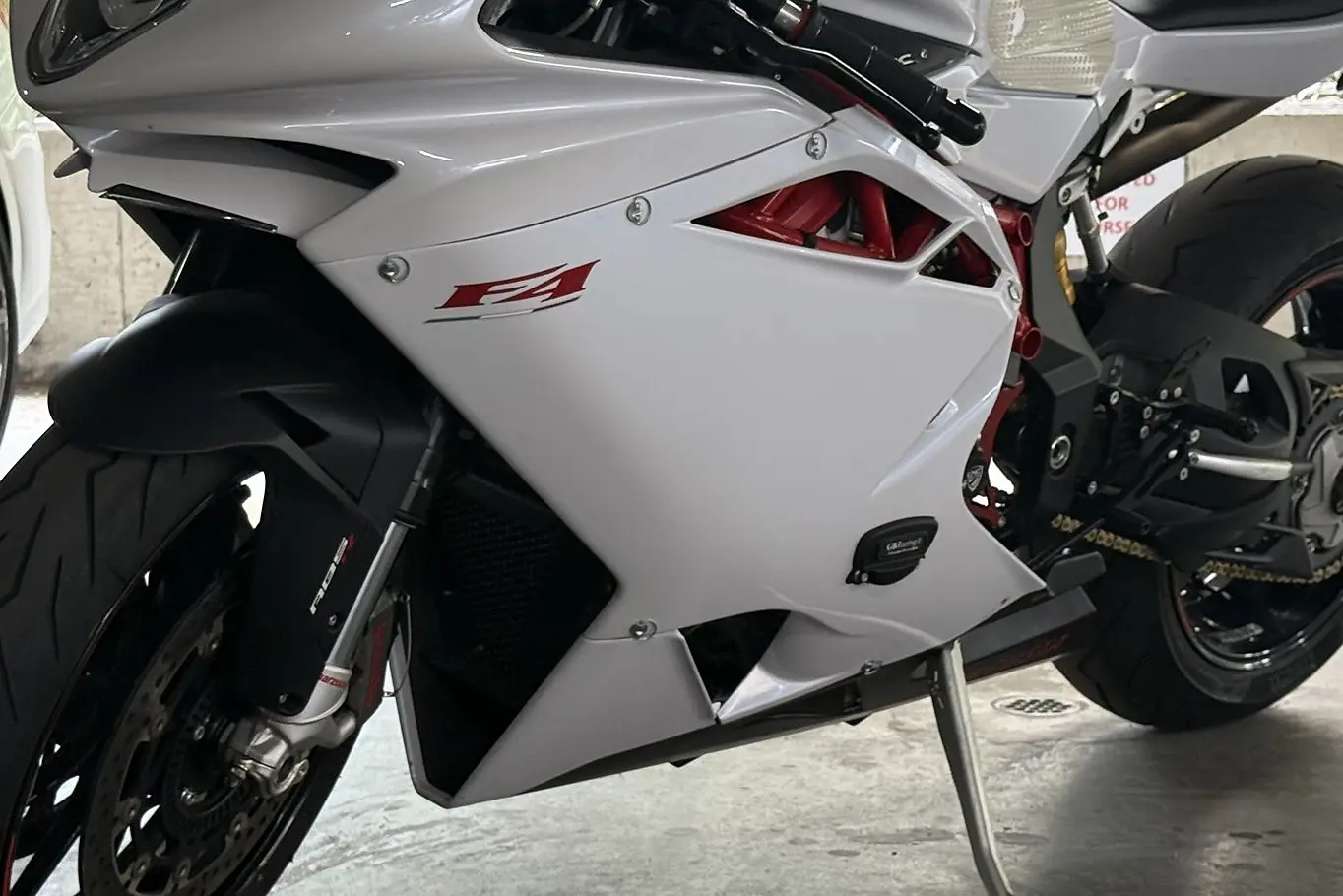
Constant braking is the enemy of a long descent. A steady drag keeps the discs and pads hot, and as the temperature rises, the brakes lose their bite and the lever feels soft. The solution is to brake lightly and intermittently, with the brakes released for most of the descent.
Apply the brakes firmly in a straight line when you need to reduce speed noticeably, then release them and let the bike roll. This pattern of firm application followed by a release keeps the brakes working well and gives you time to check your speed between applications.
Use the front and rear brakes together where the bike allows, and keep the inputs smooth. A grab at the lever can cause a loss of control on a slope, so the aim is consistent, measured pressure.
Setting a speed you can hold
Decide the speed you want to hold before the descent begins, and use the speedometer to check that you are keeping it. A speed chosen in advance is much easier to maintain than one adjusted in a panic on a steep bend.
Adjust your target to the conditions. A wet, shaded or patchy surface calls for a lower target, and a clear, dry road may allow a little more. Keep the speed within the posted limit and within what you can stop for, because the margin matters more than the top speed.
Check your speed regularly, every few hundred metres or at each change of gradient. Small, frequent corrections are far safer than one large correction at the bottom of the slope.
Reading the bends and the surface
Descents often include bends where the surface changes. Look ahead through each bend, watch for dark damp patches, loose material at the edges and any sign of repair. Surfaces can be less grippy on the slope, because water runs down the road and collects in low spots.
Enter each bend at your planned speed and choose a line that keeps the bike settled. Avoid braking in the middle of the bend, because the weight shift onto the front tyre can reduce its grip when the bike is leaning.
Pay attention to drainage crossings and culverts, where water may lie across the road. Ease the speed before you reach them and keep the bike upright as you cross.

Want the MV Agusta F4 for your date? Pick your dates and book the MV Agusta F4 online, or call us and we will sort it with you.
Book NowCall 0468 011 118Gear, fatigue and riding within your ability
Good gear matters on a long descent. A certified helmet, an armoured jacket, gloves that give fine control and boots that protect the ankle help you stay steady. Helmets (Shark, AGV or Bell) can be hired from us in small, medium or large for $50 per hire, or you can bring your own. We do not supply jackets, gloves, pants or boots, so bring your own riding gear.
Fatigue can creep up on a long slope. Tired hands grip the bars tightly, and tired eyes miss the cues in the road. Stop at a safe place part way down, let the brakes cool and rest before the rest of the descent.
Keep your riding honest, and keep alcohol well away from any day on the bike. A descent calls for clear judgement, and a rider who is not fully alert cannot judge speed reliably.
Planning a stop partway down the slope
On a long descent it helps to plan one or two safe stopping points before you start. Look for wide, firm shoulders or turnouts well clear of the carriageway, where you can stop without blocking traffic. A short rest partway down gives the brakes time to cool and lets you reset your speed judgement before the lower section.
When you stop, park the bike on firm, level ground and turn off the engine if you need to wait. Feel the brake discs carefully if you want to know how hard they have been working, but take care, because metal retains heat for some time after use. Check the fluid level and the condition of the lever feel before you continue.
Use the stop to review your speed. Ask yourself how the descent has felt so far, whether the engine has been doing enough of the work and whether any bend has caught you out. Small notes from each stop make the rest of the descent safer and more predictable.
Reviewing the descent afterwards
Once you reach the bottom, take a few minutes to review the ride. Consider where your speed crept up, which bends needed more braking than you expected and whether the brakes felt the same at the end as they did at the start. This honest review builds skill faster than any single descent.
Pay attention to how your body feels. Tight hands, a stiff neck and a sense of fatigue are signals that the descent took more out of you than you realised. Plan a longer break before the next ride and treat the feeling as useful information rather than a weakness.
Carry what you learn into the next descent. Choose a target speed in advance, use the gears early and practise light, intermittent braking. Over time these habits become automatic, and the mountain roads become far more enjoyable. A steady habit of review is what turns a demanding road into a familiar one. If you pass notes on the brakes or the surface to our team, a clear record helps everyone who rides the bike after you.
Hire terms for the mountain descent
Before you hire, check the core terms. Licence history matters: the full motorcycle licence needs three years behind it. Every rider must be aged 25 or older. Pickup happens at our Parramatta base, and the hire period starts at three days. Trackers sit on every machine, and each night the bike has to be locked away in a garage or secure off-street spot from 9pm until 6am.
Give Transport for NSW a quick check before you set out; it lists closures, roadworks and hazards across the state.
Practise control and book the F4
Speed control on a long descent is a skill that improves with practice. Start on shorter slopes, practise selecting the right gear early and notice how the engine and brakes respond together. Build up gradually to longer descents, and review each run to see where your speed crept up or where the brakes felt soft.
The MV Agusta F4 rewards a rider who manages speed with calm, deliberate inputs. Its engine and brakes work well together when used with care, and a rider who respects gradient and heat will find the descent rewarding.
When you are ready, the MV Agusta F4 page and the fleet index are the best starting points. Our team will help you choose the right bike and plan the route.
Frequently asked questions
Should I hold the brake all the way down a long hill?
No. Constant braking keeps the discs and pads hot, which leads to fade and a soft lever. Use a lower gear so the engine holds the speed, then apply the brakes firmly and briefly when you need to slow. Release the brakes between applications so they can cool and keep working well.
Which gear should I use for a long descent?
Choose a gear before the slope steepens, one that keeps the engine in a useful range without over-revving. A gear that is too high leaves you relying on the brakes, while one that is too low can unsettle the bike. Shift down smoothly and early rather than making sudden changes in a bend.
How do I know if my brakes are fading?
Signs include a softer lever, a longer stopping distance than expected and a sense that the brakes are not biting as they did earlier. If you notice these signs, stop safely at the first suitable place and let the brakes cool before continuing. Do not hold the lever on while you wait, because that keeps the heat trapped.
Can the engine do most of the slowing?
Yes, on a steady grade the engine can hold the speed well when you select a suitable lower gear and close the throttle gently. Save the brakes for the moments that need firm deceleration, such as a tight bend or an unexpected hazard. A rider who uses the engine for the constant work finds the descent less tiring.
What speed should I aim for on a long descent?
Choose a target speed before you start, and adjust it for the surface and conditions. Keep within the posted limit and within what you can stop for, because the margin matters more than the top speed. Check your speed regularly, especially at each change of gradient.
Is a long descent suitable for a first ride on a superbike?
A long descent is demanding, and it is best approached after building experience on shorter slopes. The MV Agusta F4 is a performance machine for experienced riders. Practise gear selection and light braking on smaller hills first, and speak to our team if you are unsure whether the bike suits your current level.
Ready when you are. Pick your dates and book the MV Agusta F4 online, or call us and we will sort it with you.
Book NowCall 0468 011 118