

Book the Ducati 1199R. Pick your dates and book the Ducati 1199R online, or call us and we will sort it with you.
Book NowCall 0468 011 118Road camber is the slope built into the surface across the width of the lane. It is there to drain water, but on a corner it can push a motorcycle in a direction you did not expect. On country roads in New South Wales, camber can change quickly and fall away toward the outside of a bend without much warning. This guide shows how to read camber before you lean, how to adjust speed and line, and why a calm, patient approach is the safest response.
Everything to know before you book, from the licence rules to the bond, is on our Sydney motorbike hire page.
What camber is and why it matters on a bend
Camber is the slope built into a road surface across the width of the lane. Most roads sit slightly higher in the middle, so water runs off toward the edges, and that shape is sensible for drainage. On a straight it hardly matters. On a corner, though, the slope can push a motorcycle in a direction the rider did not plan, and the effect can be stronger than the rider expects.
Country roads are often built with less uniformity than city streets. Camber can change from one kilometre to the next, sometimes within the same bend, and edge repairs can alter the slope. A road that feels level in one kilometre can tilt away in the next. Reading the surface before you lean is therefore a habit worth building early.
The aim is simple: know the grip you have before you commit to a corner. A rider who recognises camber early can choose the right speed and line, rather than discovering the slope halfway through a lean when there is little room left to change anything.
Reading the surface before you reach the bend
The best time to read camber is well before the bend. Look at how the surface meets the verge, how the painted edge line sits and whether water lingers on one side of the lane after rain. Each clue tells you something about how the road is built, and each one helps you decide how much speed to carry in.
Look at the road ahead through the bend. The inside edge may appear higher or lower than the outside, and the apex may look different from the entry. Vehicles already on the road give useful information too, because a truck that leans differently or a car that drifts wide may be reacting to a slope you cannot see yet.
Adjust your speed on the approach, not in the lean. Slow to a pace that gives you room to see the exit and to correct if the camber feels unfamiliar. A steady, controlled entry gives you the most information and the most options when the road surprises you.
Camber that falls away to the outside
Camber that falls away toward the outside of a bend is the one that catches many riders out. The bike can feel as if it is being pulled wide, and the lean can feel heavier than the bend suggests. The natural reaction is to lean harder or to brake, and both responses add load to a tyre that already has less grip on the slope.
Respond early. Ease off the throttle gently, hold a steady line and let the bike settle before the apex. Do not brake hard across a slope that falls away, because a sudden load can wash the front wheel wide. If the bend feels heavier than expected, widen your line slightly and reduce your speed further.
On a fall-away bend, keep your inputs calm and your eyes up. Look through the corner to the exit, where the road is likely to flatten out. Small, progressive corrections help the bike track through the slope, and a relaxed grip lets you feel what the tyres are doing beneath you.
Camber that tilts toward the inside
Camber that tilts toward the inside of a bend is less alarming but still deserves respect. It can help the bike turn, and it may encourage a rider to carry a little more speed than the bend justifies. The sensation can be deceptive, because the bike feels settled while the grip is still finite.
Watch the way the inside edge sits. A surface that slopes sharply toward the inside can hide a patch of loose material or a broken edge near the kerb. Keep your line away from the inside edge unless you have a clear view of the surface, and do not assume the slope makes the corner easier.
Use the helpful slope to settle into the bend, but do not let it tempt you into a faster entry. Adjust speed for the tightest part of the corner, which is often the part you cannot see from the approach. A calm approach keeps the advantage on your side.

Camber that changes in the middle of a corner
The hardest camber is the one that changes halfway through a bend. A surface that is level at the entry can slope away at the apex, and a camber that looks steady from a distance can break into a dip or a rise. These changes are often found on older repairs and where road works have been patched.
When the surface changes, the best response is to stay smooth. Hold your speed steady, keep the lean consistent and avoid sudden inputs. If you feel the bike move, let the grip return before you add any power. A sudden correction is far more likely to cause a slide than the camber itself.
Treat any change in colour, texture or the edge of the seal as a warning. Slow earlier, look further ahead and keep your mind on the next few metres of road. Experienced riders read these changes as a routine part of the road rather than a surprise.
Want the Ducati 1199R for your date? Pick your dates and book the Ducati 1199R online, or call us and we will sort it with you.
Book NowCall 0468 011 118Wet, cold and shaded conditions on cambered roads
Rain changes how camber feels. Water runs toward the edges, leaving a film on the lower side of the lane and a slick line where it collects. Painted lines and repairs become slippery, and a bend that felt secure in the dry can suddenly ask for much more care. Slow down, extend your braking zones and smooth every input.
Cold mornings add frost and damp in shaded corners. A cambered bend in the shade can hold moisture long after the sunny sections have dried, and a rider who expects a dry road can be caught out. Wait for the sun to warm the surface, ride the first kilometres gently and keep your grip relaxed.
Wind can also push against the lean on exposed country roads. A gust across an open paddock can nudge the bike as it turns, and combined with camber the effect can feel unsettling. Hold your line, keep your body loose and reduce speed when the wind builds.

Best time of day, season and country road character
Mid-morning on a weekday is the best time to learn the camber on a country road. The surface has warmed, the traffic is light and the light is good enough to read the shadows and the edges. Start after 6am, and keep the ride clear of the 9pm garage window, because low light hides the camber changes you need to see.
Autumn and spring suit country corners. The days are mild, the mornings are cool and the roads are often dry. Winter brings frost and fog in the low sections, and summer heat dries the surface quickly but can also soften a tar repair. Plan your riding with the season in mind, and treat each one as a different lesson in grip.
Stops matter on a country road. Fuel can be far apart, so top up before you leave the main highway and carry a plan for the gaps. A quiet town with a cafe and a shaded parking spot is a good place to rest, and a short pause lets you review the corners you have ridden with a clear head.
Traffic on country roads is mostly trucks, farm vehicles and visitors. Weekend tourists may slow for the views and stop without warning, so keep your distance and watch the drivers ahead. Dusk brings kangaroos and wallabies onto the verges, and the late light makes camber hard to read, so plan to finish well before dark.
Practice drills on a quiet road
Practice is the best way to learn camber. Choose a quiet, dry road with gentle bends and no traffic. Approach a bend at a modest speed, look at the surface through the entry and note how the bike responds as you lean. Repeat the exercise several times before you try a faster section.
Try a simple drill: enter a bend, hold a steady line and feel for the moment the grip changes. Use the throttle gently to feel the tyres take up the load, and notice how the camber affects the lean. Keep the drill slow and deliberate, and stop when you feel tired or uncertain.
Record what you learn in your own head: which bends fall away, which tilt toward the inside and which change mid-corner. Over time these notes become a mental map of the roads you ride most often, and that map is one of the most useful safety tools a rider can carry.
A minute on Transport for NSW before you leave can save an hour of detours later.

Hire conditions and the Ducati 1199R for experienced riders
Three hire terms matter for a ride built around careful corners. The Ducati 1199R is a single-seater, so a passenger cannot ride with you. A security bond is held against the hire, set by the class of bike. Personal injury cover beyond compulsory third-party insurance is something you arrange yourself if you want it.
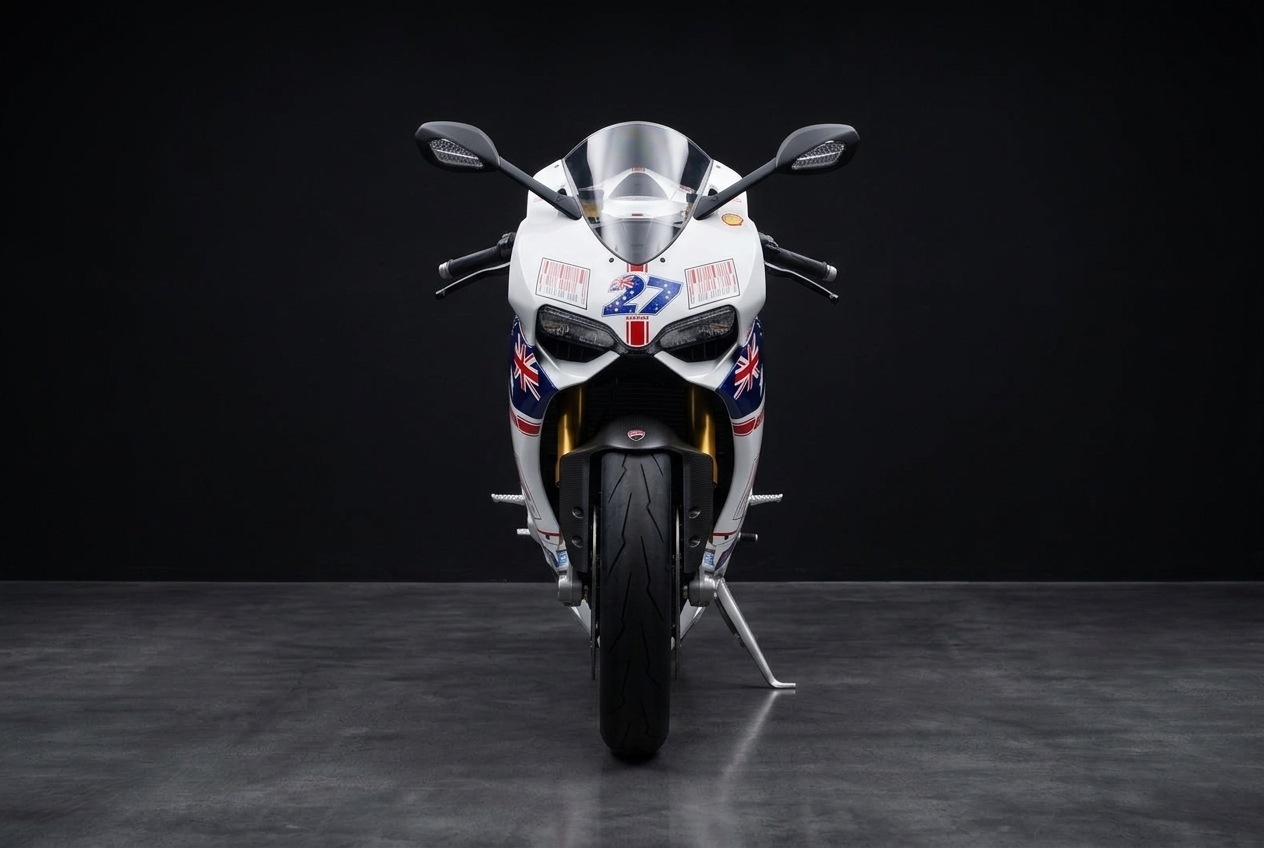
The Ducati 1199R Panigale is a superbike for experienced riders, with a V-twin, gold front forks and black forged wheels. Its Australian flag livery is a tribute to Casey Stoner, who won his first MotoGP World Championship on a Ducati in 2007, and it is a tribute livery that is not officially endorsed. Its 143 kW output asks for a precise hand on the bars and a patient approach to every corner.
When you are ready to put these habits to work, the Ducati 1199R Panigale page has the full details and booking options. Bring your licence, a clear plan for the day and a calm approach to camber, and we will help you prepare for a country run that rewards careful reading of every bend.
Frequently asked questions
What is road camber and how do I recognise it?
Camber is the slope across the width of a road, usually higher in the middle so water drains to the edges. On a bend it can tilt toward the inside or fall away to the outside. Look at how the surface meets the verge, the position of the edge line and whether water sits on one side after rain. Each clue helps you judge the grip before you lean.
Is a camber that falls away to the outside more dangerous?
It can be, because the bike may feel pulled wide and the lean can feel heavier than it is. Respond by easing off the throttle gently, keeping a steady line and avoiding hard braking across the slope. Widen your line slightly if needed and reduce your speed before the apex, rather than adding more lean.
How do I know when camber changes mid-corner?
Watch for changes in colour, texture and the edge of the seal, and for dips or rises that were not visible from the approach. If you feel the bike move, stay smooth and let the grip return before adding power. Keep your eyes on the exit, and treat any sudden change as a reason to slow earlier on the next bend.
Should I brake in a bend on a cambered road?
It is better to brake before the bend begins. A rider who is still braking as the lean starts asks the tyres to do two jobs at once, and a slope can make that worse. Scrub your speed in a straight line, release the lever smoothly and carry a steady speed through the corner.
Does rain change how camber feels?
Yes, it can make the same bend feel quite different. Water collects on the lower side of the lane, painted lines and repairs become slippery and the grip margin shrinks. Slow down, extend your braking zones and make every input smoother. If the surface looks clearly unsafe, stop somewhere safe and wait for it to dry.
Can I practise reading camber safely?
Yes, on a quiet, dry road with gentle bends and no other traffic. Approach each bend at a modest speed, feel how the bike responds through the lean and stop when you feel tired or uncertain. Do not practise on busy roads or with an aim to test the limits of grip, because the purpose is steady reading, not hard riding.
Ready when you are. Pick your dates and book the Ducati 1199R online, or call us and we will sort it with you.
Book NowCall 0468 011 118