
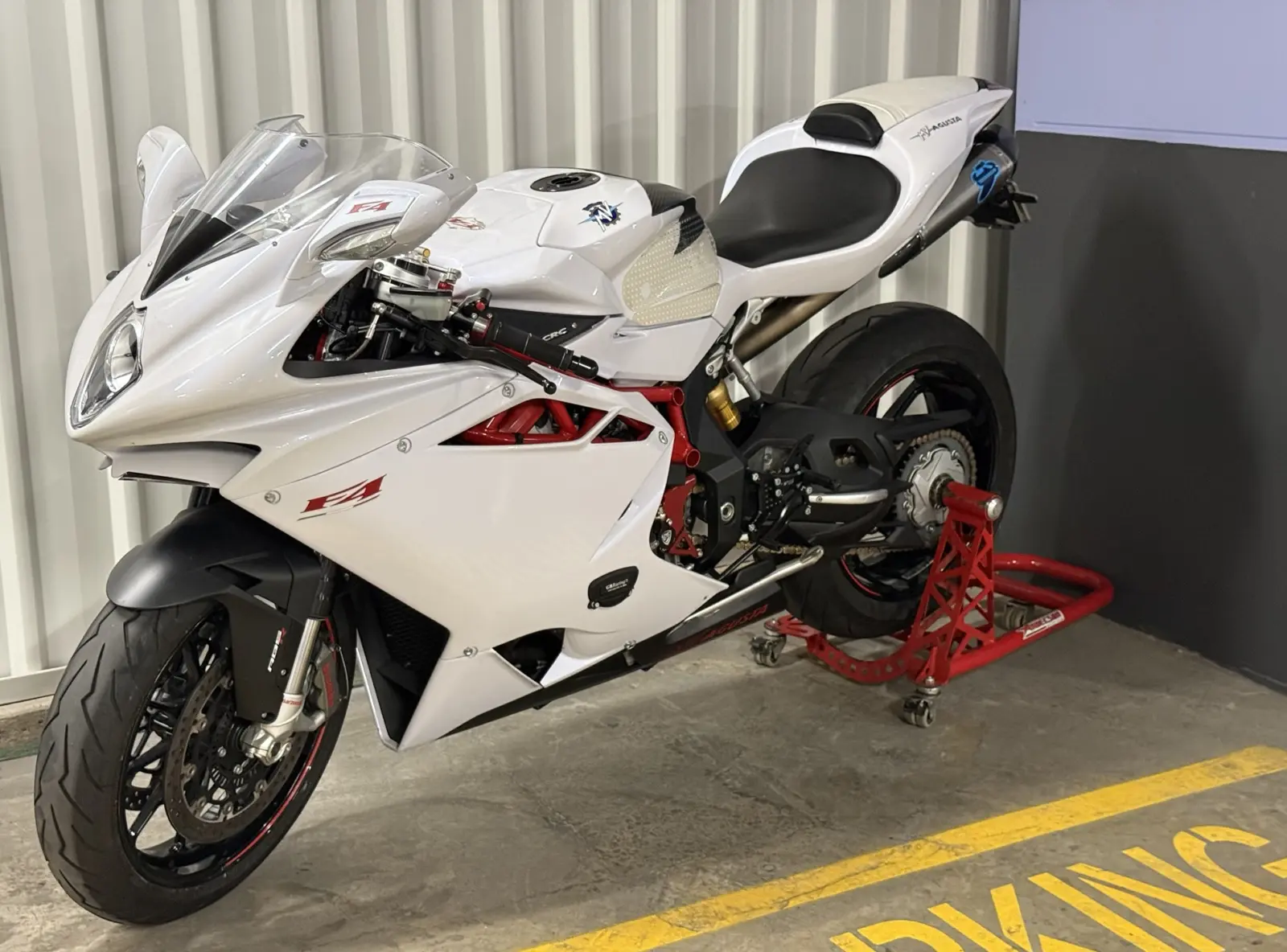
Book the MV Agusta F4. Pick your dates and book the MV Agusta F4 online, or call us and we will sort it with you.
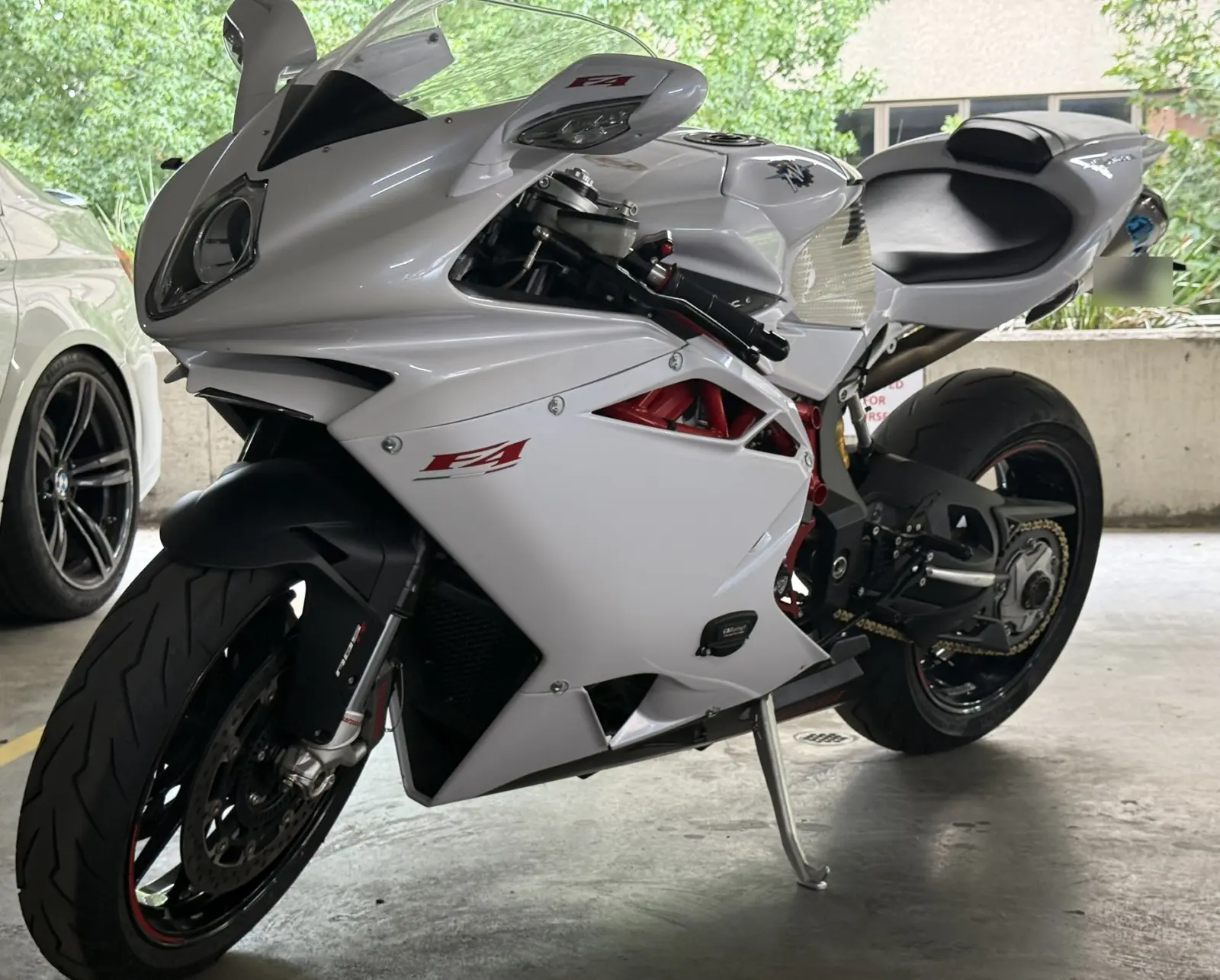
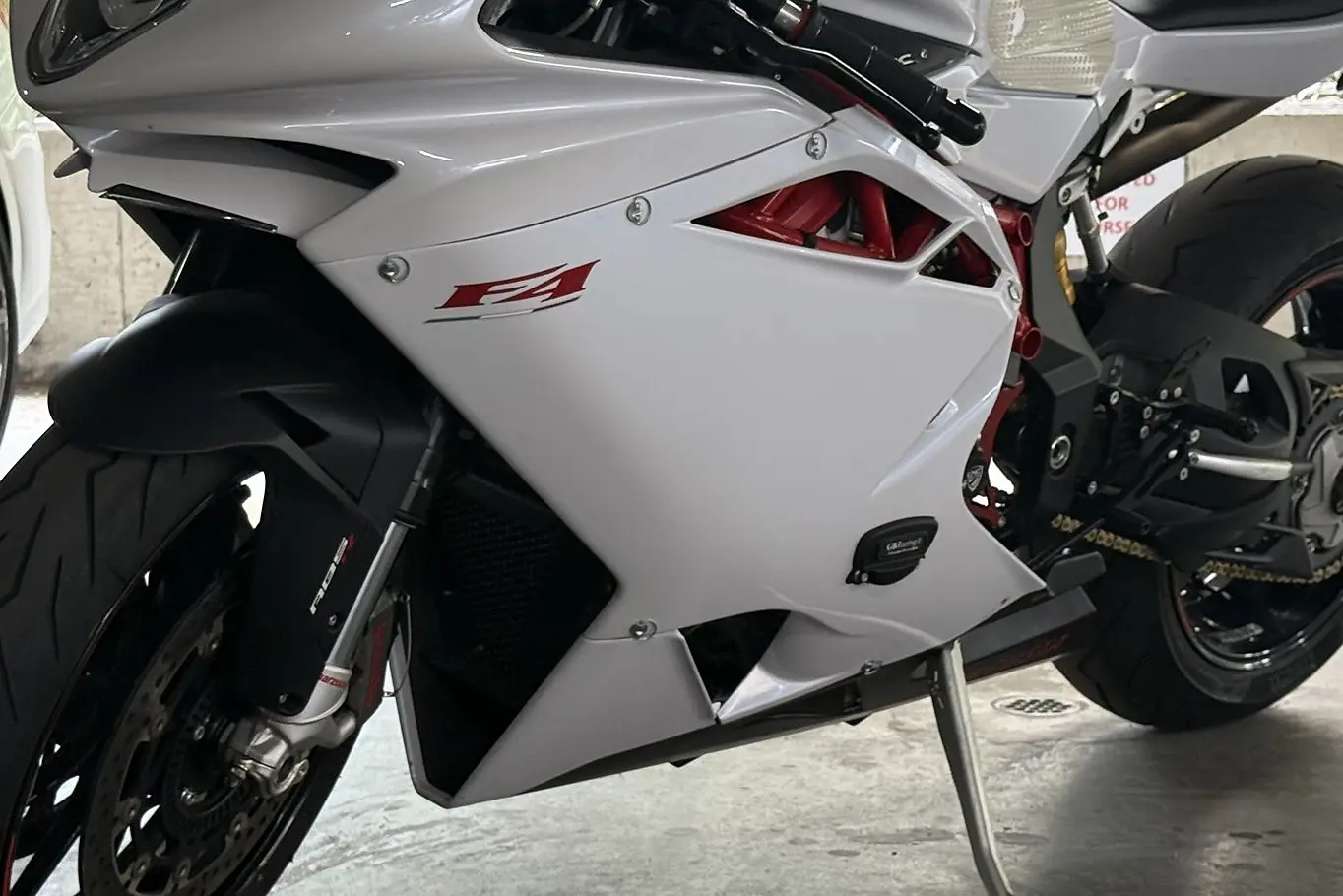
Book NowCall 0468 011 118A day on the coast is a joy, but salt spray and sea air leave a film on a bike that can dull paint and invite corrosion if it is left to sit. The MV Agusta F4, with its pearl white finish and red trellis frame, deserves careful attention after a salty run. This guide sets out a simple routine for cleaning the bike, the points that need extra care and the habits that keep it looking its best between hires.
Still choosing a bike? Start with our guide to motorcycle hire in Sydney, which sets out the licence, age and pillion rules.
Why salt is harder on a bike than dust
Salt is hygroscopic, which means it attracts moisture from the air and holds it against surfaces. A bike that has ridden through sea spray carries a fine, sticky film that keeps moisture in contact with paint, metal and fasteners for hours after the ride ends. Dust is mostly a nuisance, but salt works quietly, and its damage often shows up days later as dull patches or small spots of rust.
The problem is greater on a performance machine. Bright paint, polished surfaces and exposed fasteners all show the marks of salt more clearly, and the F4's pearl white finish will reveal any residue quickly. The red trellis frame also collects grime in the gaps between tubes, where moisture can sit and linger.
The good news is that salt is simple to remove if you deal with it promptly. A thorough wash after each salty ride protects the finish and keeps the bike in good shape for the next rider.
What to have ready before you start
Gather your supplies before you begin. You will need a bucket of clean water, a pH-neutral car wash product, several soft microfibre cloths, a soft brush for tight areas, a chamois for drying and a spray bottle of fresh water for rinsing. Avoid harsh household cleaners, abrasive pads and strong solvents, because they can dull paint, damage decals and harm the seals.
Work in shade if you can. Direct sun heats the bodywork and makes soap dry before you can rinse it, which leaves streaks and can etch the finish. Choose a flat, drained area where water can run away from the bike and the wheels.
Keep a separate cloth for the wheels and the lower areas of the bike. Grit and brake dust gather low down, and you do not want to drag that grit across the paint.
A step-by-step wash routine
Start by rinsing the whole bike with fresh water to remove loose salt and grit. Use a gentle spray rather than a high-pressure jet, which can force water into bearings, electrical connectors and gaps around the bodywork. Work from the top down, letting the water carry the salt away as it runs off.
Next, apply the car wash product with a soft cloth or sponge, working in straight lines rather than circles. Clean the trellis frame carefully, paying attention to the joints and the spaces between tubes where salt collects. Rinse the cloth often so you are not dragging grit back across the surface.
Finish with a thorough rinse, then dry the bike with a chamois or a soft microfibre towel. Pat rather than rub, and check the crevices, fasteners and undersides for any water that has been trapped.
- Rinse first to lift loose salt
- Wash top down with a soft cloth
- Clean the trellis frame joints carefully
- Dry thoroughly, including fasteners
Care for the pearl white finish
The pearl white paint on the F4 looks striking when it is clean and reflects light beautifully. Salt residue can leave a faint film that dulls that shine, so a regular wash helps maintain the appearance. Once the bike is dry and clean, you can consider a light coat of a suitable protective product designed for motorcycle paint, applied according to its instructions.
Avoid rubbing hard over any spot that seems stuck. A gentle soak with fresh water, followed by a soft cloth, is usually enough. If a mark persists, stop and think about the cause rather than scrubbing harder, because abrasion can leave swirls that are difficult to remove.
Keep an eye on decals and any edges of the bodywork. Salt and water can lift edges over time, so check them after each ride and report any loosening to us.
Use separate cloths for different zones. Keep one for the seat and the tank, and a clean one for the pearl white panels, so that grit from a low area never scratches a bright surface. Wash the cloths often and let them dry fully. A dirty cloth can do more harm than the salt it is meant to remove.
The red trellis frame and metal parts
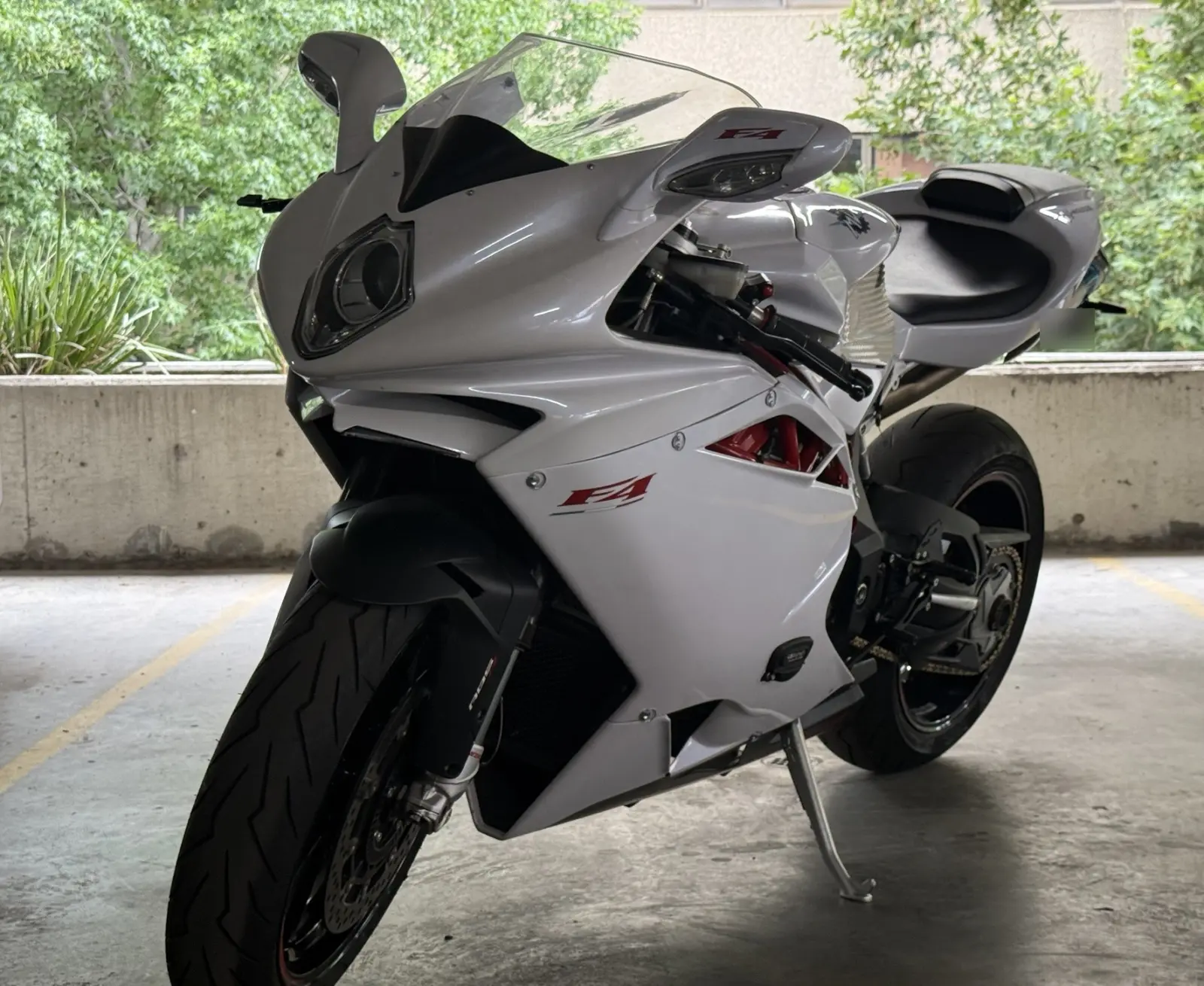
The trellis frame is a feature of the F4's character, and it needs a careful clean. Water and salt can gather in the joints and the spaces between tubes, so use a soft brush to reach those areas and make sure the rinse removes all residue. Check the frame for any signs of bubbling paint or early corrosion, especially around welds and fixings.
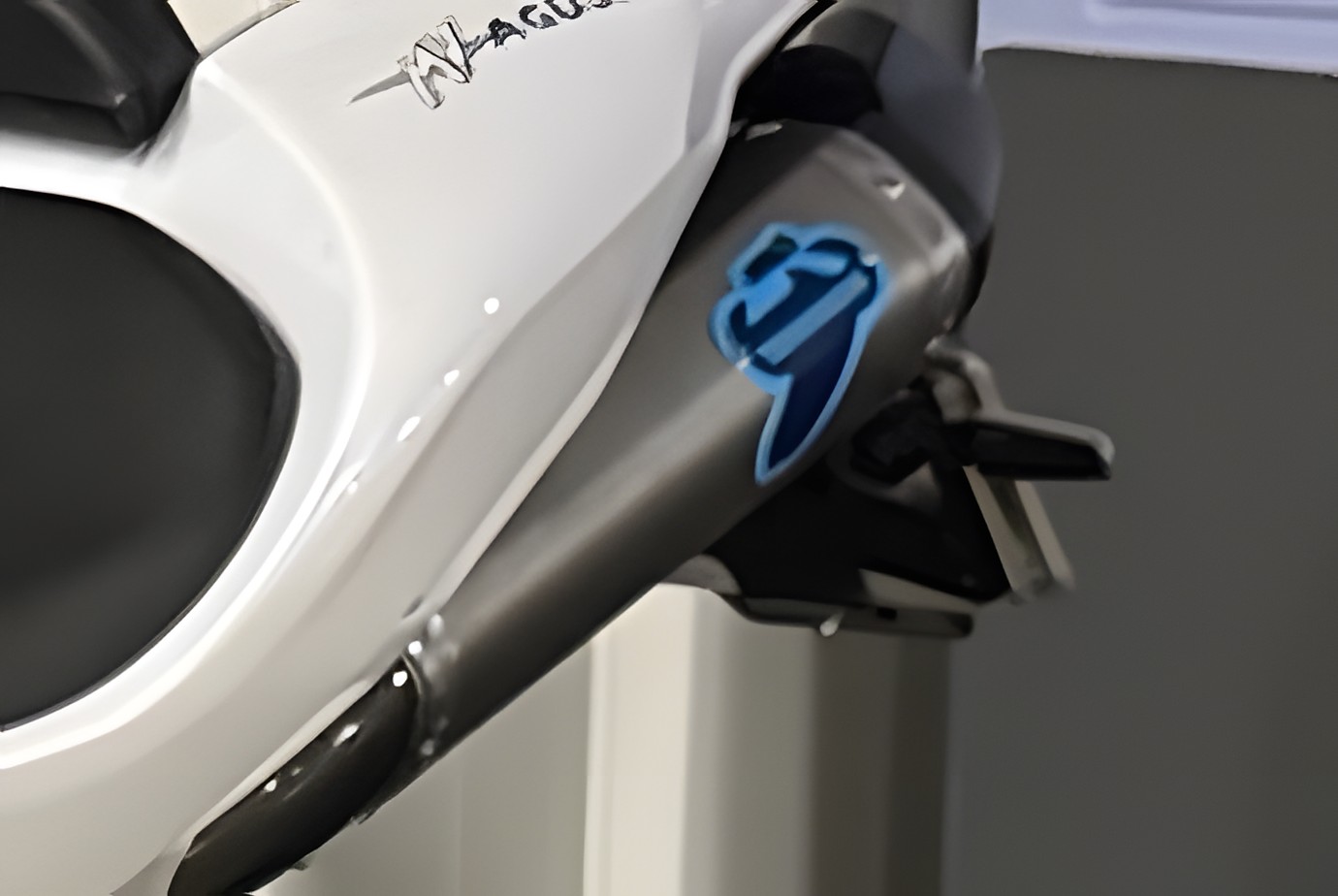
Metal parts such as fasteners, brackets and exhaust clamps are vulnerable to salt. After washing, dry them thoroughly and look for any spots forming. A light touch with a suitable protective spray can help, but apply it sparingly and away from brake components, tyres and anything that must stay clean for grip.
Do not spray water directly into the air intake, electrical connectors or the instrument area. Use gentle water and keep the spray low to avoid forcing moisture into sensitive places.
Wheels, chain and the undersides
Salt collects low on the bike, on the wheels, the swingarm and the underside of the frame. Clean these areas with a separate cloth and a soft brush, and rinse them thoroughly. Brake dust can mix with salt to form a stubborn film, so take your time around the discs and calipers, while avoiding the use of harsh chemicals on the brake components.
Check the drive chain after a salty ride. Wipe off any residue, dry it, and apply a suitable chain lubricant according to the instructions for the bike. A chain that has been left wet and salty will wear faster and can rust, so do not skip this step.
Look underneath for any trapped water or debris, and let the bike drip dry in the shade for a short while before storing it.

Want the MV Agusta F4 for your date? Pick your dates and book the MV Agusta F4 online, or call us and we will sort it with you.
Book NowCall 0468 011 118Storage, drying and the overnight rule
Proper storage after a coastal ride protects the bike from moisture. Make sure the bike is fully dry before it goes away, and avoid covering it while still damp, because trapped moisture can encourage corrosion and mildew. Once dry, store it somewhere sheltered and well ventilated.
Overnight, the bike must be kept in a locked garage or secure off-street parking between 9pm and 6am. A dry, covered space is also the best place to let the bike recover from a salty day, so choose your parking with that in mind when you return.
Keep a note of when you last cleaned the bike, and repeat the wash after every salty ride. A regular routine is far easier than tackling a neglected bike after weeks of exposure.
Make a simple record after each wash. Note the date, the route and whether the ride involved spray or a long stretch of damp road. Over a season, that log shows how quickly grime builds up and when a closer inspection is worth the time. It also helps the next rider understand the bike's recent history.
Gear, rest and getting the most from a coastal ride
Salt spray can make a ride cold and damp, and good gear protects you as much as the bike. A certified helmet, a waterproof jacket with armour, gloves and boots that cover the ankle keep you comfortable. Riding gear is available to hire as an extra, or you may bring your own, and whatever you wear should fit well and dry quickly after a wet ride.
Take breaks on the coast road to shake off the chill, stretch and check your focus. Salt air can feel refreshing, but it can also leave you tired faster than you expect, so pace the day sensibly.
Keep your riding within what you can comfortably manage, and never ride after drinking alcohol. A calm, unhurried return is the best way to finish a coastal day.
Hire conditions and the care of our bikes
Before you book, know the basic conditions. A full motorcycle licence held for at least three years is required, and riders must be 25 or older. Hire is self-drive from our Parramatta base with a three day minimum, which gives you time to enjoy the coast and bring the bike back in good condition.
We expect every bike to be returned in a clean, safe condition. If your ride takes you through salt spray, please let us know so we can check the bike and make sure it is ready for the next rider. Trackers are fitted to all the bikes, and the overnight rule applies to every hire.
Check road conditions with Transport for NSW on the morning you ride, since works and weather can change a route overnight.
A cleaner bike, a better ride, and booking the F4
A clean bike is a safer bike. Clean surfaces reveal early signs of wear, and a tidy machine gives you a clearer view of how it is performing. Make cleaning part of the ride rather than an afterthought, and you will enjoy the bike for longer.
The MV Agusta F4 is a rewarding machine on the coast. With a little care after each salty day, it will keep its striking finish and its performance character for many rides to come.
When you are ready, book the MV Agusta F4 through its fleet page, or see the full range on the fleet index. Our team will help you plan a coastal day that suits your riding.
Frequently asked questions
Why does salt damage a motorcycle so quickly?
Salt attracts moisture from the air and holds it against paint, metal and fasteners, which keeps the surface damp for hours. Over time this can dull paint, cause small spots of corrosion and build up in the joints of the frame. A prompt wash after a salty ride removes the residue before it has a chance to do lasting harm.
Can I use a pressure washer on the F4?
A high-pressure jet should be avoided on a motorcycle. It can force water into bearings, electrical connectors and seals, and it can damage decals and edges of the bodywork. Use a gentle spray and a soft cloth instead. A steady rinse removes salt effectively without the risk of driving water into sensitive areas.
Which products should I avoid?
Avoid harsh household cleaners, abrasive pads, strong solvents and anything that might dull the paint or damage the seals. Choose a pH-neutral car wash product and a protective product designed for motorcycle finishes, and follow the instructions carefully. If you are unsure whether a product is suitable for your bike, ask our team before using it.
How do I clean the trellis frame properly?
Use a soft brush to reach the joints and gaps between the tubes, then rinse thoroughly so no salt residue remains. Dry the frame well and check welds and fixings for any early signs of corrosion or bubbling paint. Do not spray water directly into sensitive electrical areas or the air intake while cleaning.
How often should I wash the bike after a coastal ride?
Wash the bike after every salty ride, and do not leave it until the next day if you can avoid it. A quick rinse and a dry-down take far less time than repairing corrosion or dull paint later. Give the chain extra attention, and keep a simple routine so cleaning becomes a habit rather than a chore.
What should I do if I notice rust or a lifting decal?
Stop and note the location, and let us know so we can check the bike. Do not attempt to scrub or peel the affected area yourself, because that can make the damage worse. Early attention usually leads to a simpler fix, so reporting a small issue quickly is always the better choice for everyone who rides the bike next.
Ready when you are. Pick your dates and book the MV Agusta F4 online, or call us and we will sort it with you.
Book NowCall 0468 011 118