
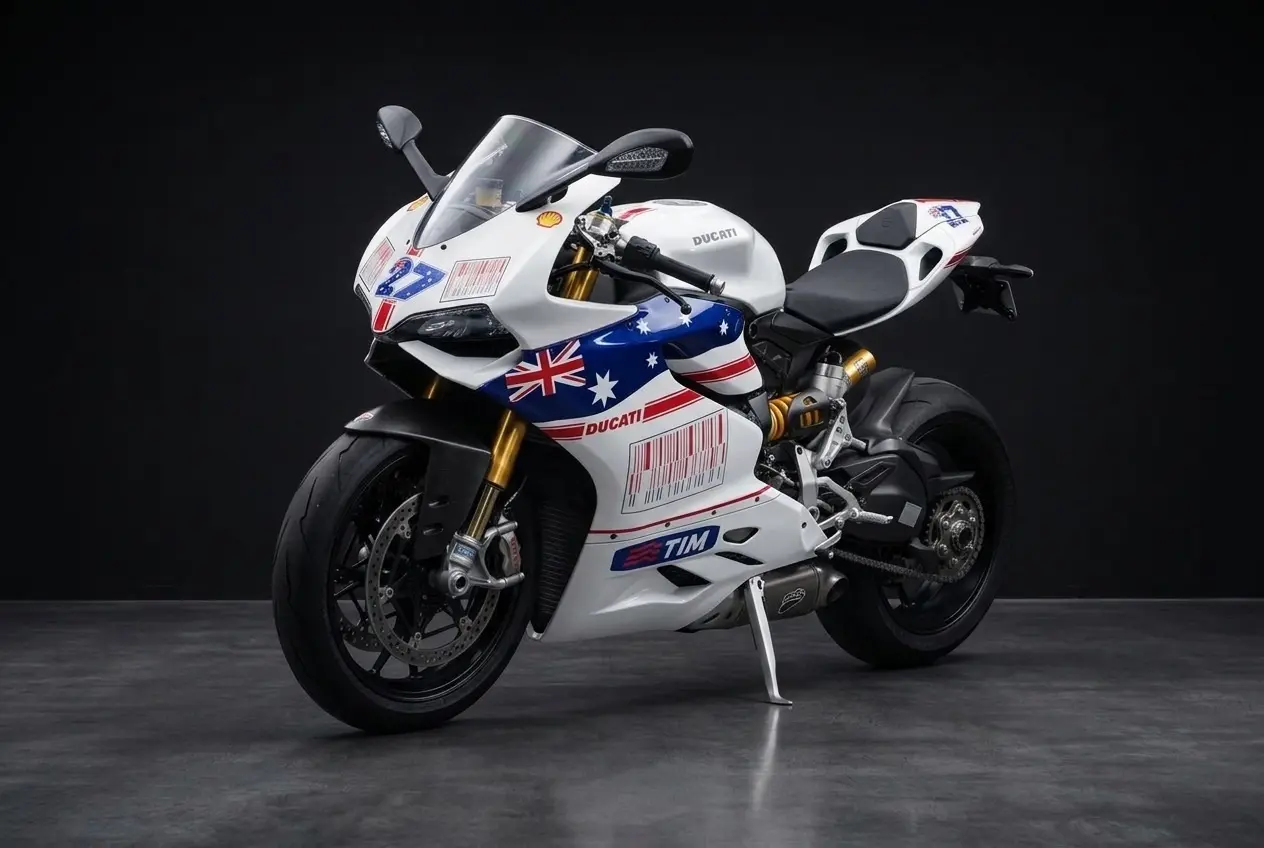
Book the Ducati 1199R. Pick your dates and book the Ducati 1199R online, or call us and we will sort it with you.
Book NowCall 0468 011 118A parked car on a rural road looks like a fixed object, but it is anything but still. A driver may be about to open a door, a passenger may step onto the verge, or a vehicle may pull out without a glance over its shoulder. Riders who pass these vehicles on a steady, wide line give everyone more time to react. This piece explains how to read the signs, hold a safe position and keep your pace calm when the road narrows between parked cars and the paddock fence.
Still choosing a bike? Start with our guide to motorcycle hire in Sydney, which sets out the licence, age and pillion rules.
Why parked vehicles are a bigger risk than they look
Parked vehicles are easy to dismiss because they are not moving. Yet a parked car is movement waiting to happen, with doors, drivers and passengers all ready to step out. On a rural road the parked vehicle may be the only sign of life for kilometres, which makes it a useful clue that people are close by.
The risk grows where the road is narrow. Two vehicles may need the same space, and a parked car can leave less room than the markings suggest. A motorbike sits lower and narrower than a car, but it still needs a clear path to pass without being squeezed toward the edge.
We see passes past parked vehicles as a matter of margin. Give the parked car a wider berth than you think is needed, slow the approach and keep your attention on the people around it. Margin is cheap insurance on any rural road.
Spotting who might move next
Look at the vehicle before you reach it. Exhaust fumes, a driver sitting inside or a person looking at a phone can all signal that the car is about to move. Brake lights that flicker when a driver checks a mirror, and a change in the wheel angle, can mean a car is about to pull out.
Scan the area beyond the vehicle as well. A gate, a driveway or a track often lies behind a parked car, and people step out from those gaps without warning. Keep your eyes on the spaces between vehicles, since those are the points where movement tends to appear first.
Animals are part of this too. Dogs can slip out of a parked ute, and horses or cattle may stand near the verge. If something is moving near the parked car, reduce speed and widen your line before you draw level.
Setting a wide line and a steady pace
The best defence is a wide, steady line. Move toward the centre of your lane as you approach parked vehicles, but never stray into oncoming traffic. A small lateral shift keeps you clear of doors and gives you room to react if a door opens or someone steps out.
Pace matters as much as position. A steady, relaxed speed gives you time to read each parked vehicle, while a rushed approach leaves little room for error. Ease the throttle early, let the bike settle and avoid sudden changes in pace as you draw level.
Keep the bike upright and avoid leaning toward the parked cars. The extra space between you and the vehicle works as a buffer, and a well balanced bike is easier to control if you need a quick correction.
Doors, drivers and sudden movements
Car doors are the most common surprise. A driver who has just parked may open a door without checking the road, and a passenger may swing out to reach something from the back seat. Watch for the shape of a head or a hand inside the car, and keep your distance even if the car looks empty.
If a door opens or a person steps out, avoid swerving sharply. Brake in a straight line, keep the bike upright and steer gently around the obstacle. A sudden swerve toward oncoming traffic is often more dangerous than the door itself.
Give parked vehicles on country roads the same attention you would give a moving car. Their drivers may not have seen you, and they may not expect a motorbike to be passing at that moment.
Sharing narrow roads with farm vehicles
Farm vehicles, utes, trailers and tractors often park on the side of rural roads, sometimes with machinery partly on the seal. These vehicles can be wide and awkward, and the operator may move them without much warning. Give large machines a generous berth and keep your pace low as you pass.
Dust and loose material blown by passing vehicles can collect at the edge of the road near parked machinery. Stay in the cleaner section of the lane, and do not assume the verge is firm just because a machine is parked on it.
Farm drivers know these roads well, and they often reverse or turn without warning. Keep your distance, be patient and watch for the first sign of movement before you commit to a pass.
Driveways, gates and the verge
Driveways and gates are the hidden entries on a rural road. A car may be waiting to turn in, or a vehicle may be pulling out from a gate that looks empty. Slow as you approach each entrance, and keep your eyes on the wheels and lights of any vehicle that appears to be waiting.
The verge can be soft, uneven or covered in loose stones, especially near parked cars where people walk. Avoid riding onto the verge to get past a parked vehicle, since a bike can lose grip quickly on uneven ground. Keep your wheels on the sealed road whenever you can.
Pedestrians are less common on rural roads, but they do appear, particularly near small towns and picnic spots. Ease off as you approach any group of people standing near a parked vehicle, and give them plenty of space.
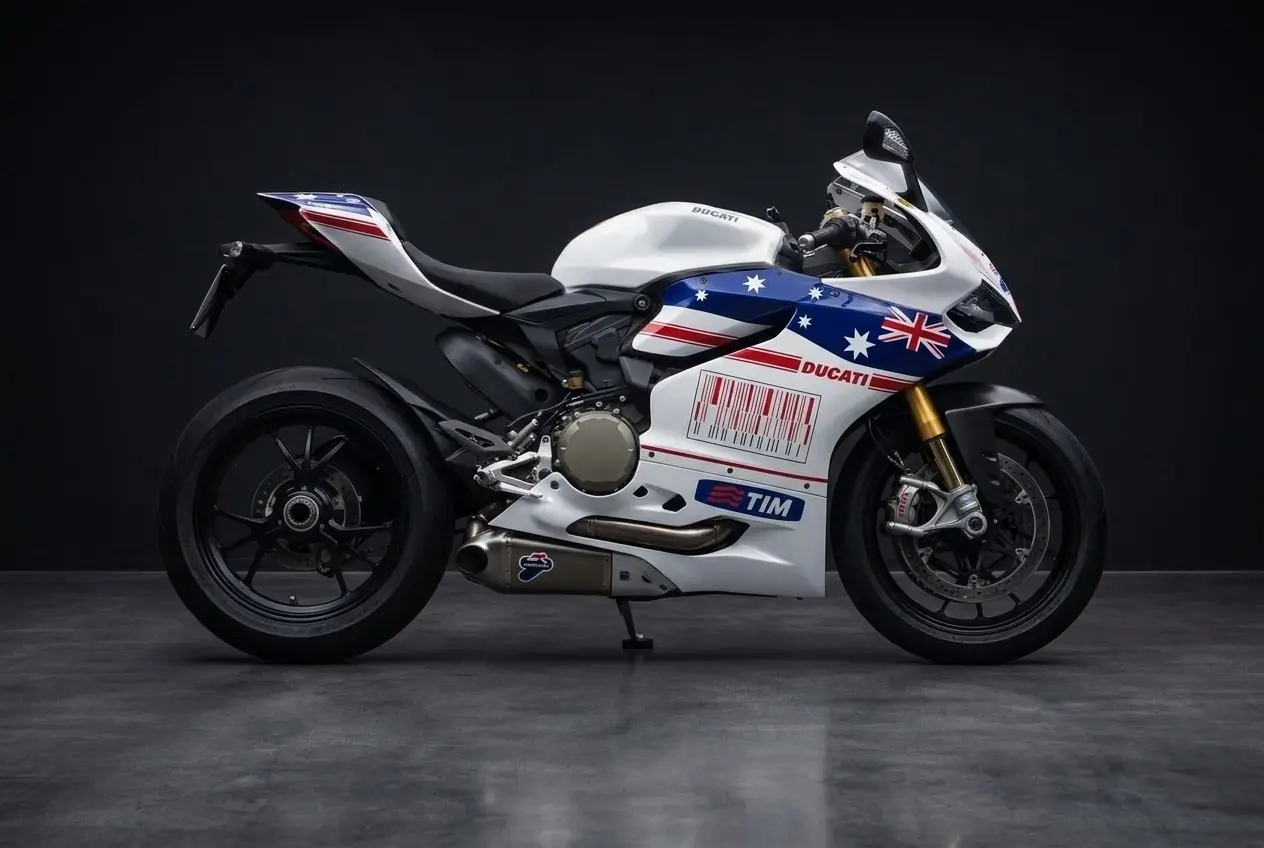
Want the Ducati 1199R for your date? Pick your dates and book the Ducati 1199R online, or call us and we will sort it with you.
Book NowCall 0468 011 118Best time of day and season for rural passes
Autumn and spring are the easiest seasons for passing parked vehicles on rural roads. The light is clear, the roads are generally dry and visitors are fewer than in summer. Summer heat can bring shimmer and sudden storms, while winter mornings can leave frost or fog in the shaded hollows near parked vehicles.
Early morning and late afternoon bring the most movement, as farmers head out and return and people stop at roadside spots. Set off once first light has settled on the paddocks, since no ride should begin before 6am. Midday tends to be quieter, though holiday weekends can bring campers and caravans to rural stops.
Check conditions with Transport for NSW before you leave, since works and temporary signs can change where vehicles park. Weekdays are usually steadier, while weekends bring visitors, boats and trailers to the roadside, so allow extra margin on those days.
Fuel, food and places to pull over
Fuel is easiest to find in the larger towns along a rural route, so top up before you leave them. Stations on the back roads may be spaced far apart, and some close on quiet days. Keep your tank comfortable, especially if you plan to explore the side roads near farms.
Food stops in rural towns tend to be relaxed, with plenty of space to park the bike clear of the traffic. Choose a spot away from parked vehicles, eat lightly and avoid rushing back onto the road afterwards. A slow, calm pause helps you pass the next parked car with a clear head.
Pull over only at proper, level pull-offs well clear of the carriageway. Never stop beside a parked car or in a gateway. Use the break to check the tyres, wipe the visor and stretch your legs.
Gear, fatigue and wildlife near parked cars
Gear keeps you protected if a door or a passenger catches you by surprise. A full face helmet, gloves, a protective jacket, long trousers and boots that cover the ankle are the basics. Bright colours help parked drivers notice you, and a clean visor improves your view of the cars ahead.
Fatigue reduces your ability to spot a door or a step out, and rural roads can be long and repetitive. Take a break every hour, drink water and return to the road only when you feel alert. A tired rider may fixate on the parked car and miss what is happening beyond it.
Wildlife can appear near parked cars at dawn and dusk. Kangaroos, wallabies and birds may move off the verge without warning, and a parked vehicle can hide an animal until you are close. Slow down in those hours and keep your line wide.
Hire rules and booking the Ducati 1199R
You need a full motorcycle licence held for at least 3 years, and you must be 25 or over on every bike. The Ducati 1199R and the MV Agusta F4 are single-seaters, so they suit solo riding. Trackers are fitted to every bike in the fleet, which is worth knowing on quiet rural roads.
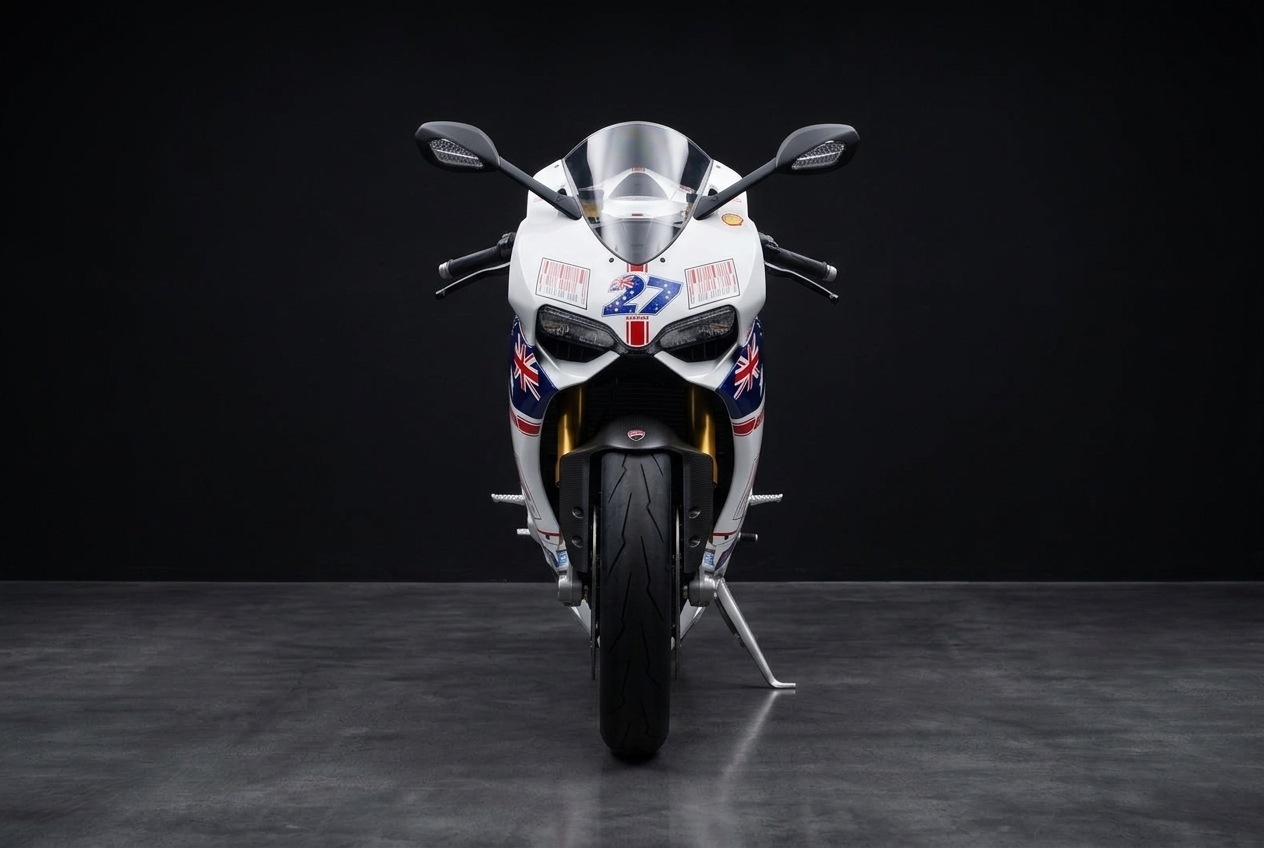
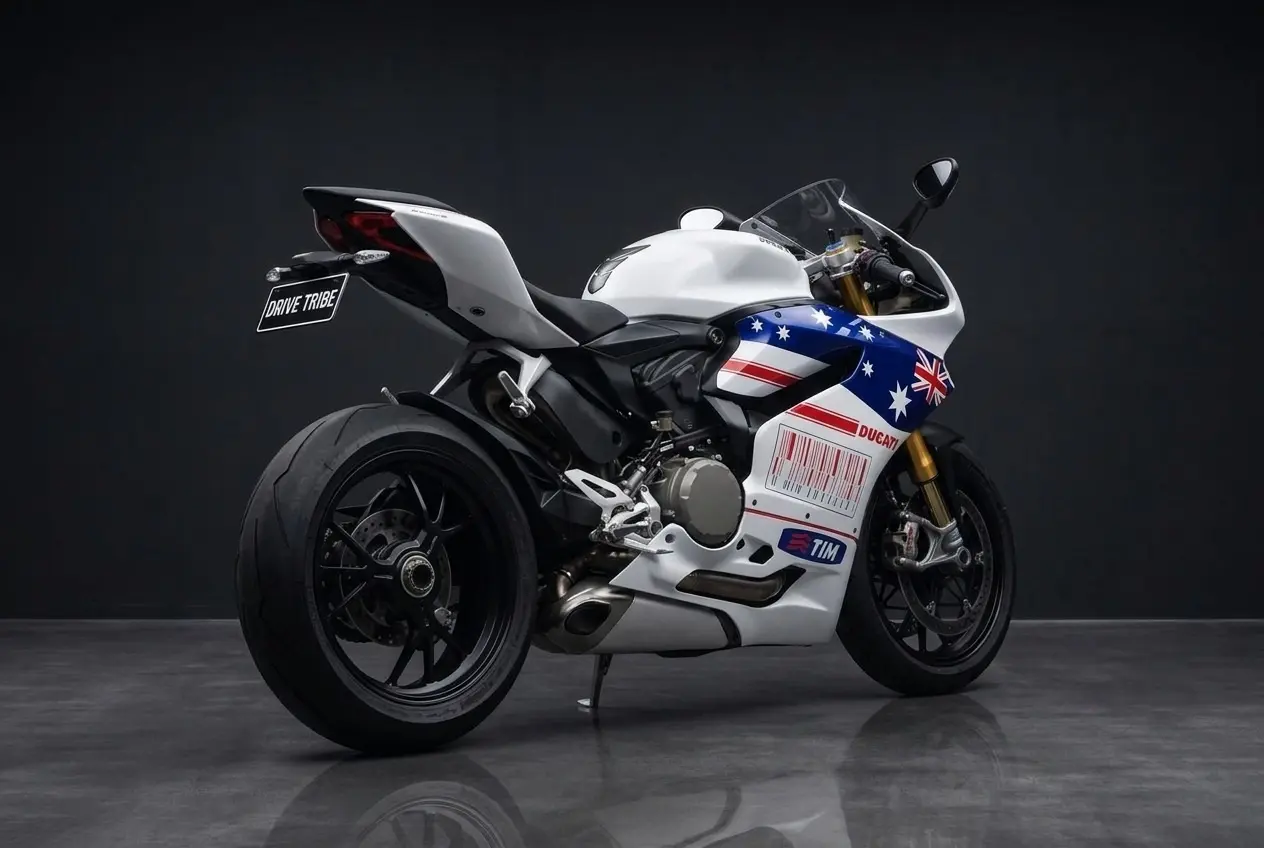
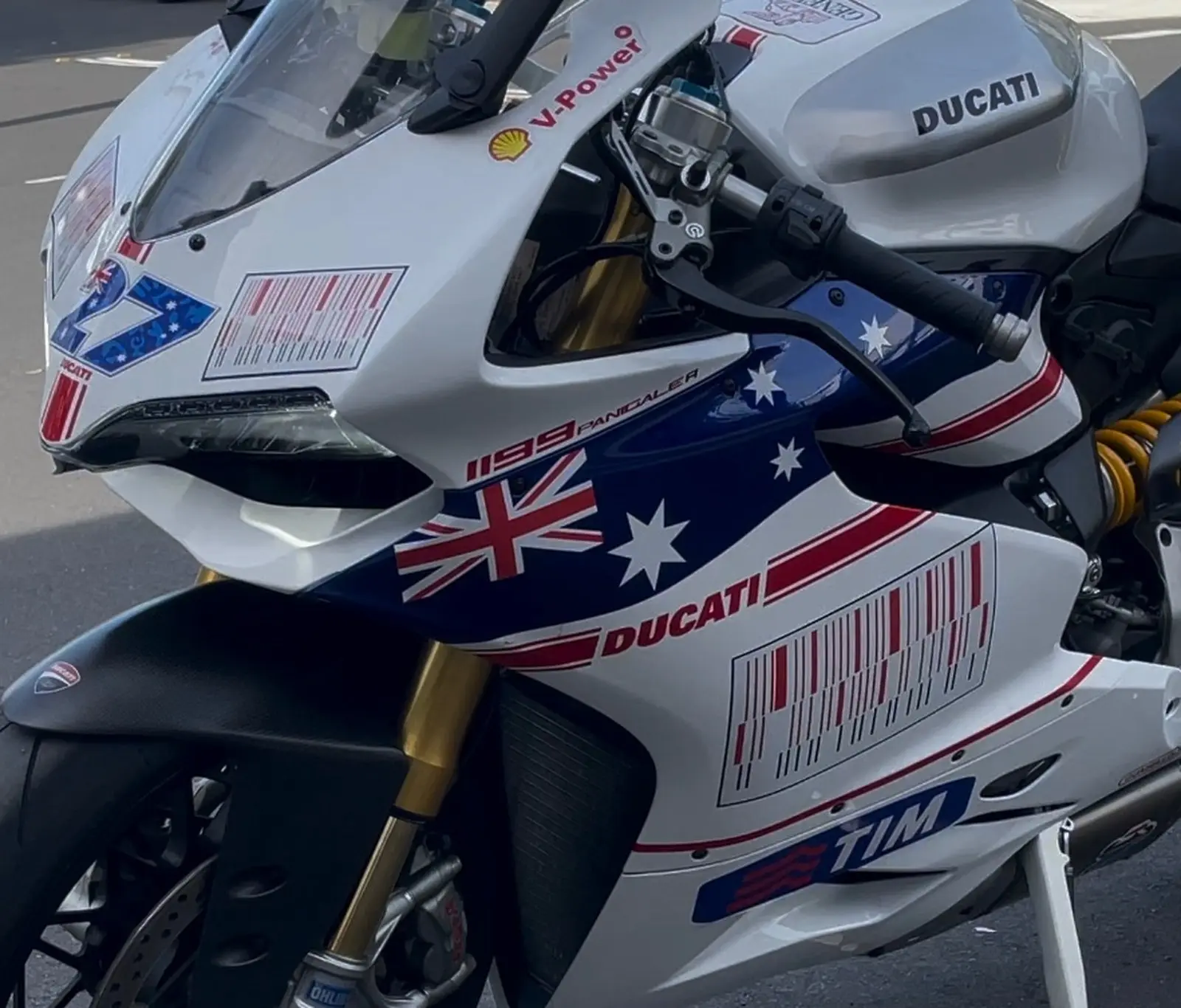
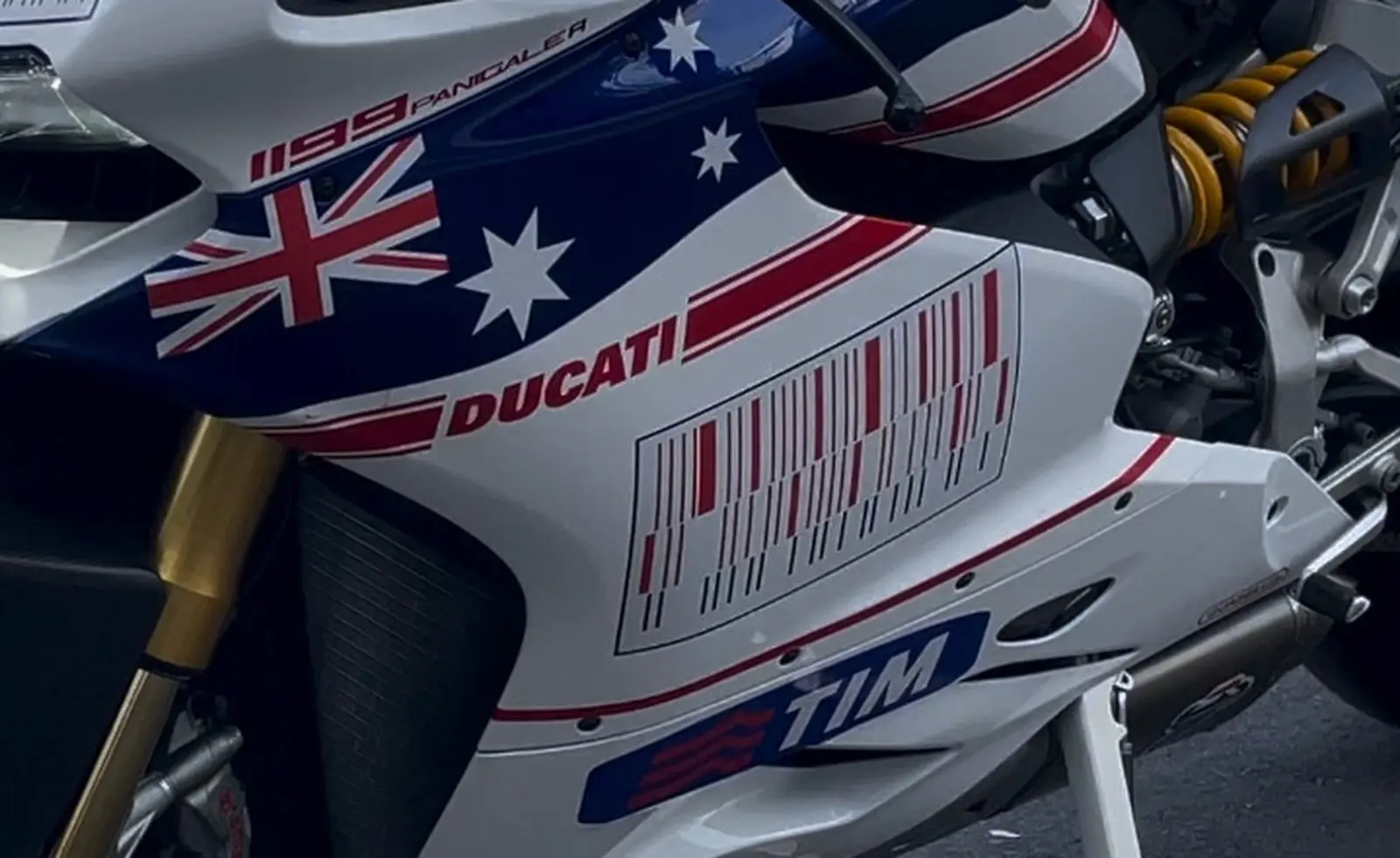
The Ducati 1199R is a superbike for experienced riders, with an Australian flag livery that is a tribute, gold front forks and black forged wheels. Its V-twin and 143 kW give plenty of response, so approach parked vehicles with a patient hand and a wide line rather than trying to use the power to escape a surprise.
Ready to explore rural roads with more confidence? Book the Ducati 1199R, plan your route with extra margin around parked vehicles and let us know your route and experience when you book. We will help you prepare, and you can browse the full fleet to compare the other bikes.
Frequently asked questions
How far should I stay from a parked car?
Leave as much room as the road allows, and more than you think you need. A wide margin protects you from open doors, people stepping out and vehicles pulling away. If the road is too narrow to give that space, slow right down and wait for a clear opening before you pass.
What should I do if a door opens in front of me?
Brake in a straight line, keep the bike upright and steer gently around the door. Avoid a sharp swerve, since that can carry you into oncoming traffic. Once you are clear, check your mirrors and settle back into a steady line.
Should I ride onto the verge to get past?
No. Verges are often soft, uneven or loose, and a bike can lose grip on them quickly. Keep your wheels on the sealed road, slow down and wait for the vehicle to be clear or for a safe moment to pass within your own lane.
How can I spot a driver who is about to pull out?
Watch for exhaust, a driver sitting inside, brake lights that flicker and changes in the wheel angle. A person looking at a phone or glancing over a shoulder can also signal movement. Treat any sign of life in a parked car as a reason to give extra room.
Are farm machines a bigger risk than cars?
They can be, because they are often wider, slower and parked with part of the machine on the seal. Their operators may move them without much warning. Give large machines a generous berth, keep your pace low and watch for the first sign of movement before you commit to a pass.
Is it safe to pass a parked car at dusk?
It needs extra care. Visibility drops, shapes become harder to read and animals are more active at the verge. Slow down, widen your line and be ready to stop if a shape moves. If the light is poor, choose a different moment to pass rather than rushing.
Ready when you are. Pick your dates and book the Ducati 1199R online, or call us and we will sort it with you.
Book NowCall 0468 011 118