
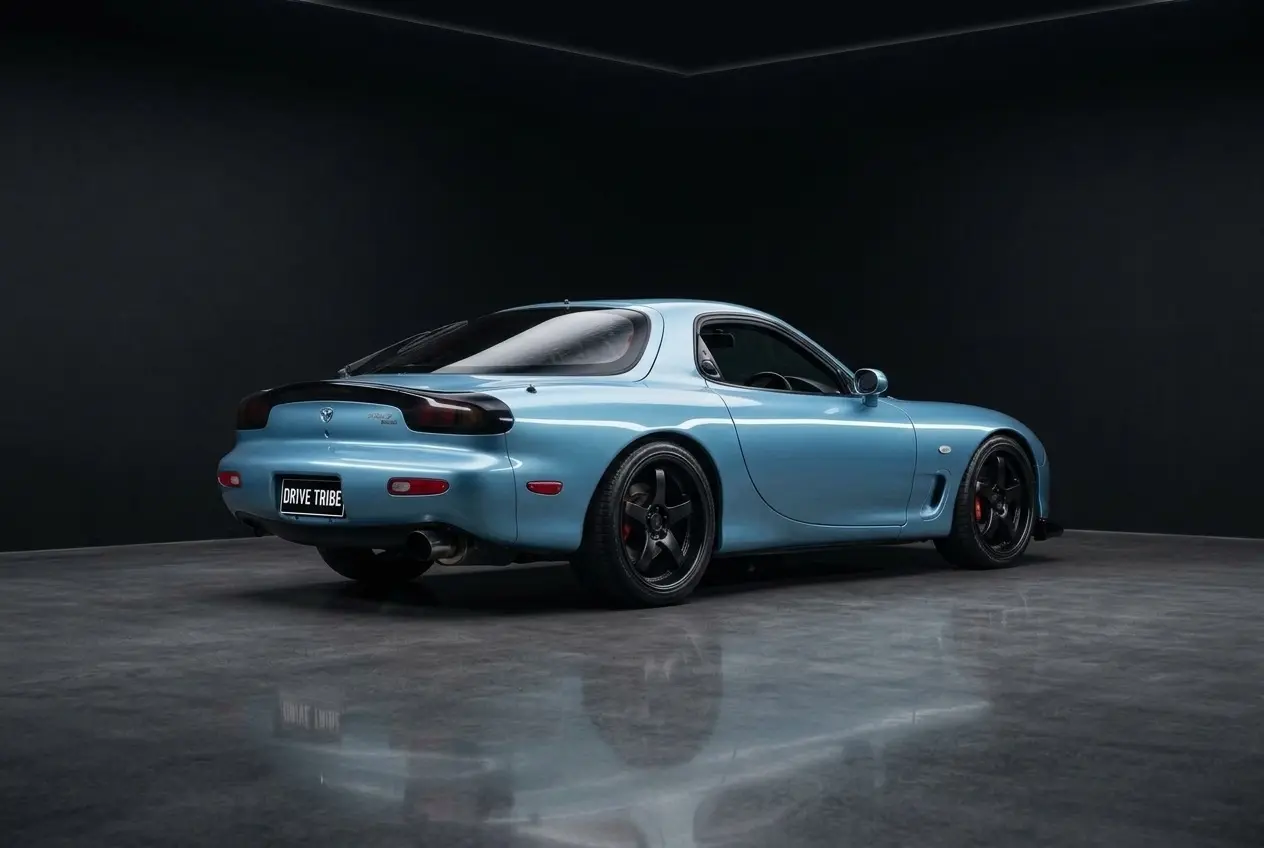
The Mazda RX-7 FD, known by its chassis code FD3S, was the third and final generation of the RX-7. It ran from the early 1990s until 2002, used a sequential twin-turbo 13B-REW rotary in standard form, and is widely regarded as one of the best-looking Japanese sports cars ever made. Our Mazda RX-7 FD Bridgeport is a bridgeported FD, finished in light metallic blue.
Where the FD sits in the RX-7 story
The RX-7 ran across three generations: the first with the SA22C and FB codes, then the FC, and finally the FD3S. All shared a basic recipe: a compact rotary engine mounted low, rear-wheel drive and a focus on balance rather than brute force. The FD took that recipe and pushed it to its limit, with curved, flowing bodywork and a twin-turbo engine. You can read the wider rotary background in Mazda rotary engine history.
The shape
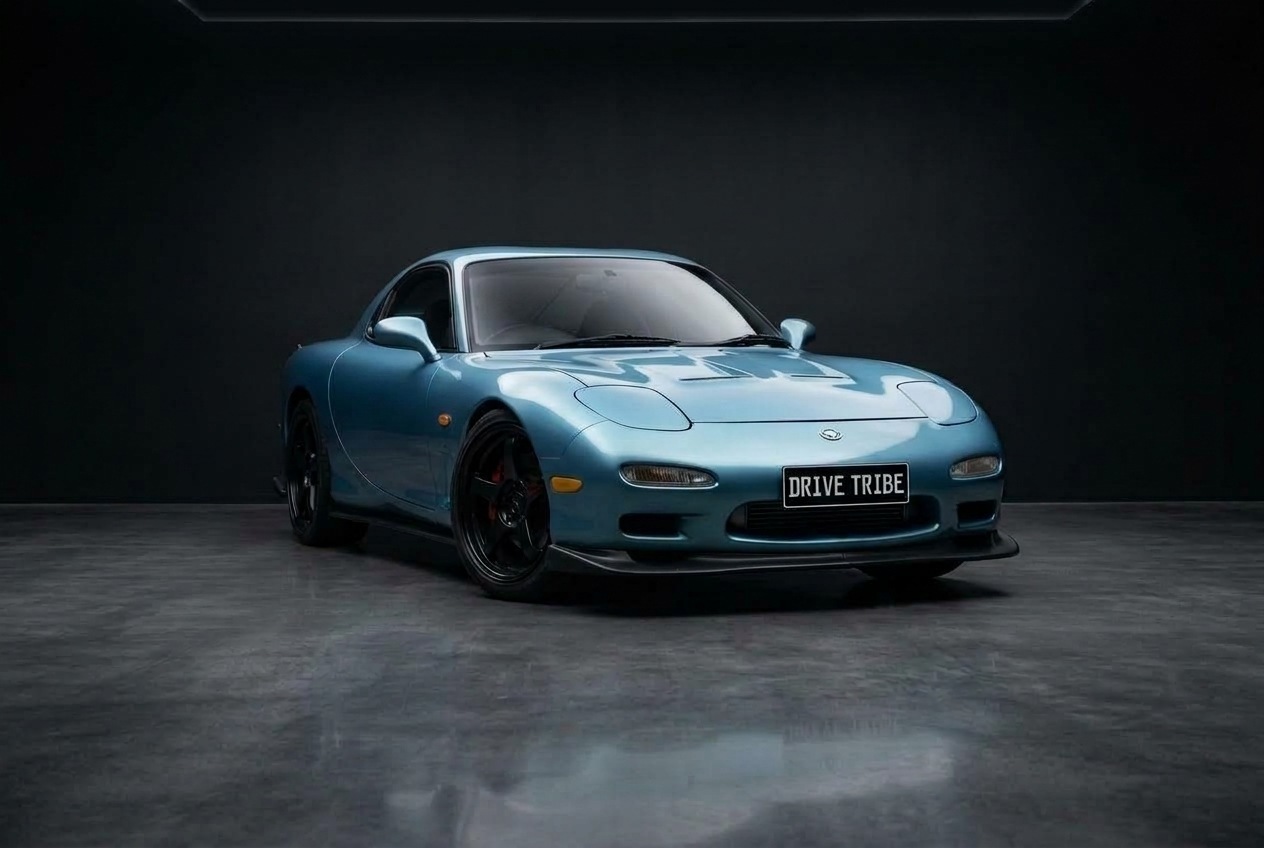
Most people who love the FD begin with the shape. It is low and wide, with a rounded nose, a tight cabin and pronounced rear haunches. Nothing on it looks like an afterthought. The proportions have aged well, which is why it still draws attention at meets and on the road. Our car adds a vented bonnet, a black front lip and black five-spoke wheels, which sharpen the look without changing the basic lines.
The engine
In standard form the FD used a sequential twin-turbo 13B-REW. Sequential means the turbochargers work in stages, with one doing the early work and the second joining in higher up the rev range, to keep response sharp across the range. The rotary beneath it uses triangular rotors rather than pistons, sealed at the tips by apex seals, and it revs freely right up to the top of its range.
Our car has a bridgeported 13B rotary on a single G42 turbo, meaning the ports have been enlarged and re-shaped to breathe more freely. We do not publish power figures because the tune is not published. For the engineering, read bridgeport rotary explained.
Why the FD became a cultural icon
- It appears in the Initial D anime, where it has a devoted following.
- It is a staple of the Gran Turismo games, which introduced many drivers to the car long before they saw one.
- An RX-7 features in the first Fast and the Furious film.
- It remains a favourite of tuners who value its balance and the rotary sound.
For more of that story, see the RX-7 in pop culture.
The FD's reputation for needing care
The FD has a name for being demanding, and it comes from the rotary. Apex seals, heat management and fuelling matter more than in a mild piston car, and a modified example asks even more of the people looking after it. That is why enthusiasts tend to treat FDs with respect, and why our car is chauffeur only for normal hire. Details in why a bridgeported rotary needs expert hands.
Meeting an FD in Sydney
You can see and hear ours in two ways. Chauffeur driven, it suits a wedding arrival, formal, corporate transfer, special event or a weekend run up the coast road. As a guided drive, you take the wheel yourself with an experienced driver from our team beside you the whole time. Browse the Mazda hire page or sports car hire for the wider picture, and read the RX-7 guided drive guide.
Guided drives happen on public roads at the posted speed limit. Our driver keeps it relaxed and legal, and fast driving belongs on a track. We do not support speeding or street racing.
How the FD compares with its rivals
The FD arrived in a golden era for Japanese performance cars, and it is often discussed alongside the Toyota Supra, the Nissan Skyline GT-R, the Honda NSX and others. Each took a different route. The Supra leaned on an inline-six, the Skyline on all-wheel drive and a turbocharged six, the NSX on a mid-engine layout. The RX-7 chose a compact rotary and rear-wheel drive, with an emphasis on lightness and balance. We do not hold the others, but we have written about what makes them special in our RX-7 versus Supra versus Skyline piece and our Supra wishlist article.
What to look for if you see one at a meet
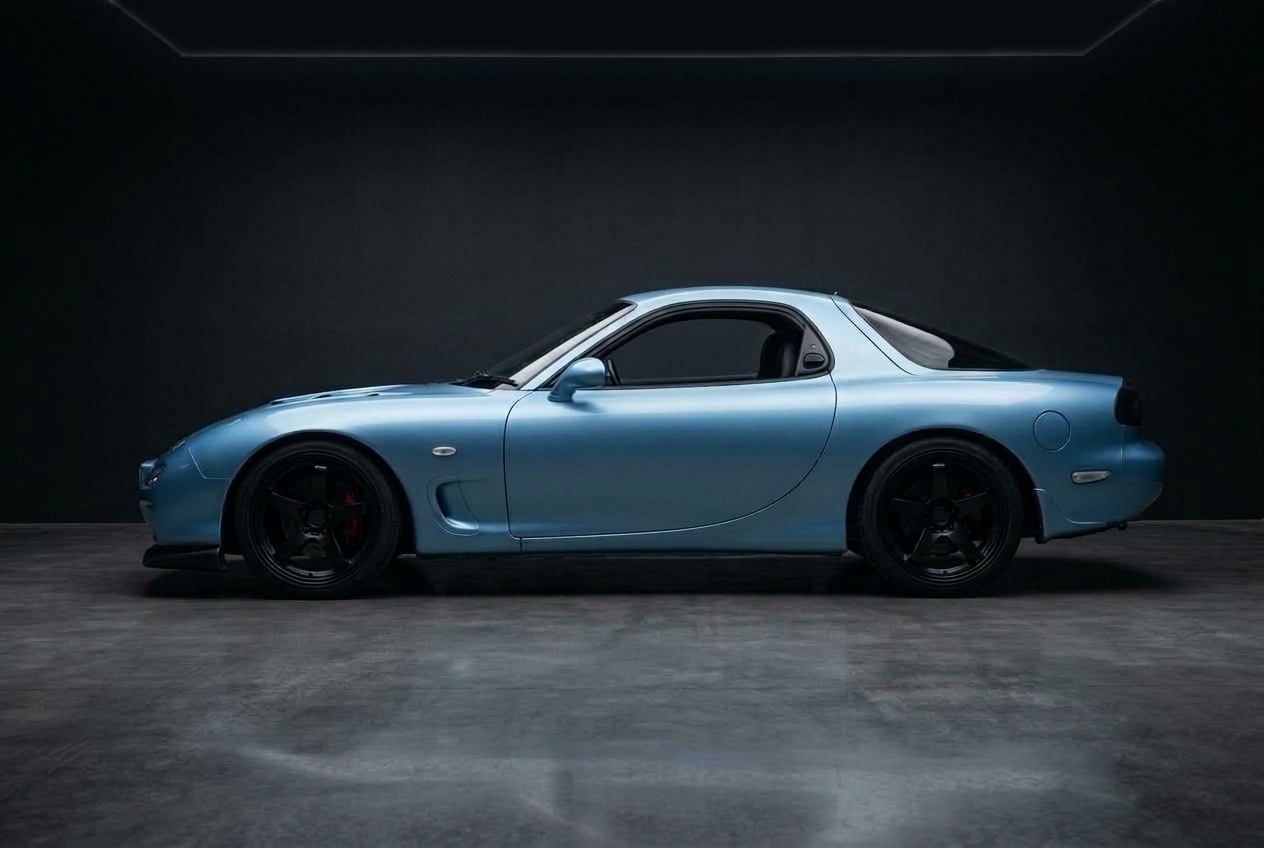
- The profile: low nose, rounded roofline and a short tail with a rear spoiler.
- Pop-up or smooth front: the FD has a smooth, rounded front end with lights set into it.
- The exhaust note: a rotary sounds distinctly different from a piston engine.
- The stance: wide, low and planted, with wheels filling the arches.
If you are planning a night out around Japanese performance cars, our RX-7 car meets article and RX-7 JDM night piece have ideas. Our FD also suits a photo shoot, where the shape and the baby blue colour photograph well. See also the baby blue styling.
What James's FD adds
Our car carries a bridgeported 13B rotary on a single G42 turbo, light metallic blue paint, black five-spoke wheels, a vented bonnet and a black front lip. It goes beyond a stock FD. We do not state power figures because the tune is not published, but you can hear and feel the difference from a standard car. If you like what you read, a guided drive is the way to experience it with the wheel in your hands and an expert beside you.
FAQ
What does FD3S mean?
It is the chassis code for the third-generation Mazda RX-7.
When was the FD made?
It ran from the early 1990s until 2002.
What engine did the FD use?
In standard form, a sequential twin-turbo 13B-REW rotary. Ours is a bridgeported 13B rotary on a single G42 turbo.
Is the FD rear-wheel drive?
Yes, and ours is too.
Can I drive one in Sydney?
Yes, on a guided drive in our RX-7, with an experienced driver of ours beside you. We confirm eligibility, bond and cover in the quote.
Ready to ask? See the FD for yourself. Request a guided drive quote on the car's page, message us on WhatsApp, or phone 0468 011 118. Tell us the date, the times and where you would like to go, and we will plan the route and stops with you.
More in our Mazda RX-7 category, and compare it with other 90s icons in RX-7 versus Supra versus Skyline. You can also see the RX-7 on its car page.