
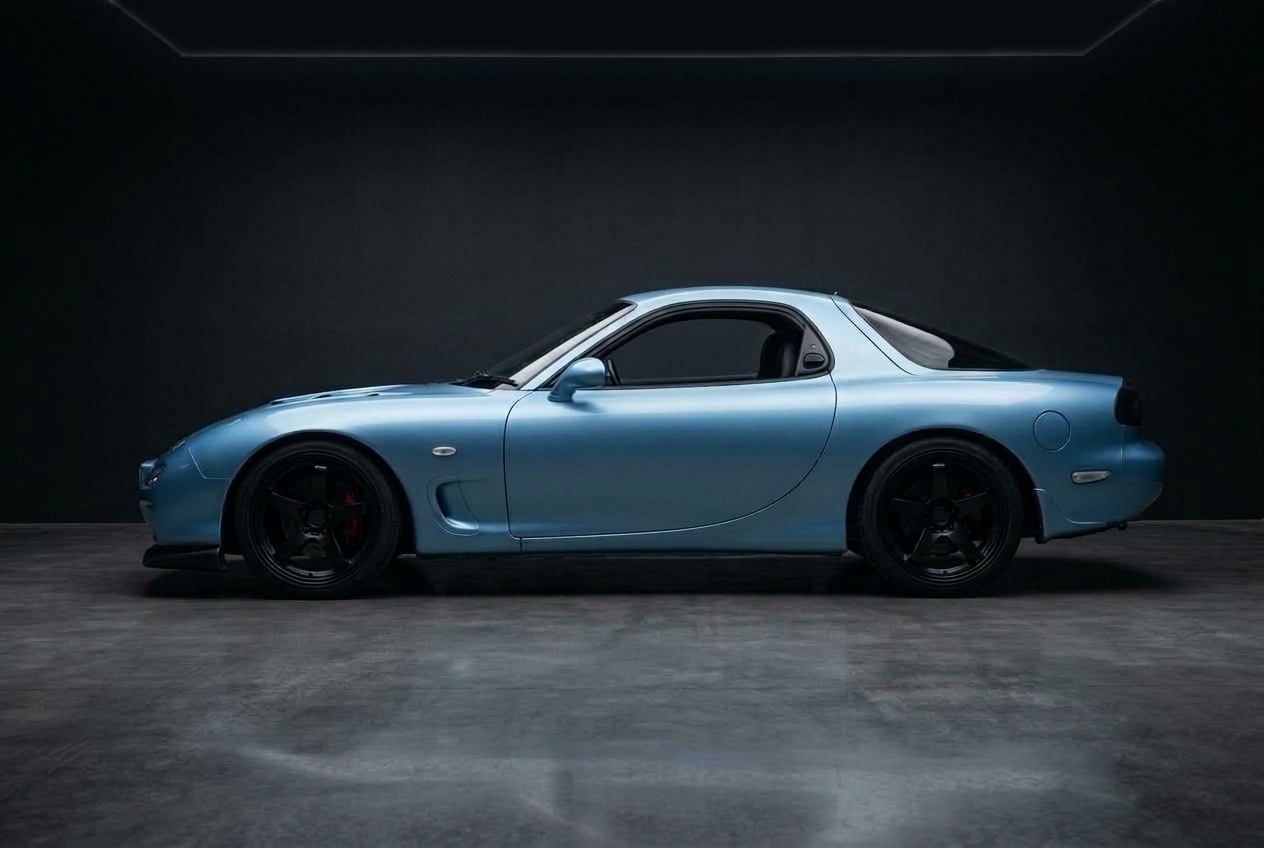
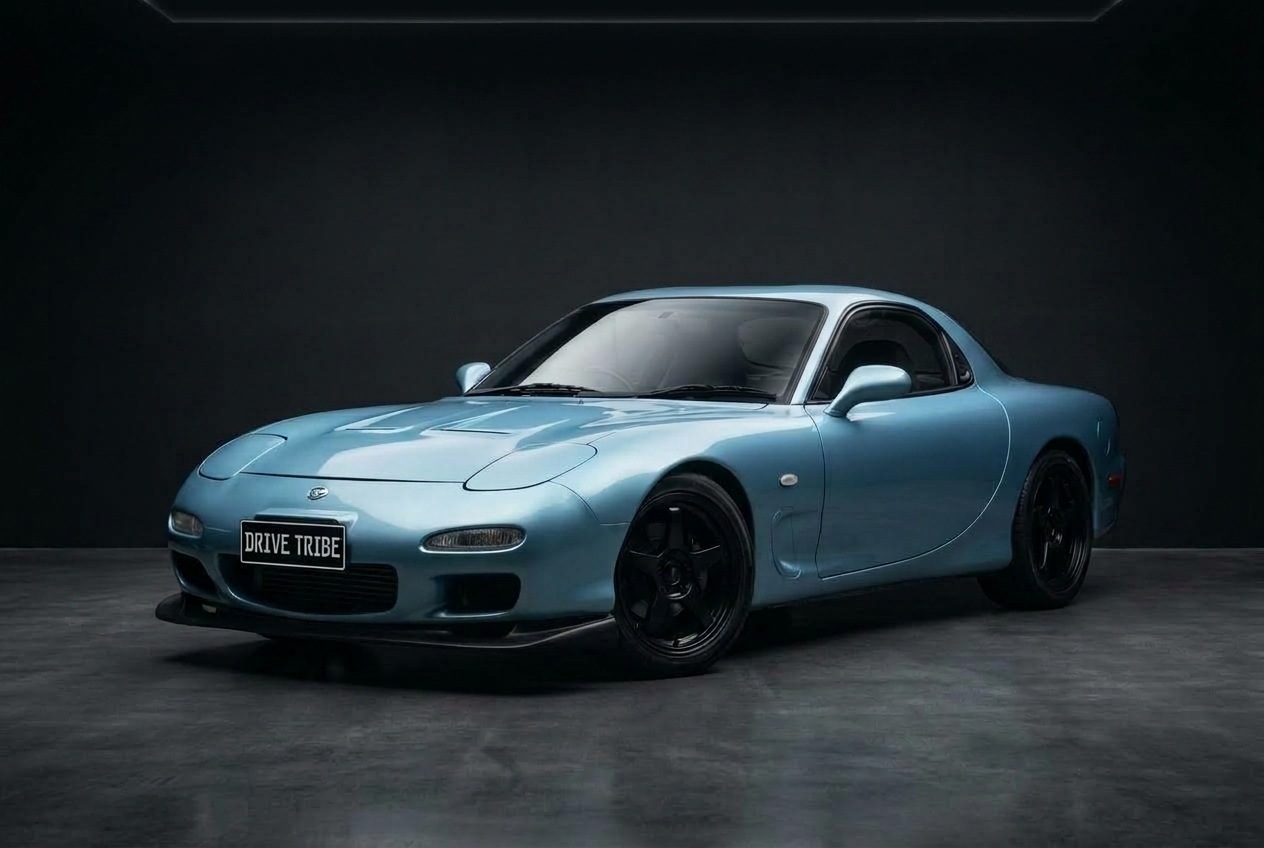
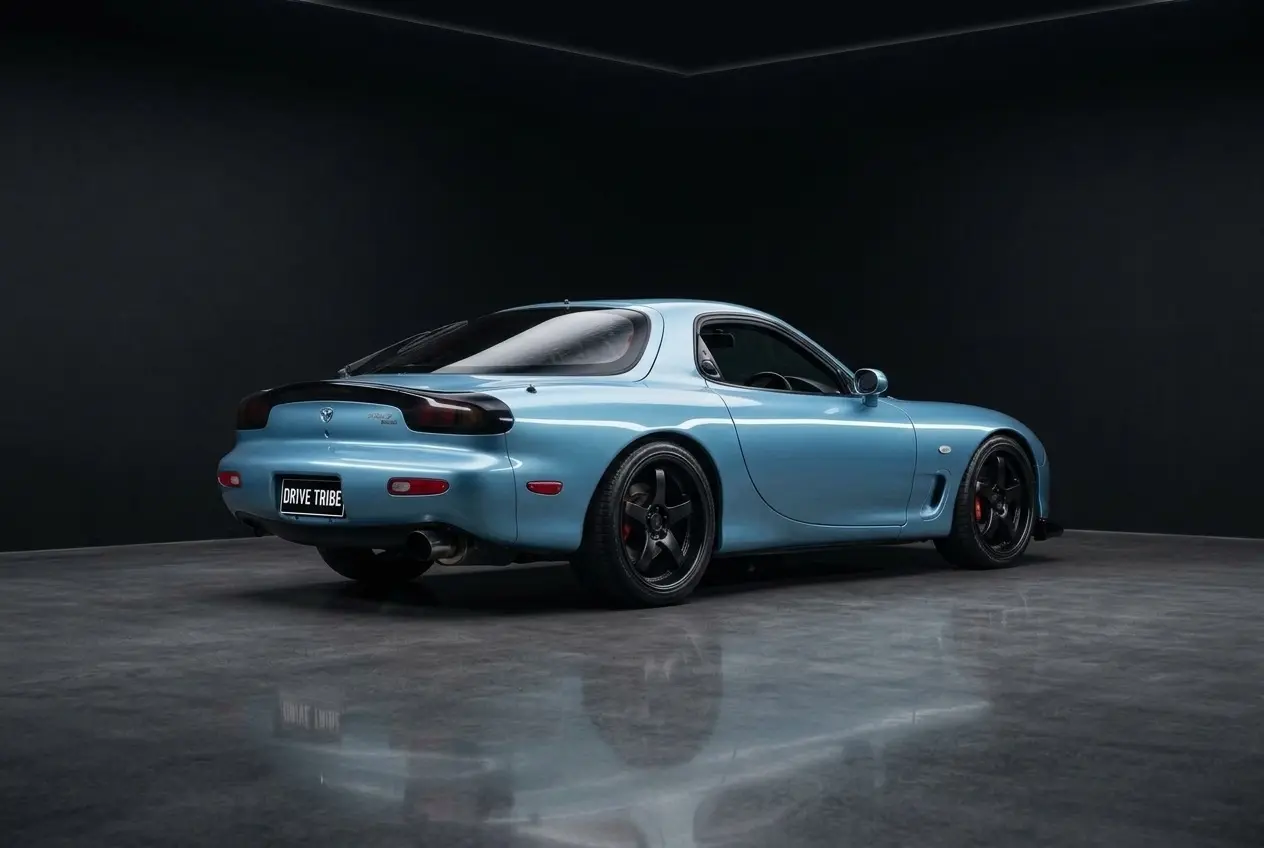
A bridgeported rotary sounds nothing like a piston engine: a rough, uneven idle at standstill, then a hard-edged, rising buzz as the revs climb, with no deep V8 rumble underneath. In our Mazda RX-7 FD Bridgeport the sound is the main event, and the best way to understand it is to sit in the car while it runs.
Why a rotary sounds different
A piston engine fires with a rhythm set by pistons going up and down in cylinders. A rotary has no pistons. Triangular rotors spin inside housings, and the combustion events follow each other in a continuous, overlapping way. The result is a smoother pulse that turns into a continuous note as the revs rise. Add the ports, which in a rotary are openings the rotor uncovers as it turns, and the sound takes on a different texture from anything with valves.
What bridgeporting adds
Bridgeporting enlarges and re-shapes the ports so the engine breathes more freely. That means more overlap between intake and exhaust, which makes the idle lumpy and uneven, and gives the exhaust note an edge. At low speed, the car can sound almost angry, with a burble and a pulse. As the revs build, it clears into a higher, smoother and louder tone. A rotary revs freely and loves the top of its rev range in general terms, so the sound keeps climbing and keeps getting brighter. For the engineering behind it, read bridgeport rotary explained.
What you notice from the seat
- At idle: an uneven, restless note, felt through the seat as much as heard.
- Pulling away: a growing buzz with a metallic edge, unlike the low growl of a V8.
- Through the turbo: the big single turbo adds whoosh, whistle and flutter between the engine noise.
- On the overrun: crackles and pops when you lift off. Read why the RX-7 spits flames for the explanation.
- Inside the cabin: a small, snug FD cabin that puts the engine close, so you hear it up close.
Why it matters
Many enthusiasts have heard the sound only through games, anime and videos. The FD RX-7 appears in the Initial D anime and the Gran Turismo games, and an RX-7 features in the first Fast and the Furious film. Hearing the real thing in person is quite different from a recording. Rotary history helps explain the attachment: Mazda is the only maker to win Le Mans with a rotary, in the 787B in 1991, and its scream is part of racing folklore. See Mazda rotary engine history.
How to hear it
There are three options. You can ride chauffeur driven for a wedding arrival, formal, corporate transfer, special event or a weekend run up the coast road. You can book it for an event or shoot, such as a photo shoot. Or you can ask for a guided drive, where you take the wheel with an experienced driver of ours beside you. A first ride is described in first ride in a rotary: what to expect.
Keeping it legal
The sound is loud, and we treat it with respect. A guided drive stays on public roads at the posted speed limit. Our driver keeps it relaxed and legal, and fast driving belongs on a track. We never support speeding or street racing, and we do not encourage anyone to rev the car out in residential streets. The point of a guided drive is to enjoy the car as it is, not to chase noise. See how a guided drive works.
How the sound changes with the setting
A rotary does not sound the same everywhere. Where you stand or sit, and what is around the car, shapes what you hear.
- In a tunnel or under a bridge: the sound bounces back and fills the space. A bridgeported note in a tunnel is impressive, but it is also very loud, so a guided drive is paced by common sense and the posted speed limit.
- On a coast road: open air spreads the note out, with the turbo whistle clearer over the engine.
- At a meet: the idle is the star, a restless, uneven pulse that other car owners recognise instantly.
- At a wedding arrival: a lower, calmer approach. The car arrives with a burble, not a bellow, which suits the occasion. See wedding car hire.
- During a shoot: microphones tend to love it, and the rotary's note records distinctively. See RX-7 bridgeport sound and exhaust.
Tips for listening properly
- Ask your driver to cover a few different speeds and road types so you hear the full range.
- Open the window at a safe moment, if the car and the conditions allow.
- Listen from outside the car for a minute too, if you can.
- Ask questions: our driver can explain what each change in the note means.
- Remember it is a performance car with a loud exhaust, so earplugs are not a bad idea for a long drive or a chauffeured trip.
If you are weighing it against other Japanese options, compare it with our Nissan 350Z Convertible Track Edition in RX-7 versus 350Z. The 350Z's V6 sounds very different, and the comparison shows how distinct the rotary really is.
What the sound says about the car
The note is a result of every choice made on the car: the rotary layout, the bridgeported ports, the big single turbo, the exhaust. It is the clearest summary of what makes the FD RX-7 unlike other sports cars. You can read the design in the car's shape. You can read the engineering in its sound.
FAQ
Does a rotary sound like a V8?
No. It is higher, more urgent and more buzzy, without the deep rumble.
Why is the idle uneven?
Bridgeported ports overlap more, which gives a lumpy, restless idle.
Is the RX-7 loud inside?
The cabin is small, so you hear the engine up close. We can tell you more when you ask.
Can I drive it to hear it?
Yes, on a guided drive, with an experienced driver of ours beside you. We confirm eligibility, bond and cover in the quote.
Will it be the same as a video?
Not really. A recording flattens it. The sound is something you feel.
Ready to ask? Hear it for yourself. Request a guided drive quote on the car's page, message us on WhatsApp, or phone 0468 011 118. Tell us the date, the times and where you would like to go, and we will plan the route and stops with you.
Explore the Mazda RX-7 category, the Mazda hire page and the chauffeur car hire page. You can also see the RX-7 on its car page.